
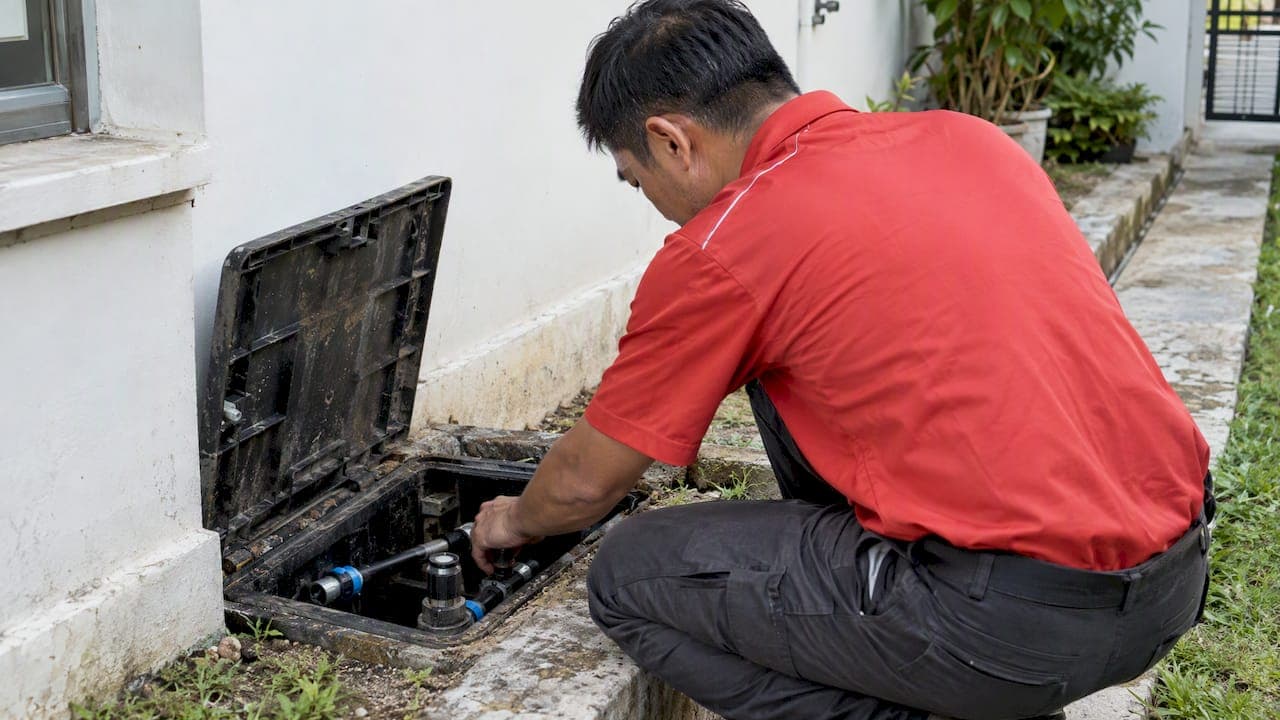
A termite reticulation system is a buried network of pipes that delivers liquid termiticide into the soil around a building. The pipes are a permanent delivery method, but the chemical barrier fades and needs periodic recharging. Licensed operators must handle the termiticide, and NEA rules govern how it is applied safely.
TL;DR:
- Porous tubing distributes treatment evenly, while improvised hoses or drilled PVC can leave untreated gaps; installers lay new build pipes before concrete is poured.
- NEA rules require a Hazardous Substances Licence and approved termiticides, plus safeguards against runoff and drain discharge; chlorpyrifos has been prohibited since July 1, 2009.
- A high groundwater table rules out soil treatment under NEA guidance; baiting may suit certain species or sites, while retrofits can provide less even coverage.
- Recharge timing depends on the product label and site conditions, so get the operator’s schedule in writing and compare renewal costs with warranty coverage.
- Baiting uses less active ingredient and targets the colony, but takes longer; a 2025 review found field success varied by termite species and site.
Table of Contents
- What a termite reticulation system is made of
- How reticulation systems work, and what NEA requires
- Where reticulation fits, and where it does not
- Installation timing: new builds versus retrofits
- Maintenance and recharging: schedules, checks, and fixes
- Reticulation versus baiting: how the two compare
- How to choose a contractor you can trust
- Our view: reticulation is one tool, not the whole plan
- Protect your property with a termite plan that fits your site
- FAQ
- Sources
What a termite reticulation system is made of
Think of the system as plumbing for pest protection. Every part has a job, and the quality of each part decides how evenly the soil gets treated. You will usually meet three components:
- Control or access box: a sealed, reachable point where an operator connects equipment to pump in termiticide.
- Buried pipe network: lines laid around the perimeter and near penetrations such as plumbing and service entries, where termites often find a way in.
- Porous emitters: engineered micro-porous tubing that lets the liquid seep out gradually along its length.
Materials matter. Purpose-built micro-porous tubing spreads chemical uniformly. Improvised hoses or drilled PVC discharge unevenly and leave untreated gaps where termites can pass. In new builds, installers place the network at the slab stage, so the pipes sit under and beside the concrete before it is poured.
How reticulation systems work, and what NEA requires
An operator pumps termiticide at low pressure into the sealed network. The liquid travels through the pipes and seeps out of the emitters into the surrounding soil, forming a continuous treated zone. The network stays in place for years. The chemical in the soil does not, because it degrades, which is why recharging is part of the design.

Regulation shapes every step. NEA guidance requires pest control operators to hold a Hazardous Substances Licence to buy and apply approved termiticides, and it prohibits accidental discharge into drains and waterways.
That single rule can decide whether a site qualifies. Other points worth knowing:
- Only termiticides on NEA's approved list may be used for soil treatment.
- NEA's notice documents that chlorpyrifos has been prohibited for anti-termite soil treatment since 1 July 2009.
- Operators must guard against groundwater contamination and runoff during application.
Where reticulation fits, and where it does not
Reticulation suits properties where pipes can be laid before concrete goes down or where paved perimeters make soil access limited. In practice that points to a few clear cases:
- Slab-on-ground houses and low-rise buildings under construction.
- Properties with paved or concreted surroundings where trenching later would be disruptive.
- Sites where a continuous treated zone around the foundation is the goal.
It is not right everywhere. A high groundwater table rules out soil treatment under NEA guidance, so the site check comes first. Some termite species and site conditions also favor baiting over a liquid barrier. Retrofits are possible, but they involve more compromise: access points are harder to place and coverage can be less even than in a new build. Our localized termite treatment guide explains when a targeted approach is enough.
Installation timing: new builds versus retrofits
Timing is the biggest factor in how well a system performs. Here is what a new-build installation typically looks like:
- The installer plans the pipe layout from the building plans and site conditions.
- Pipes and emitters are positioned at the slab stage, along the perimeter and around penetrations.
- The access box is fitted in a reachable spot before the pour.
- The network is pressure-checked for leaks and blockages.
- Concrete is poured over the sealed system, and the first charge is applied by a licensed operator.
Retrofits are different. Options are limited, and an installer may need to drill or use surface-mounted access points. Because pipes cannot be laid beneath existing slabs, coverage can come out uneven. Expect protection of surrounding areas during the work, a clear explanation of the time the job needs, and cleanup afterward. Ask for all of this in writing before work starts.
Maintenance and recharging: schedules, checks, and fixes
The pipework can last, but chemical protection does not. Recharge intervals depend on the termiticide label and site conditions, so your operator should give you a schedule tied to the product used. Between visits, do a simple check of the following:
- The access box: look for cracks, water pooling, damage from landscaping, or a missing lid.
- Any pressure gauge or readout the system includes.
- New mud tubes on walls, foundations or paving, and any sign of live termites.
- Blocked emitters, which often show up as dry stretches of soil during a recharge.
- Damaged pipework, commonly from digging, tree roots or later construction.
A licensed operator diagnoses faults by flow testing the network, locating breaks and flushing or replacing the failed sections. A depleted barrier is fixed by recharging.
Pro Tip: Keep a log of every recharge date, product name and area treated, and photograph the access box each year. That record makes warranty claims and future inspections much easier.
For inspection rhythm and audit-ready routines, see our notes on pest control schedules.
Reticulation versus baiting: how the two compare
Both methods are established tools, and they work in different ways. Reticulation builds a chemical soil barrier. Baiting uses slow-acting active ingredients that termites carry back to their colony. A 2025 review of termite baiting in Southeast Asia found that bait products eliminated colonies in many field studies, but success varied by species and site. The trade-offs look like this:
- Chemical volume: baiting typically uses far less active ingredient than a soil barrier.
- Speed: a liquid barrier acts on contact, while baits take time to spread through a colony.
- Colony elimination: baiting targets the colony itself, while a barrier relies on keeping termites out.
- Site fit: soil conditions, groundwater and species differences can favor one method over the other.
Some sites call for both, with a barrier at vulnerable entry points and bait stations to deal with the colony. Cost deserves a longer view than the installation quote. Compare how long the chemical lasts, what renewals cost and what the warranty covers. Our termite treatment cost guide walks through typical considerations.
How to choose a contractor you can trust
A short checklist protects you better than any sales pitch. Before you sign, work through these steps:
- Confirm the company is NEA-licensed and that its applicators hold the Hazardous Substances Licence for handling termiticides.
- Ask for the product label and safety data sheet for the termiticide they plan to use.
- Ask how they will follow groundwater and runoff safeguards, including the groundwater table check.
- Get the recharge schedule, warranty and service contract terms in writing.
- Request a written scope of work with before and after documentation.
- Ask for references and a site-specific inspection report.
Physical exclusion helps too. Sealing gaps around openings reduces other pest entry routes, and this homeowner's guide to caulking covers the basics.
Our view: reticulation is one tool, not the whole plan
We have extensive experience in pest control, working to NEA requirements and integrated pest management principles. We treat reticulation as one tool among several. The right choice depends on your slab, soil, groundwater and termite activity, which is why we start with a site inspection and recommend from there. If you want a site-specific assessment, contact us and we will look at your property first.
— Bespoke-Enviro Services
Protect your property with a termite plan that fits your site

If you want a professional to inspect your property, install a system or recharge an existing one, we can help. Our team handles inspections, installations, recharges and service contracts, with NEA-aligned workmanship and safe practices for people and pets. We start by working out what your site actually needs. Learn more about our termite control and treatment services and request an inspection today.
FAQ
What is a reticulation system?
It is a network of buried pipes that carries liquid termiticide into the soil around a building. The pipes stay in place, while the chemical is replenished by a licensed operator when the barrier fades.
How to refill a termite reticulation system?
A licensed operator connects pumping equipment to the access box and pushes termiticide through the pipe network at low pressure. The liquid then seeps out of the emitters into the soil. Homeowners should not attempt this themselves, since NEA requires a Hazardous Substances Licence to buy and apply approved termiticides, as set out in NEA's guidance.
How much does it cost to refill a termite reticulation system?
The price depends on the size of the network, the termiticide used and site conditions, so it is quoted after an inspection. Ask for the recharge cost, the schedule and the warranty terms in writing, and compare them over the life of the barrier rather than the first quote alone.
Do termite baiting systems really work?
Often, but not equally everywhere. A 2025 review reports colony elimination in many field studies, with results varying by species and site. Some properties do best with baiting, a liquid barrier, or both.
Sources
- NEA | Measures to Prevent and Control Water Pollution from the Use of Termiticide
- Termite baiting—how it changed the landscape of the pest management industry and termite research in Southeast Asia