
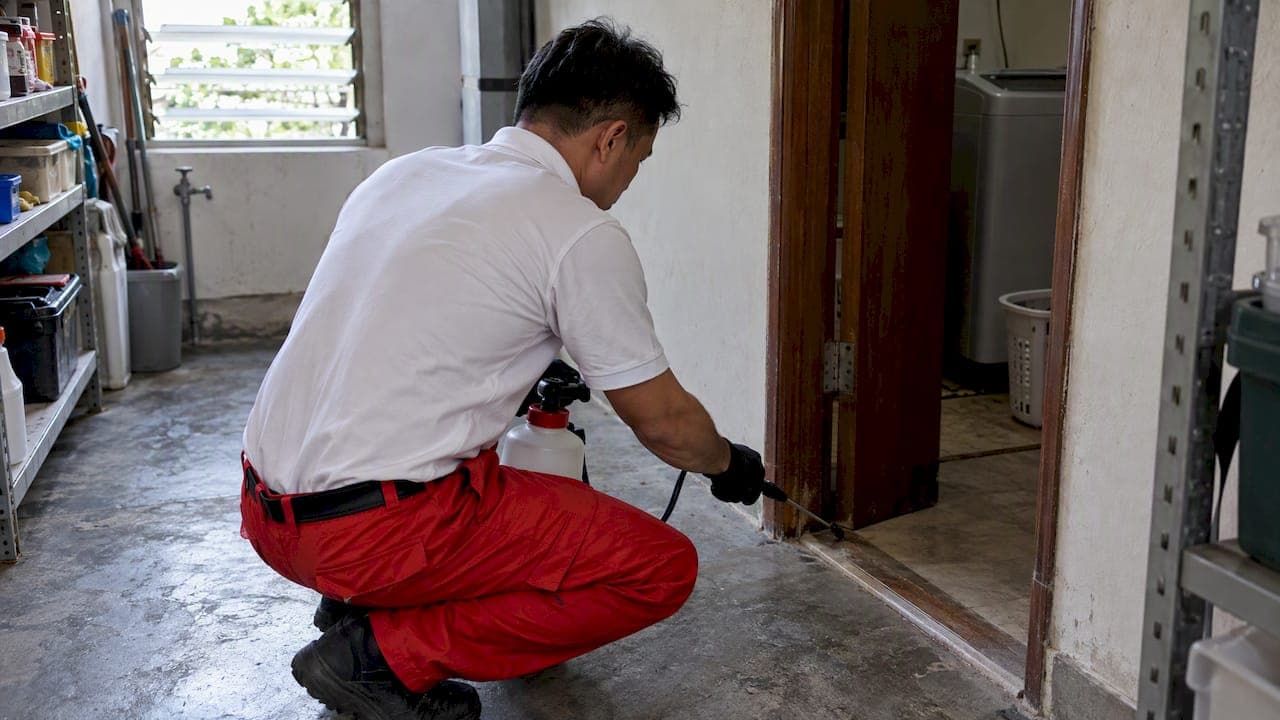
If you suspect subterranean termites, arrange a licensed inspection right away. Reliable colony elimination depends on professional baiting systems or non-repellent liquid soil barriers; DIY sprays rarely reach the queen or the broader colony. Restricted-use termiticides also require a licensed technician to apply them safely and legally.
TL;DR:
- Professional baiting systems and non-repellent liquid barriers are the most effective treatments, as DIY sprays rarely reach the colony's queen or entire nest.
- Signs of activity include mud tubes, hollow or blistered wood, discarded wings, and soft timber, especially near soil contact points and damp areas.
- Restricted-use termiticides require licensed technicians for safe application, and untreated or improperly applied chemicals pose health and legal risks.
- Full inspection reports, clear treatment plans, and scheduled monitoring are essential for a long-lasting, compliant termite control approach.
- Moisture control and avoiding wood-to-soil contact are key preventive measures to reduce the risk of subterranean termite infestation.
Table of Contents
- How to identify subterranean termite activity
- Proven treatment methods for subterranean termite colonies
- When to call a licensed professional and what regulations apply
- Practical prevention and maintenance steps for homeowners
- Inspection timelines, monitoring, and what affects cost
- Our perspective on getting termite control right
- Get a licensed inspection from our team
- FAQ
- Sources
- Useful official resources
How to identify subterranean termite activity
Subterranean termites leave distinct physical evidence long before visible structural damage appears. Mud tubes are the clearest sign: pencil-width trails of soil and saliva that run along foundations, piers, or walls, connecting the colony underground to a timber food source. Hollow-sounding or blistered timber, discarded wings near windowsills, and soft or crumbling skirting boards also point to an active infestation.
Where to look first:
- Timber-to-soil contact points, including fence posts, deck supports, and stumps
- Skirting boards, door thresholds, and window frames
- Roof voids and subfloor or crawl-space timber
- Damp areas near plumbing, gutters, or poor drainage
Photograph any mud tubes, damaged wood, or swarmers before a technician arrives, since this speeds up diagnosis. Avoid breaking open mud tubes: disturbing them scatters the termites and makes it harder for a technician to judge how active and extensive the colony really is. A mud tube guide and a pre-visit checklist can help you organize what you find before the inspection.
Proven treatment methods for subterranean termite colonies
Professional treatments differ widely in how far they reach into a colony and how long they take to work. Choosing the right one depends on the extent of the infestation, the structure involved, and how quickly you need results.
- Termite baiting systems: Bait stations placed around the structure's perimeter deliver slow-acting active ingredients that worker termites carry back to the colony, eventually affecting the queen and reproductive members. Technicians monitor stations on a set schedule, and colony elimination through baiting often takes several months to confirm.
- Non-repellent liquid soil barriers: Applied by trenching around the foundation or through trenchless injection beneath slabs, these barriers create a treated zone that termites cannot detect and avoid, so they pass through it and transfer the active ingredient to nest mates. They offer broad residual protection around a structure, though they do not actively travel to the colony the way bait does.
- Foams and localized injections: Useful for isolated galleries found inside a wall void or timber member, these spot treatments kill termites on contact but have limited reach beyond the treated area.
- Structural fumigation: Reserved for severe, widespread infestations or when other pests are present alongside termites, fumigation treats an entire structure but does not address termites living in soil outside the tented area, so it is rarely a standalone subterranean termite solution.
Consumer sprays and repellents usually kill only the termites they directly contact, leaving the colony and queen untouched. Improper use of stronger chemicals also carries health and legal risks, which is one reason restricted-use pesticides are limited to licensed applicators.
Pro Tip: For heavily infested structures, pairing an immediate liquid barrier at critical access points with a longer-term baiting program often gives you faster relief and sustained protection.
When to call a licensed professional and what regulations apply

Public health pesticides in this category fall into two classes: products registered for general use and those restricted to licensed Vector Control Technicians. Any treatment involving restricted-use termiticides requires a technician working under a registered Vector Control Operator.
A compliant service should include:
- A written inspection report documenting findings and extent of activity
- A clear vector control plan outlining the chosen method, placement, and frequency of visits
- A monitoring schedule with regular checks after treatment and periodic inspections thereafter
- Technicians following proper PPE and application safety practices
Unlicensed treatments carry both legal exposure and real safety risk, since restricted-use chemicals applied incorrectly can affect residents, pets, and groundwater. Engaging a licensed operator protects you on both counts while also giving you documentation you can rely on later.
Practical prevention and maintenance steps for homeowners
Most subterranean termite problems start with moisture and wood-to-soil contact, both of which you can control. Fixing leaking pipes, improving drainage away from the foundation, and eliminating direct wood-to-ground contact remove the conditions termites need most.
- Keep mulch, firewood, and timber off the ground and away from exterior walls
- Position planters and garden beds away from the foundation line
- Repair leaking taps, gutters, and downspouts that keep soil near the structure damp
- Install physical termite barriers during construction or major renovation work
Pro Tip: Schedule a routine inspection once a year even without visible signs, since subterranean colonies can operate underground for a long time before surfacing.
Inspection timelines, monitoring, and what affects cost
A standard inspection typically covers accessible timber, subfloor areas, and the building perimeter, with findings delivered as a written report. The timeline from there depends heavily on the method chosen.
- Baiting systems: confirming colony elimination can take several months of monitoring
- Liquid soil barriers: installation is usually a single job, though periodic checks verify the barrier remains intact
- Severity and access difficulty: a property with limited subfloor access or significant existing damage takes longer and costs more to treat
- Repairs and warranties: structural repair needs and whether a maintenance plan is bundled in both affect total cost
For a detailed breakdown of what drives pricing, our termite treatment cost guide walks through the main cost factors in more depth.
Our perspective on getting termite control right
Single-method fixes rarely hold up over time. An integrated approach, pairing source reduction with baiting or barriers and consistent monitoring, addresses both the immediate colony and the conditions that invited it. Reliable termite treatment solutions include proof of NEA registration, a written treatment plan, and a defined monitoring schedule, because those three elements are what separate a lasting solution from a temporary one.
— Bespoke-Enviro Services
Get a licensed inspection from our team
Termite inspection, baiting and soil-barrier installation, ongoing monitoring, and follow-up maintenance services are available, carried out by NEA-licensed technicians using integrated pest management methods that prioritize the safety of households and pets.

Before your visit, clear access to subfloor areas, external walls, and any spots where you noticed mud tubes or damaged timber, since this helps our technicians complete a thorough first inspection.
- Full inspection with a written report and treatment recommendation
- Baiting or liquid soil barrier installation matched to your property
- Scheduled monitoring visits with documented findings
- Maintenance plans for long-term protection
Visit our termite control and treatment page to book an inspection, or explore our general pest control services if you need a broader maintenance plan.
FAQ
What is the most effective way to control subterranean termites?
Professional baiting systems and non-repellent liquid soil barriers are the most reliable methods, since both are designed to reach the broader colony rather than just the termites you can see. A licensed technician typically chooses between them, or combines them, based on the inspection findings and the structure involved.
What is the best insecticide for getting rid of subterranean termites?
There is no single best product, since effective treatment depends on correct placement and application rather than the chemical alone. Restricted-use termiticides must be applied by a licensed Vector Control Technician, which is why DIY insecticide shopping is not a reliable path to colony elimination.
What do subterranean termites hate?
Subterranean termites avoid dry, well-ventilated conditions and areas without direct wood-to-soil contact, which is why moisture control and keeping timber off the ground are effective prevention steps. They also cannot detect non-repellent soil treatments, which is precisely what allows those barriers to work.
What is the best spray for subterranean termites?
Consumer sprays are not an effective stand-alone solution, since they typically kill only the termites they directly contact and leave the colony and queen unaffected. Lasting control requires a professional baiting system or a properly applied soil barrier installed by a licensed technician.
Sources
- Registration of control of public health pesticides and repellents against vectors — NEA
- Code of practice for vector control operator, technician and worker — NEA (PDF)
Useful official resources
- NEA pesticide registration and licensing requirements
- NEA code of practice for vector control operators