
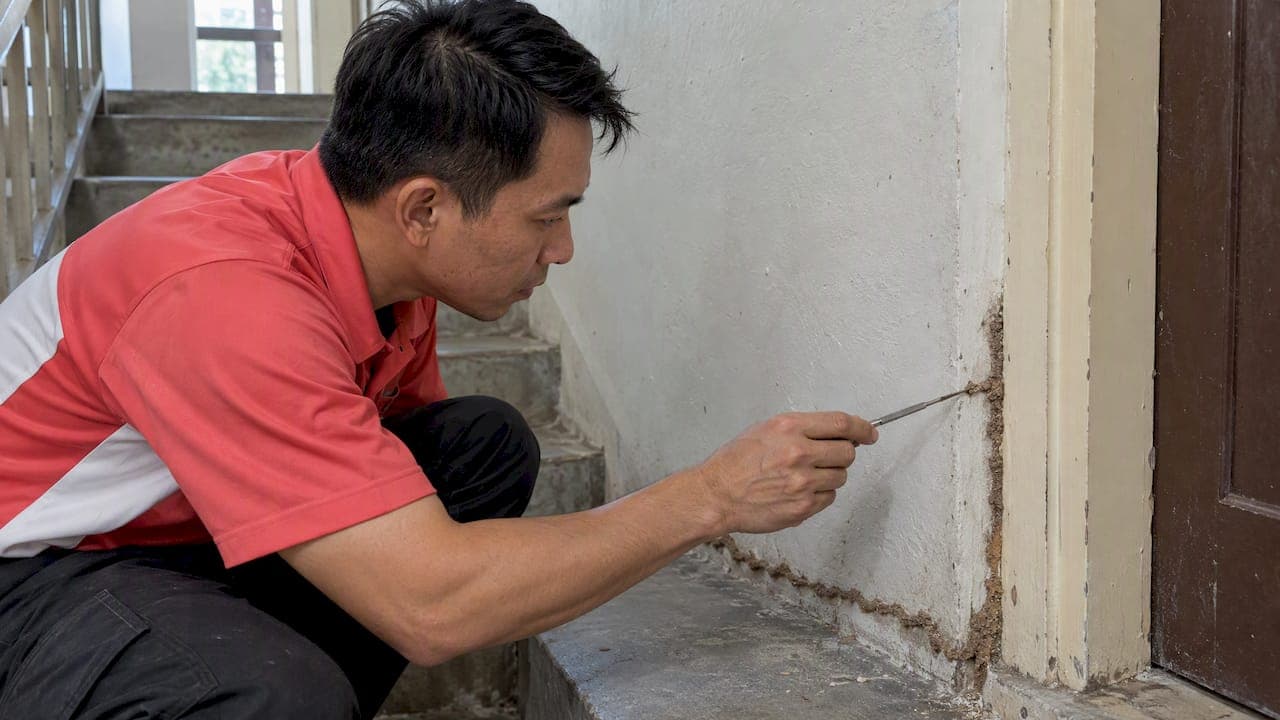
When termite activity is confined to a single, clearly identified area, localized termite treatment, whether spot termiticide, baiting, or direct wood injection, is often the faster, less disruptive choice. It works best when a licensed technician confirms the infestation hasn't spread, builds a treatment plan around that finding, and schedules monitoring visits afterward. Spread beyond one zone, and whole-structure options become the safer call.
TL;DR:
- A localized plan fits one traceable entry point or isolated timber damage; activity across rooms, multiple sides, or inaccessible structural wood calls for broader treatment.
- Baiting targets the colony when its nest is unknown but usually takes weeks to months; direct termiticide acts faster, while wood treatment suits isolated timber.
- Before treatment, verify the technician’s license and request a written plan, product safety sheet, containment details, and return visits to check whether activity has stopped.
- Soil termiticide near drains requires groundwater checks, runoff containment, and proper wastewater disposal; restricted products are for licensed operators, not homeowners.
Table of Contents
- When localized treatment works: inspection signals and decision criteria
- Common localized treatment methods: how they work and where they fall short
- What to expect during a professional localized treatment visit
- Costs, timelines, and how success is judged
- Legal, safety, and environmental rules that shape localized treatment
- How to choose a technician: verification checklist and red flags
- How we approach localized termite treatment
- Get a professional termite inspection before you choose a treatment
- FAQ
- Sources
When localized treatment works: inspection signals and decision criteria
A spot treatment only makes sense when the inspection findings support it. Before any product goes down, a technician needs to establish how far the colony has traveled and whether the damage is truly isolated.
Evidence that supports treating a single area includes:
- A single active mud tube or gallery traced to one entry point, with no secondary tubes elsewhere on the structure.
- Damage confined to one piece of timber, one wall section, or one isolated frame.
- Moisture or thermal readings that flag just one hot zone rather than a spread pattern across multiple rooms.
Several signs tell you localized treatment probably won't hold. Multiple active sites on different sides of a building, visible foraging in more than one room, or termite damage inside structural members you can't fully access all point toward a broader problem than a spot application can solve. In those cases, a whole-structure approach, including fumigation, deserves serious consideration instead of chasing activity one patch at a time.
Diagnostic tools matter here because termites are experts at staying hidden. Thermal imaging picks up moisture and activity patterns behind walls that a visual check would miss, probe testing confirms whether wood has been hollowed out, and timber boring checks the extent of internal damage. Reading termite mud tubes correctly also helps determine whether you're looking at one colony entry or several, which directly shapes how wide the treatment plan needs to be.
Common localized treatment methods: how they work and where they fall short
Several localized methods exist, and each fits a different kind of infestation.
Spot liquid and soil termiticides get applied directly to the soil around a confirmed entry point or injected into an active gallery. This approach suits subterranean termites with a traceable path from soil to structure. Because termiticide can affect groundwater, operators follow precautions around runoff and containment, a requirement under NEA guidance on water pollution, which calls for groundwater depth checks and proper containment before any soil treatment near drains or water sources.
Baiting systems work differently: stations placed around the structure deliver a slow-acting substance that foraging termites carry back to the colony, eventually suppressing or eliminating it. Baiting takes longer than a direct chemical application, often weeks to months, but it targets the whole colony rather than just the workers you can see, which makes it a strong fit for infestations where the nest location itself isn't confirmed.
Direct wood treatments, including injection, borate application, and foam delivery, work well on isolated timber damage, particularly for drywood termites that don't need soil contact. Penetration depth is a real limitation here. Thick or painted timber may need drilling before the product reaches active galleries, and some repairs follow treatment once structural integrity is confirmed.

Thermal and microwave treatments have a narrower role. They can eliminate localized drywood colonies without chemicals, but they only reach what the equipment can physically target, making them impractical for widespread or hidden infestations.
Academic reviews note that localized pesticide treatments can control drywood termites effectively, and that alternatives like heat and microwave exist as legitimate options, but their success depends heavily on accurate detection. Miss one satellite colony, and any of these methods can look like it failed when the real issue was an incomplete inspection.
Pro Tip: Ask your technician to show you exactly where they found activity before they recommend a method, not just what they plan to apply.
What to expect during a professional localized treatment visit
A compliant visit follows a predictable sequence, and knowing the steps helps you confirm your technician is doing this properly.
- Pre-visit scoping. Expect questions about when you first noticed activity, whether you've seen mud tubes or discarded wings, and which rooms or structures are affected.
- On-site inspection. A thorough check includes tracing mud tubes, mapping moisture levels, running a thermal scan, and identifying termite species where relevant, since species identification affects which method applies.
- Plan preparation. The technician drafts a site-specific vector control plan outlining the treatment strategy, containment measures such as impervious sheeting, and runoff controls, consistent with the NEA code of practice for vector control operators, which requires a defined surveillance programme and service frequency.
- Execution and documentation. Treatment is applied with safety precautions in place, and you should receive a written treatment report, the product's safety data sheet, and a monitoring schedule.
- Follow-up scheduling. The technician, not the homeowner, should propose re-inspection dates and explain what success will look like at each visit.
Skipping any of these steps is a signal worth questioning before you sign off on treatment.
Costs, timelines, and how success is judged
Price for localized treatment depends on a handful of practical factors: how much area is affected, how hard it is to access the damaged timber or soil, which method is chosen, and how many monitoring visits the plan includes. A single spot soil treatment generally costs less than a full baiting program, since baiting requires ongoing station checks over an extended period.
- Spot chemical treatments often show reduced activity relatively quickly, often within a few weeks.
- Baiting programs typically take weeks to months to suppress or eliminate a colony, since the process depends on termites foraging back to the nest.
- Direct wood injections show immediate application but require follow-up inspection to confirm no activity remains in adjacent timber.
Academic literature confirms that the effectiveness of localized pesticide and alternative treatments depends directly on how accurately the colony was detected and located before treatment began, not just on the method chosen.
Technicians typically judge success by the absence of new mud tubes, no renewed foraging at bait stations, and clean follow-up inspection reports over consecutive visits. For a detailed breakdown of what drives pricing, our termite treatment cost guide walks through typical ranges.
Legal, safety, and environmental rules that shape localized treatment
Termite treatment isn't a do-it-yourself project, and the regulatory framework explains why.
- Termite control services must be delivered by a registered Vector Control Operator and carried out by a licensed Vector Control Technician under the Control of Vectors and Pesticides Act; restricted-use pesticides are never sold to the public.
- Singapore Standard SS 721:2025 centers pest management on Integrated Pest Management, recommending diagnostic-led, targeted treatments over blanket chemical use, which directly supports localized approaches when the inspection justifies them.
- NEA guidance requires groundwater depth checks, containment measures, and proper disposal of contaminated wastewater whenever termiticide is used near soil or drainage, protecting water sources from runoff.
- NEA's pesticide registration guidebook distinguishes 'general use' from 'restricted use' products, and restricted products are reserved for licensed operators only.
These rules exist because termiticide misuse carries real environmental risk, and they're a big part of why hiring a licensed professional matters more than finding the cheapest spot treatment available.
How to choose a technician: verification checklist and red flags
Vetting a provider before treatment starts saves money and prevents compliance headaches later.
- Ask for VCO and VCT verification. A legitimate operator will readily confirm registration status.
- Request a written vector control plan. This should name the species if known, the chosen method, and the reasoning behind treating locally rather than whole-structure.
- Ask for the product's safety data sheet. You're entitled to know what's being applied in your home.
- Confirm the monitoring schedule in writing. A single visit with no follow-up plan isn't a complete treatment.
- Ask directly about wastewater handling and groundwater precautions, particularly for soil treatments near drains.
Pro Tip: A technician who skips the inspection and jumps straight to a quote is a red flag, not efficiency.
Watch for pushy sales tactics, vague answers about environmental safeguards, or any suggestion that you could apply restricted products yourself. These are signs to walk away.
How we approach localized termite treatment

We build every termite job around Integrated Pest Management principles rather than defaulting to the broadest chemical application available. Technicians use thermal imaging during inspection to confirm whether activity is genuinely confined before recommending a localized plan.
A typical job follows a clear sequence: inspection and thermal scan, a tailored plan matched to what we actually find, localized application where the evidence supports it, and scheduled monitoring visits afterward to confirm the colony hasn't returned. Eco-friendly, non-toxic methods are prioritized wherever the infestation allows it, balancing effectiveness with safety for the people and pets living in the space.
— Bespoke-Enviro Services
Get a professional termite inspection before you choose a treatment
If you've spotted mud tubes, damaged timber, or discarded wings in one area of your property, the fastest path to a real answer is a proper inspection, not a guess. We send NEA-licensed technicians equipped with thermal imaging to confirm exactly how far an infestation has spread, then build an IPM-based plan around what we find, whether that's a targeted localized treatment or a broader approach.

Request an inspection through our termite control and treatment service page, and we'll walk you through the findings, the recommended plan, and what monitoring will look like afterward.
FAQ
Can I spot treat termites myself?
No. Restricted-use termiticides in Singapore are reserved for licensed Vector Control Technicians and aren't sold to the public under NEA regulations. DIY products may suppress visible termites temporarily without reaching the colony, which often leads to recurrence.
Is it possible to spot treat termites?
Yes, when an inspection confirms the infestation is confined to one traceable entry point or isolated piece of timber. A licensed technician decides this using thermal scans, mud tube tracing, and moisture mapping before recommending a localized method over whole-structure treatment.
Do spot treatments for termites work?
They can work well, but effectiveness depends almost entirely on accurate detection of every active site. Research on localized and alternative termite control strategies notes that missed satellite colonies are the main reason spot treatments appear to fail.
How much does termite treatment cost?
Cost varies based on infestation extent, access difficulty, the method used, and how many monitoring visits the plan includes. Our termite treatment cost guide breaks down the typical price drivers in detail.
Sources
- Measures to prevent and control water pollution from the use of termiticide — NEA
- Alternative control strategies for termites — ResearchGate (1997)