
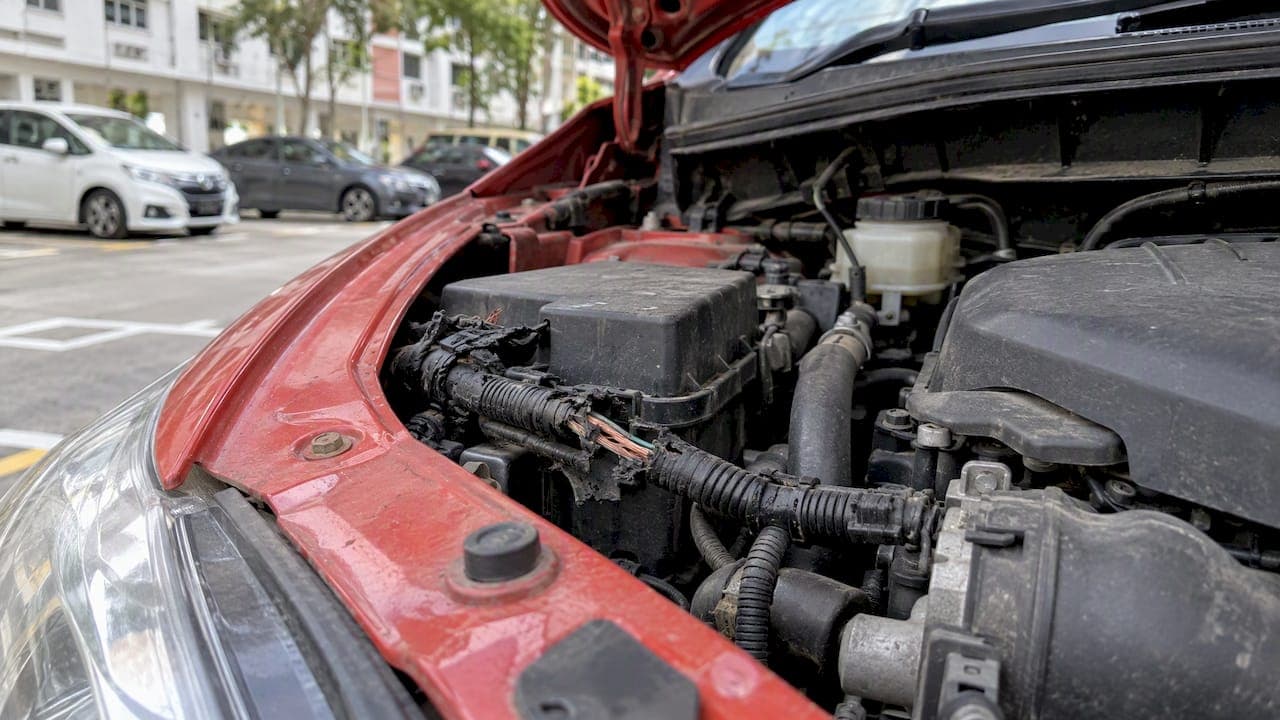
Rats chew wires because their teeth never stop growing, and cable sheaths, ceiling cabling and warm engine bays give them something to gnaw and somewhere to nest. The damage can cause power faults, dead appliances and, in the worst case, a short circuit. The fix has two parts: have a licensed professional remove the rats and close their entry points, and have a qualified person repair or replace any damaged wiring. This guide covers how to spot the problem, what to do first and how to keep wires protected for good.
TL;DR
- Rats gnaw to wear down continuously growing teeth, and they nest in warm, sheltered spaces such as switched-off engine bays and ceiling voids.
- Look for gnaw marks, droppings, rub marks, burrows and live sightings. Flickering lights, dead outlets or a car that will not start are warning signs too.
- Frayed wires and cracked cords should be repaired or replaced immediately. Do not tape over the damage and carry on.
- Cable protection helps (conduits, armouring, anti-rodent additives), but it only works when the rats are also removed and the gaps they use are sealed.
- If you see repeated signs, book a rodent control inspection rather than relying on traps alone.
Table of Contents
- Why rats chew on wires
- Where wiring is most at risk in Singapore
- Signs that rats are chewing your wires
- Why chewed wiring is a safety issue
- What to do if you suspect rats have chewed your wires
- How to protect wires from rats
- When the problem is bigger than one unit
- Our perspective: treat the rats, then the wires
- Rodent control from Bespoke Enviro
- What a professional inspection should cover
- Common mistakes that lead to repeat damage
- FAQ
- Sources
Why rats chew on wires
Rats are not eating the copper. They gnaw to manage their teeth, which grow continuously. A Singapore pest control operator quoted by The Straits Times in 2024 described this behavior in a case where rats chewed through the wiring of a car in Hougang and left it unable to start. The same report notes that warm, switched-off engine bays can attract rats looking for a place to nest.
The cable itself can also be part of the attraction. A cable manufacturer's guidance on pest attacks on cables points to plasticizers, aromatic odors, and the color and texture of the cable sheath as features that draw rodents. In other words, ordinary insulation is not a neutral material to a rat.
Three practical points follow from this:
- Gnawing is a habit, not an accident. A rat that has chewed one cable will chew again. Removing a single cable does not solve the problem.
- Nesting and gnawing go together. Where rats nest, wires nearby are at risk, because they are within reach of an animal that needs to gnaw.
- Food and shelter bring them in. Wires are damaged only after rats have settled in, so the real job is making the building unattractive to them.
Where wiring is most at risk in Singapore
We see the same locations come up again and again in homes, offices and industrial sites.
Ceiling voids and false ceilings
False ceilings hide cabling, trunking and gaps that nobody checks for months. The NEA's guidance for food establishments tells operators to check false ceilings regularly and to seal holes and gaps in ceilings, floors and walls. The guidance is written for food premises, but the logic applies to any building: if rats can reach the ceiling space, they can reach the cables in it.
Roof rats are agile climbers and a common culprit in upper levels and roof spaces. Our guide on identifying roof rats in Singapore explains how to tell them from other species, which matters because it changes where you look for entry points.
Cars and motorcycles
Car owners in housing estates and open car parks are exposed. A vehicle engine bay that has just been switched off stays warm, and a parked car gives rats shelter. Damage to harnesses can disable lights, sensors and the ignition, which is what the Hougang case showed.
Offices, server rooms and shops
Data cables, power strips behind desks and cabling under raised floors are all within easy reach of rats in a commercial unit, especially one near a food outlet or bin center. Fixed furniture and ducting can hide runs of cable from view. Well-chosen office cable management components, such as trays, sleeves and enclosed trunking, keep cabling off the floor and out of sight, which reduces how much of it a rat can reach.
Construction sites and vacant units
Sites with temporary power, stacked materials and food waste attract rats quickly, and unoccupied units give them time to settle. Temporary wiring is often exposed and unprotected.
Signs that rats are chewing your wires
There are two sets of signs: signs of rats, and signs of electrical damage. Check for both.
Signs of rats
The NEA lists the indicators it asks food operators to watch for: burrows, gnaw marks, rub marks, droppings and live sightings. Those are the three-signs-and-more answer for any building:
- Droppings along walls, on top of cabinets or near cable runs.
- Gnaw marks on cable sheaths, skirting, plastic trunking, door edges or packaging.
- Rub marks, dark greasy smears along walls and pipes where rats travel the same route.
- Burrows in soil beside walls, drains or planters.
- Live sightings, especially at dusk or at night, or noises in the ceiling.
Signs of electrical damage
These are the reasons people usually notice the problem:
- Lights that flicker or circuits that trip repeatedly.
- Outlets or appliances that stop working without explanation.
- A burning smell near sockets, a distribution board or a ceiling.
- Discolored or warm sockets.
- A vehicle that will not start, or sensors and lights that fail suddenly.
None of these proves rats are the cause, and an electrician can find other faults. But when any of them appears together with signs of rodents, assume the wiring has been compromised until a qualified person confirms it has not.
Why chewed wiring is a safety issue
A chewed cable can expose the conductor inside. That raises the risk of a short circuit, and short circuits can start fires. In its 2024 fire statistics and case studies, the Singapore Civil Defence Force (SCDF) lists damaged wiring or components leading to short circuits among the causes of electrical fires, and advises the public to switch off power outlets when not in use.
The SCDF's earlier fire analysis reports give a direct instruction: frayed wires or cracked cords should be replaced or repaired immediately. That applies whether the cause is age, wear or a rat.
The damage is often hidden. Cabling in ceilings, walls and conduits can be gnawed with nothing visible from below. This is why we treat the discovery of rodents near wiring as a reason to inspect, not just to trap.
What to do if you suspect rats have chewed your wires
Follow these steps in order.
- Stay away from damaged cables. If you see exposed conductors, a burning smell or scorch marks, do not touch the area. Switch off the affected circuit at the distribution board if it is safe to do so, and unplug appliances that are not affected.
- Call a qualified person for the wiring. Frayed or cracked cords and cables should be repaired or replaced immediately, as the SCDF advises. Do not use insulating tape as a permanent fix. For fixed wiring in the building, engage a licensed electrical worker.
- Document what you find. Photograph gnaw marks, droppings and damaged cables. This helps your pest control provider locate entry routes and helps with any insurance or management follow-up.
- Book a rodent inspection. Repairing the wire without removing the rats means the new cable gets chewed too. A proper inspection finds the entry points, the runways and the nesting areas.
- Do not rely on poison alone in enclosed spaces. Rats that die inside ceilings or walls cause odor and attract flies. A professional program uses monitoring, trapping and proofing together.
- Fix the cause. Seal gaps, secure waste and remove food sources before the rats come back.
How to protect wires from rats
Protection works best in layers: stop rats entering, stop them settling, then make the cables themselves harder to damage.

Layer 1: Seal the building
The NEA recommends sealing holes and gaps in ceilings, floors and walls with metal plates or cement. Soft materials like foam or paper are not a barrier to a gnawing animal. Pay attention to:
- Gaps where pipes, trunking and cables pass through walls or slabs.
- Gaps around air-conditioning conduits and refrigerant pipes.
- Gaps beneath doors and at the edges of roller shutters.
- Openings in ceiling boards and access panels.
- Drains and covers near the building edge.
Layer 2: Remove food and shelter
Rats stay where they can eat. The same NEA guidance points to proper refuse management: waste in covered, rat-proof containers, and cleanliness in areas such as drains and under bulky appliances. At home, that means closing bin lids, not leaving pet food out overnight and clearing clutter in store rooms. In a business, it means scheduled waste removal and no stacked cardboard against walls.
Layer 3: Protect the cables
Physical protection reduces damage when a rat does get close. The cable guidance from Keystone Cable says rats can chew through cable insulation, and lists conduits and armouring tapes as suitable protection, along with cables treated with anti-rodent additives such as capsaicin. Where cables may face pest attacks, it recommends considering physical barriers or additives.
In practice, this gives you a short list of options:
| Protection | Where it suits | What to keep in mind |
|---|---|---|
| Conduit | Fixed wiring in ceilings, walls and risers | Joints and ends must be closed, or rats enter at the open end |
| Armouring tape or armoured cable | Exposed runs, plant rooms, temporary site wiring | Needs to be fitted over the full exposed length |
| Anti-rodent additive cables | New installations or replacements | Chosen at specification stage with your electrician |
| Enclosed trunking and cable trays | Offices, shops, server rooms | Keeps cabling off the floor and out of sight |
If you are replacing damaged cabling, ask your electrician about these options at the same time. Doing it once is cheaper than doing it after the second round of damage.
For vehicles
Keep the area around your parking space clean of food waste. Check the engine bay if you notice droppings under the car or if the vehicle has stood unused for a while. If a harness has been chewed, have the vehicle inspected by a workshop, and ask a pest control provider to check the parking area if the problem looks like it comes from the estate.
When the problem is bigger than one unit
If you live in a block or estate where rats are active, sealing your own gaps helps but may not be enough. Pest control operators quoted by The Straits Times in the Hougang case observed that an estate-wide rat issue may need coordinated, professional action, even though individual efforts to seal gaps and manage waste are useful. If your neighbors see rats too, raise it with your town council or management so that the response covers the whole area.
For managed properties, responsibilities matter. Our guide for MCST pest check obligations explains what management bodies are expected to do, and our overview of pest control schedules in Singapore shows how often inspections typically run for different site types.
Food businesses carry added obligations. The NEA advises operators to engage licensed pest control operators and to run an effective pest control program, including routine inspections. If you run a kitchen, our kitchen pest control checklist and our guide to restaurant pest control requirements set out what to have in place.
Our perspective: treat the rats, then the wires
We have worked on rodent problems in Singapore for over 30 years, and the pattern is consistent. Customers call after the damage appears: a tripped circuit, a dead air-conditioner, a failed server. By then the rats have usually been active for some time.
Our view is simple. Wire damage is a symptom, and the treatment has to address the cause. That is why our approach follows integrated pest management (IPM). We inspect to find where rats enter, travel and nest. We remove the food and shelter that keep them there. We proof the entry points, and we use non-toxic, environmentally safe methods that put people and pets first. We do not treat a rodent problem as a single visit with a single product.

We also encourage customers to separate the two jobs clearly. The pest control provider deals with the rats and the building envelope. A qualified electrician deals with the wiring. Each should know what the other has found. Where we spot damaged cabling during an inspection, we tell you, because a repair delayed is a risk carried.
Our technicians are NEA-licensed, we are available 24/7, and we use tools such as thermal imaging during inspections to help us understand what is happening in areas that are hard to see.
— Bespoke-Enviro Services
Rodent control from Bespoke Enviro
If you have found gnaw marks, droppings or damaged cables, our rodent and rat control service is built for this situation. We inspect homes, offices, industrial premises and construction sites, identify how the rats are getting in, and put a plan in place that deals with the rats and the conditions that attract them.

If rodents are one of several issues on your premises, our general pest control service covers ongoing maintenance across common pests. Contact us through our website to arrange an inspection.
What a professional inspection should cover
When you hire a provider, expect more than bait stations. A good inspection looks at:
- Entry points: gaps at pipes, ducts, doors, vents and roof edges.
- Travel routes: rub marks, droppings and gnawing along walls, trunking and ceilings.
- Nesting areas: ceiling voids, store rooms, behind appliances, engine bays and landscaped areas.
- Attractants: waste handling, food storage, stacked materials and blocked drains.
- Cable risk: where wiring runs through areas of activity, so that your electrician knows where to check.
After the inspection, you should receive a clear plan: what will be treated, what needs proofing, what you or your management must change, and when the follow-up visits will happen. Ask for the follow-ups to be scheduled. Rats rarely disappear after a single visit, and monitoring shows whether the proofing is holding.
Common mistakes that lead to repeat damage
- Replacing the cable and nothing else. The new cable is just as appealing as the old one.
- Sealing with soft materials. Rats gnaw through foam, paper and thin plastic. Use metal plates or cement, as the NEA recommends.
- Ignoring the ceiling. The ceiling void is a common route and nesting zone, and it is rarely inspected without a reason.
- Leaving waste uncovered. A reliable food source keeps rats close to your wiring.
- Waiting for a second failure. One chewed cable usually means more are damaged elsewhere.
- Skipping follow-up. Proofing can fail over time, and monitoring catches it early.
FAQ
What are three signs that you have a rat infestation?
The clearest are droppings, gnaw marks and rub marks along walls. Burrows outside and live sightings are further signs the NEA asks operators to look for. Noises in the ceiling at night often point to the same problem.
How do I stop rats chewing car wires?
Keep your parking area free of food waste and check the engine bay if you see droppings or if the car has been left unused. Rats are drawn to warm, switched-off engine bays where they can nest and gnaw. If you find damage, have a workshop repair the harness and ask a pest control provider to deal with the source.
What material will rats not chew through?
No material is completely safe, since rats can chew through ordinary cable insulation. Metal plates and cement are the materials the NEA recommends for sealing gaps, and conduits or armouring tapes are the usual protection for cables. Anti-rodent additives such as capsaicin in the cable sheath can add deterrence, but they work best alongside proofing.
Is it safe to keep using a cable that has been chewed?
No. Frayed wires and cracked cords should be replaced or repaired immediately, according to the SCDF. Stop using the appliance, switch off the circuit if it is safe to do so, and call a qualified electrician.
When should I call a pest control company instead of dealing with rats myself?
Call when you see repeated signs, when rats are in ceilings or walls, when cables have been damaged, or when neighbors report rats as well. Sealing gaps and managing waste are useful, but an infestation inside a structure needs inspection, proofing and monitoring. Businesses that handle food should use a licensed pest control operator.
Sources
- NEA: Precautionary measures for rat control in food establishments
- The Straits Times: Rats chew through wiring of Hougang resident's car
- Keystone Cable: How to prevent pest attacks on cables
- SCDF: Fire analysis report
- SCDF: Annual fire statistics 2024 and case studies