
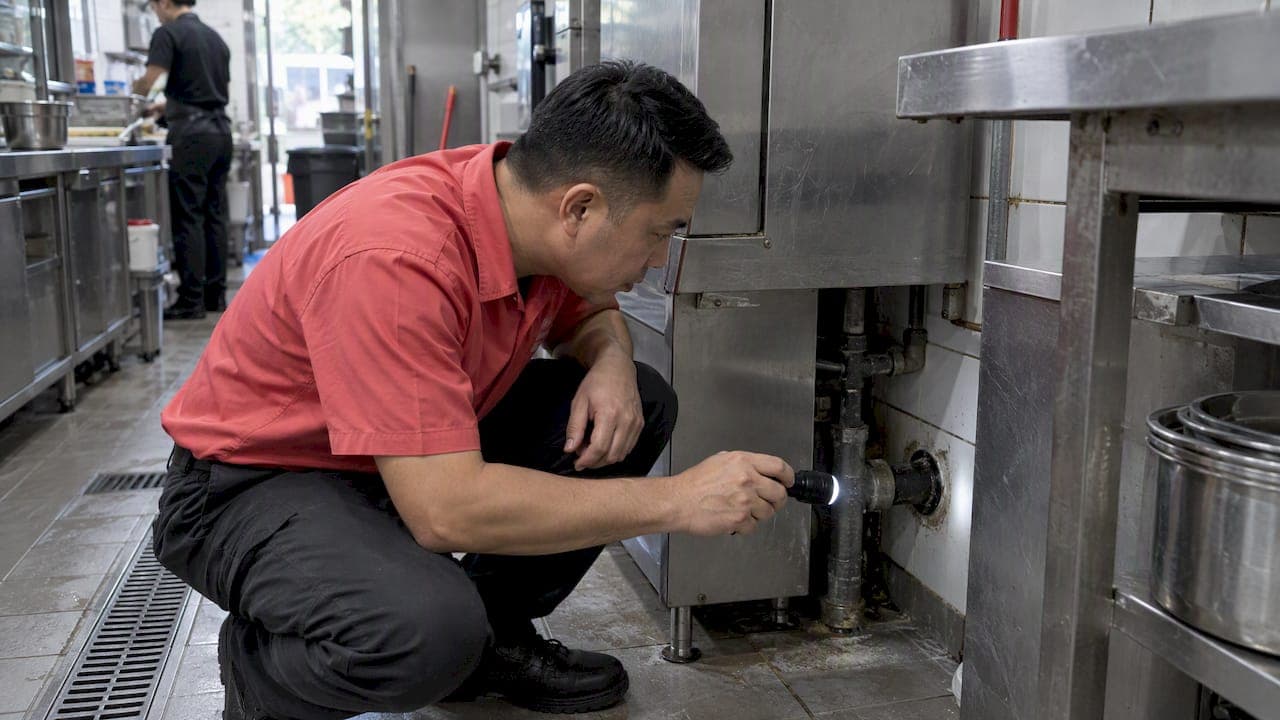
Every kitchen pest control checklist works on three pillars: exclusion, sanitation, and monitoring, and all three need daily attention, not occasional effort. Regulatory bodies like NEA and SFA expect regular checks and documented records to prove a kitchen is managing risk, not reacting to it. We built the template below so managers can put these pillars to work immediately.
TL;DR:
- Regular inspection logs should record pest activity, trap counts, corrective actions, and responsible staff to meet NEA audit requirements.
- Sealing entry points under six millimeters around pipes, doors, and vents is the most effective long-term strategy for pest exclusion.
- Daily sanitation tasks, combined with weekly trap checks and monthly deep cleans, significantly reduce the risk of infestation recurrence.
- Pesticides must be handled only by licensed technicians, stored securely away from food areas, and used only as a last resort after mechanical prevention methods.
- Professional pest control services are essential for maintaining compliance through ongoing inspections, trap monitoring, sealing, and comprehensive surveys at least every six months.
Table of Contents
- Daily, weekly, and monthly kitchen pest control tasks
- How to run a kitchen pest inspection step by step
- Sealing entry points and fixing structural weak spots
- Setting up traps and monitors that actually catch problems early
- Safe pesticide use and storage rules for food premises
- Assigning staff roles and keeping audit-ready records
- Putting the checklist template to work in your kitchen
- Why IPM-aligned processes cut repeat infestations
- Closing gaps the right way: exclusion fundamentals
- What actually moves the needle on repeat infestations
- Getting professional support to run this checklist
- FAQ
- Sources
Daily, weekly, and monthly kitchen pest control tasks
Pest prevention fails when tasks are vague or ownership is unclear. Breaking the work into daily, weekly, and monthly blocks gives every shift a defined job and gives managers a way to verify it got done.
Daily tasks (closing shift supervisor signs off):
- Clear food debris from prep surfaces, floors, and under equipment before closing.
- Empty and cover all refuse bins; wipe down bin exteriors and surrounding floor.
- Clean floor drains and gullies to remove grease and organic buildup.
- Wipe down floors under cooking lines and refrigeration units.
- Walk known hotspots (behind the dish pit, under the three-compartment sink, near the back door) for droppings or activity.
Weekly tasks (shift leader or hygiene officer):
- Inspect and clean glue traps and insect light traps, replacing glue boards that are full or dusty.
- Check door sweeps and window screens for gaps or tears.
- Service exhaust hood filters and check for grease accumulation that attracts pests.
- Review delivery inspection routines to confirm incoming stock is checked for signs of infestation before it enters storage.
Monthly tasks (duty manager):
- Deep clean hard-to-reach areas: behind fixed equipment, inside dry storage shelving, ceiling voids above cooking lines.
- Audit storage heights to confirm food is kept at least 15 cm above the floor, as SFA guidance recommends.
- Review trap count trends to spot emerging hotspots before they become infestations.
- Schedule preventive maintenance for door seals, screens, and fabric repairs flagged during inspections.
Pro Tip: Attach the daily checklist to the closing manager's shift handover so pest tasks never get skipped during a busy night.
How to run a kitchen pest inspection step by step
A consistent inspection method turns pest control from guesswork into an auditable process. Before walking the floor, pull the previous inspection log, trap map, and any open corrective actions so you can verify they were closed.
Pre-inspection prep:
- Gather a flashlight, camera, inspection mirror, and a screwdriver for opening panels.
- Put on appropriate PPE if inspecting near chemical storage or waste areas.
- Review the prior log for recurring problem spots.
Exterior checks:
- Refuse area condition, bin lids, and surrounding ground for spillage.
- Vegetation and drains near the building for harborage or standing water.
- Delivery bays and dumpster placement relative to doors.
Interior checks:
- Dry stores, chillers, and cooking lines for droppings, gnaw marks, or insect activity.
- Under fixed equipment, ceiling and wall junctions, grease traps, and floor drains.
For each finding, record the trap ID or location, pest count, a photo, the timestamp, the corrective action taken, and the person responsible. This level of detail is what NEA's Code of Practice for Environmental Control Coordinators expects premises to maintain for audit purposes.
Sealing entry points and fixing structural weak spots
Pests get into kitchens through gaps most staff walk past every day. Common entry points include gaps around pipe penetrations, floor-wall junctions, duct openings, and damaged seals around doors and windows. Rodents can squeeze through openings smaller than you would expect, which is why the NEA Code of Practice calls for closing gaps under 6 millimeters as part of an effective environmental control program.
Fixes worth prioritizing:
- Install door sweeps and self-closing mechanisms on all exterior doors.
- Seal gaps around pipes, conduits, and duct penetrations with appropriate fire-rated or pest-proof sealant.
- Fit fine mesh screens on vents and exhaust openings.
- Repair chipped tiles and coved skirting where walls meet floors, since cracks there harbor insects and moisture.
Pro Tip: Walk the kitchen perimeter with a flashlight at night, when gaps around doors and vents are easiest to spot against exterior light.
Setting up traps and monitors that actually catch problems early
Monitoring only works when devices are placed where pests actually travel, not just where they're convenient to check. Glue boards, bait stations, and insect light traps each suit different pests and locations, so map fixed positions for each device and keep that map on file.
- Place glue boards along walls and behind equipment where rodents and crawling insects travel.
- Position insect light traps away from food prep lines and entry doors, never directly above open food.
- Check and record trap activity daily in high-risk zones, weekly elsewhere.
NEA's registered vector control framework ties this kind of consistent monitoring to lower infestation risk over time, since rising trap counts in the same spot flag a problem before it spreads. Rotate monitor types periodically and audit placement quarterly, using count patterns to decide where sealing or targeted treatment is needed most.
Safe pesticide use and storage rules for food premises
Pesticides are a last resort, not a first response. WHO guidance on integrated pest management recommends prevention and mechanical methods before any chemical treatment, with pesticides applied only when necessary and handled by trained personnel.
Storage and application rules worth building into your SOPs:
- Keep pesticides in a locked cabinet, clearly labelled, with safety data sheets on hand.
- Never store pesticides in or near food storage rooms.
- Schedule treatments outside food handling hours and document every application, including product, location, and technician.
Pro Tip: Keep a single binder or shared folder with every pesticide application record, so it's ready the moment an inspector asks.
Assigning staff roles and keeping audit-ready records
Pest control fails when nobody owns it clearly. A simple role matrix fixes that: line staff handle daily checks, the duty manager reviews weekly tasks, and a designated hygiene officer manages the contract with your pest control provider and signs off on corrective actions.
Training should cover:
- Identifying common kitchen pests and their signs.
- Checking and resetting traps correctly.
- Recording findings and escalating active infestations immediately.
Keep these records on file for inspections: the pest management plan, inspection and trap logs, vector control operator (VCO) reports, and evidence that corrective actions were closed. Our guide to proving pest control compliance covers what documentation SFA inspectors typically request.
Putting the checklist template to work in your kitchen
A usable template groups tasks by frequency, includes a trap-log table with location and count columns, a corrective-action field, and signature lines for accountability.
- Use a printable PDF for wall-mounted daily checklists and a spreadsheet for ongoing trap logs.
- Assign an owner to each frequency block and set calendar reminders for weekly and monthly tasks.
- Link the template to your existing cleaning SOPs so pest checks happen alongside routine sanitation, not as a separate chore.
Why IPM-aligned processes cut repeat infestations
SS 721:2025 frames integrated pest management as prevention first, multiple control methods, and reduced chemical reliance, which is exactly what SFA and NEA inspections look for. Daily refuse control and sealing around exhaust systems matter more than most managers expect, since these are common re-infestation drivers even in otherwise clean kitchens. Engage an NEA-registered vector control operator for the six-month comprehensive survey that the code of practice requires, and more often if your site has an infestation history.

Closing gaps the right way: exclusion fundamentals
Exclusion is the cheapest, most permanent pest control measure a kitchen can take, because it removes the opportunity for pests to enter in the first place. The baseline standard from NEA's code of practice calls for gaps under 6 millimeters to prevent rodent passage, a tolerance worth checking around every pipe, conduit, and door frame in the kitchen.
Door sweeps and self-closing doors stop pests from walking in during busy service when doors are propped open for airflow. Screens on windows and vents block flying insects without restricting ventilation. Damaged seals around delivery doors are a frequent miss: a door that looks fine when closed can still leave a gap large enough for rodents once hinges wear down.
Floor-wall junctions deserve particular attention. SFA's facility guidance recommends coved skirting and sealed junctions precisely because flat seams trap moisture and debris that draw pests. Treat exclusion as ongoing maintenance, not a one-time fix: seals degrade, screens tear, and gaps reopen after equipment moves or renovations.

What actually moves the needle on repeat infestations
The biggest reduction in repeat infestations rarely comes from more chemical treatment. It comes from controlling refuse and delivery areas, sealing the entry points staff walk past daily, and folding trap checks into shift handovers so nobody has to remember to do them separately.
Track success with hard numbers: trap counts over time, how quickly corrective actions get closed, and whether VCO reports show declining activity. A kitchen with flat or rising trap counts despite regular treatment has a sealing problem, not a chemical one.
— Bespoke-Enviro Services
Getting professional support to run this checklist
Running this checklist well takes consistency that's hard to maintain alongside a busy kitchen schedule, which is where an engaged pest control dispatch & field service software partner earns its keep. Our general pest control service covers the ongoing work: monthly inspections, trap monitoring, corrective sealing, and a six-month comprehensive survey with full reporting for your records.

If rodents are your main concern, our rodent control service focuses on proofing and targeted treatment. For termite concerns uncovered during structural checks, our termite control service addresses wood-boring pests before they spread. To get the checklist template or arrange an on-site survey, reach out through our general pest control page.
FAQ
What are the three pillars of kitchen pest control?
Exclusion, sanitation, and monitoring form the foundation of any effective kitchen pest control program. Exclusion seals entry points, sanitation removes food and water sources pests need, and monitoring catches activity early through traps and regular inspection.
How often should a commercial kitchen be inspected for pests?
Daily visual checks and weekly trap reviews should happen in-house, with a comprehensive survey by an NEA-registered vector control operator at least every six months. Kitchens with a history of infestation should schedule professional surveys more frequently than that minimum.
How high above the floor should food be stored?
SFA guidance recommends storing food at least 15 centimeters above the floor to prevent rodent and cockroach access. This applies to dry storage, chillers, and any shelving in food handling areas.
Who is allowed to apply pesticides in a food premise?
Restricted-use pesticides and baits should only be handled by licensed, NEA-registered technicians, since misuse risks contamination and regulatory penalties. Prevention-first methods like sealing and sanitation should always come before chemical treatment in a food kitchen.
What records do inspectors expect to see for pest control?
Inspectors typically look for a signed pest management plan, dated inspection and trap logs with photos, and a corrective-action tracker showing when issues were resolved. Keeping VCO survey reports alongside these logs demonstrates an active, documented pest management program.
Sources
- Code of Practice for Environmental Control Coordinators (NEA)
- Guidelines on prevention of rats and cockroach infestations at food establishments (SFA)
- WHO guidance on pesticide management and IPM