
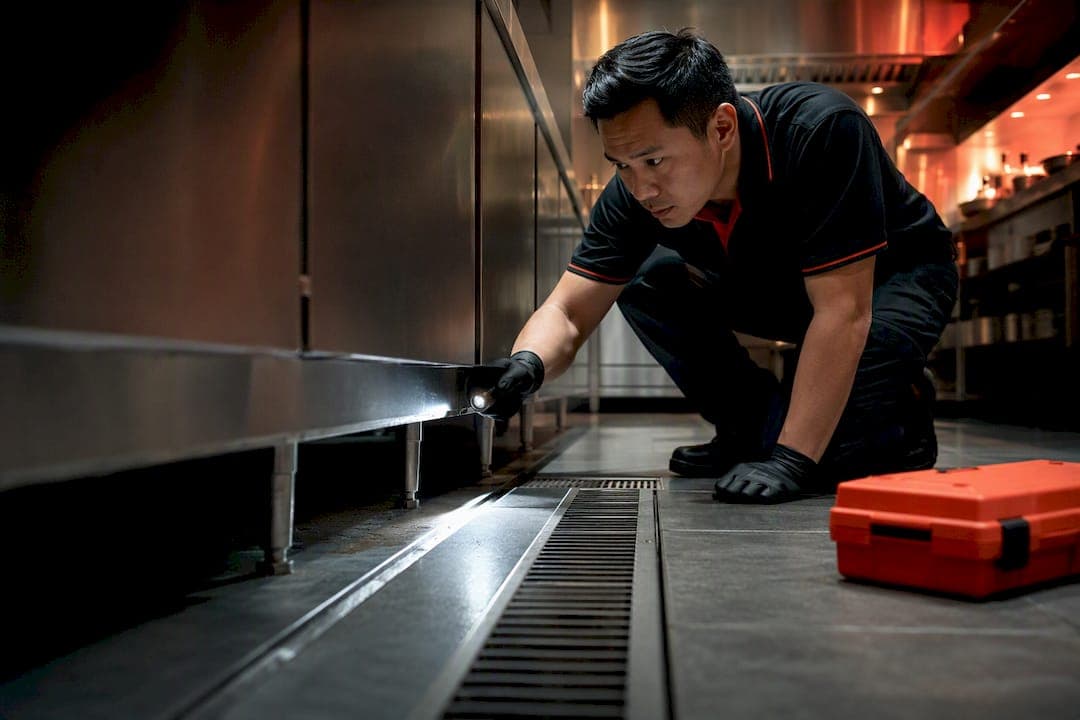
SFA-licensed food establishments must operate an effective pest management program as a condition of keeping their license, and any professional treatment involving restricted-use pesticides must come from an NEA-registered Vector Control Operator. Skipping either requirement carries real consequences: fines, license suspension, or revocation. The baseline is simple to state, harder to maintain day to day, and it starts with what you document, not just what you spray.
TL;DR:
- Regular documentation like signed service reports, staff training logs, and maintenance certificates are essential to demonstrate ongoing pest prevention efforts.
- Treatment from NEA-registered Vector Control Operators with licensed technicians is mandatory, and proof of personnel credentials must be verified before work begins.
- Weekly operational controls include cleaning drains, sealing entry points, and properly storing and handling waste to prevent pests, with physical proofing prioritized over chemical controls.
- Inspection success depends on proactive, daily pest management routines, timely response to sightings, and comprehensive structural proofing to eliminate entry points.
- Higher-risk premises may require more frequent visits, such as bi-weekly, and active sightings should trigger immediate service calls rather than waiting for a scheduled visit.
Table of Contents
- Restaurant Pest Control Requirements Singapore: The Quick Compliance Checklist
- What Laws Require Pest Control at Singapore Restaurants?
- How Do You Verify a Pest Control Company Meets NEA Requirements?
- Operational Controls SFA Expects Restaurants to Maintain
- What Documents Do Inspectors Actually Check?
- Building a Pest Control Program: Schedule and Contract Checklist
- How Bespoke-Enviro Helps Restaurants Meet SFA and NEA Standards
- How Often Should Restaurants Get Pest Control Treatment?
- Which Pests Pose the Biggest Risk in Singapore Kitchens?
- What Pest Control Training Do Restaurant Staff Need?
- How Does Waste and Drainage Management Prevent Pest Infestations?
- Pest Control Is a Program, Not a Service Call
- Get a Compliant Pest Control Program in Place
- Where to Verify These Rules Yourself
- Sources
- FAQ
Restaurant Pest Control Requirements Singapore: The Quick Compliance Checklist
Before you call anyone, walk your own kitchen with an inspector's eyes. Most enforcement actions trace back to a handful of overlooked basics, not exotic infestations.
Run through this list weekly, at minimum:
- Clean drains, grease traps, and under-range areas at the end of every shift, not just when they look dirty.
- Keep refuse in covered bins, bag food waste before disposal, and remove it at least daily.
- Store dry goods and perishables in sealed containers, lifted 15 to 30 cm off the floor per SFA's licensed premises guidelines.
- Seal wall and floor gaps, fit door screens, and confirm self-closing doors and floor traps actually close and seal.
- Keep three documents accessible on site: your current VCO's NEA registration, signed service reports, and exhaust maintenance certificates.
Pro Tip: Photograph your storage racks and refuse area monthly. If an inspector questions your practices, a dated photo record backs up your service reports faster than trying to explain from memory.
One statistic worth building your routine around: NEA guidance points to keeping food storage at that 15 to 30 cm clearance and refuse bins covered and emptied daily as baseline expectations for licensed food retail premises, not aspirational targets.
What Laws Require Pest Control at Singapore Restaurants?
The legal foundation sits in the Sale of Food Act and the Environmental Public Health (Food Hygiene) Regulations, which SFA translates into specific licensing conditions for every food retail premise. Under those conditions, licensees are responsible for preventing pest harbourage, breeding, and entry, not just reacting once pests appear.
That distinction matters for how SFA assesses you. An establishment that gets an occasional pest sighting but can show ongoing preventive work is treated differently from one with no program at all. SFA's own guidelines for licensed food retail premises state plainly that failure to keep premises free of pest activity can lead to fines, license suspension, or outright revocation.
Enforcement typically escalates in stages: a warning or fine for a first infraction, suspension for repeated or serious lapses, and revocation reserved for establishments that show no evidence of corrective action. The pattern inspectors look for isn't perfection. It's a demonstrated, ongoing effort to control the problem.
How Do You Verify a Pest Control Company Meets NEA Requirements?
Only NEA-registered Vector Control Operators (VCOs) should touch your premises for professional treatments, and the people they send must carry individual credentials on top of the company's registration.
Here's what those credentials mean in practice:
- VCO is the registered company itself, the entity NEA holds accountable for the work performed.
- VCT (Vector Control Technician) and VCW (Vector Control Worker) are the individual staff, licensed or certified to actually apply treatments on your premises.
- Technicians should be able to produce a license card or certificate on request, according to NEA's VCO registration framework.
- Products labeled "For Restricted Use" under the Control of Vectors and Pesticides Act can only be applied by licensed personnel, never left with untrained staff.
Pro Tip: Ask to see the technician's VCT or VCW card before they start work, not after. A legitimate operator expects this question and will have the card ready without hesitation.
Before signing anything, request a sample recent service report showing the technician's name and license number. If a company hesitates to share one, that's a signal worth taking seriously.
Operational Controls SFA Expects Restaurants to Maintain
Regulations describe outcomes; day-to-day operations are where compliance actually gets built or lost. SFA guidance breaks this into housekeeping, storage, refuse handling, structural proofing, and exhaust maintenance, each with specific expectations.
- Daily cleaning discipline. Clean drains, floor traps, and under-equipment areas every day, and clean spills immediately rather than at closing. Pests need moisture and food residue to establish themselves, and daily cleaning removes both.
- Storage that keeps food off pest routes. Store ingredients in sealed, pest-proof containers, lifted 15 to 30 cm off the floor, according to SFA's premises guidelines. Metal cabinets or a dedicated, rodent-proofed dry store work better than open shelving against a wall.
- Refuse handled like a liability, not an afterthought. Bins stay covered, get emptied at least daily, and food waste gets bagged and tied before it reaches the bin. An uncovered bin behind a restaurant is one of the most common rodent attractants inspectors cite.
- Structural proofing that closes real entry points. Seal wall and floor gaps, install mesh over vents, cover floor traps and downpipes, and fit self-closing doors or air curtains at entrances that stay open during service.
- Kitchen exhaust maintenance on a fixed schedule. Degrease hoods and ducts at least once every 12 months, in line with SCDF Fire Code guidance, and keep the maintenance record. Grease buildup isn't just a fire risk; it's also a food source that draws roaches directly into your extraction system.
SFA guidance also favors physical controls over chemical ones wherever contamination risk exists, reserving pesticide treatments for cases where trained personnel can apply them safely, as outlined in the same licensing framework.
What Documents Do Inspectors Actually Check?
Inspectors treat documentation as the strongest available proof that your pest program is real, not just claimed. NEA guidance frames it directly: a signed service report and consistent monitoring records carry more weight than a clean-looking kitchen on the day of inspection, since absence of documentation is a frequent trigger for enforcement action.
A proper VCO service report should include the date of service, findings from the visit, trap and bait station locations, any corrective actions taken, and the technician's name and license number. Beyond that single report, keep these on hand:
- Staff training logs covering hygiene and pest-awareness topics.
- Maintenance certificates for kitchen exhaust degreasing.
- A pest-sighting log your team updates whenever something is spotted between VCO visits.
- Stock rotation and purchase records that show ingredients aren't sitting long enough to attract pests.
Retain at least 12 months of signed service reports on site, stored where any staff member can pull them quickly during a walk-through, not filed away in someone's inbox. Our related guide on proving a 12 month pest contract with monthly reports breaks down exactly what a compliant report should contain.
Building a Pest Control Program: Schedule and Contract Checklist
A program only works when responsibility, frequency, and escalation are all defined ahead of time, not improvised after a sighting.
- Set a daily internal check. Staff should scan storage areas, drains, and refuse points every shift, using a checklist similar to the one in our restaurant rodent control daily task guide.
- Match VCO visit frequency to your risk profile. Monthly visits suit most kitchens; higher-risk premises near markets, drains, or construction sites often need visits every two weeks.
- Define emergency response terms upfront. Your contract should specify how fast a VCO responds to an active sighting, ideally within 24 to 48 hours.
- Prioritize proofing before chemicals. Seal entry points and fix storage issues first; escalate to licensed chemical treatment only when physical controls aren't enough.
- Confirm contract essentials before signing: scope of work, reporting frequency, emergency response terms, proof of NEA registration, staff license verification, and insurance coverage.
Pro Tip: Assign one staff member as the pest-control point of contact. When responsibility is shared among everyone, it usually falls to no one, and that's exactly when small issues turn into inspection failures.
How Bespoke-Enviro Helps Restaurants Meet SFA and NEA Standards
A leading pest control company in Singapore operates with NEA licensed technicians using integrated pest management methods that limit chemical exposure in active kitchens. We schedule visits around your risk profile, provide signed service reports with technician names and license details, and flag proofing or maintenance gaps before they become inspection findings.
Before engaging any provider, ask to see their NEA registration and a sample recent service report. It takes five minutes and tells you whether the operator you're hiring will actually protect your license.
How Often Should Restaurants Get Pest Control Treatment?
Treatment frequency should follow your kitchen's risk level, not a flat industry default. A hawker stall backing onto a drain or refuse area faces different pressure than a mall unit with controlled loading access.
Most licensed food premises in Singapore work on a monthly VCO visit schedule, covering rodent bait stations, cockroach monitoring, and general inspection of entry points. Higher-risk locations, those near construction sites, wet markets, or with a documented history of infestation, often move to fortnightly visits until the underlying issue is resolved.
Treatment type varies by target pest and location within the kitchen. Cockroach and ant control typically relies on gel baiting and monitoring stations placed along walls and under equipment, since SFA guidance favors physical and low-contamination-risk methods where pesticide use presents a contamination risk. Rodent control combines exterior bait stations with interior snap traps or glue boards, since bait alone rarely resolves an active rodent presence indoors. Fumigation, reserved for severe or established infestations, uses restricted-use chemicals that only licensed technicians may apply.
Beyond scheduled visits, any active sighting should trigger an unscheduled callout rather than waiting for the next routine appointment. A single mouse sighting in a dry store, left until the monthly visit, can become a breeding population within weeks. Building that emergency response clause into your VCO contract, discussed earlier, is what keeps a minor sighting from turning into an enforcement conversation.
Which Pests Pose the Biggest Risk in Singapore Kitchens?
Four pest categories account for most restaurant compliance issues in Singapore, and each carries a distinct risk profile worth understanding rather than treating as interchangeable "pest problems."
German cockroaches thrive in Singapore's warm, humid kitchens and hide in cracks near heat sources, cardboard boxes, and equipment motors. They contaminate surfaces and food contact areas through fecal matter and shed skin, and a visible infestation during service is one of the fastest ways to lose a customer's trust permanently.
Rats and mice are drawn by uncovered refuse, spilled dry goods, and gaps around drainage pipes or door thresholds. Beyond contaminating stock, rodents gnaw through wiring and insulation, creating fire risks that compound the pest problem into a facilities one.
Flies, particularly around refuse areas and floor drains, carry bacteria between waste and food prep surfaces within minutes of landing. Their presence is often the first visible sign to a diner or inspector that refuse handling has slipped.
Ants, especially the smaller species that trail along counters and shelving, are drawn to sugar and grease residue. They're less of a direct health hazard than cockroaches or rodents, but a visible trail across a prep counter signals the same underlying issue: food residue that wasn't cleaned promptly.
Each species points back to the same root causes: available food, moisture, and unsealed entry points. That overlap is exactly why the operational controls covered earlier work across all four pest types rather than requiring a separate strategy for each.

What Pest Control Training Do Restaurant Staff Need?
Licensing covers the technicians who apply treatments, but your own kitchen staff need a different kind of training, one focused on prevention and early detection rather than application.
Every team member handling food or cleaning duties should understand basic pest indicators: droppings, gnaw marks, egg casings, and unusual odors near storage areas. Staff who know what to look for catch problems during routine cleaning, long before a monthly VCO visit would.
Training should also cover correct storage habits (sealing containers immediately after use, not leaving bags open overnight), proper waste bagging before disposal, and reporting protocols for any sighting. A simple rule works well here: any pest sighting gets logged the same day, with the sighting log discussed earlier serving as the record inspectors expect to see.
New hires should walk through these basics during onboarding, not learn them informally weeks into the job. A short refresher every six months, tied to your broader food hygiene training, keeps the habit current and gives you a documented training log to show during inspection.
How Does Waste and Drainage Management Prevent Pest Infestations?
Waste and drainage failures are behind a large share of restaurant pest complaints, more than most managers assume when they first review their compliance gaps.
Refuse areas need covered bins that get emptied at least daily, with food waste bagged and tied before disposal, as covered earlier in the operational controls section. But the drainage side deserves separate attention: floor drains and grease traps that aren't cleaned daily accumulate organic residue that becomes a food source and breeding ground, particularly for flies and cockroaches.

Grease trap buildup carries a double risk. It attracts pests directly, and it can cause drainage backups that create standing water elsewhere in the kitchen, extending the moisture problem beyond the trap itself. Clean grease traps on a fixed schedule, not just when they start smelling.
External refuse points deserve the same scrutiny as internal ones. Bin areas positioned against exterior walls, especially near drains or downpipes, give rodents a direct route toward gaps in the structure. Sealing those gaps, covered in the structural proofing section above, works only if the refuse area itself isn't actively attracting pests to that same wall.
Pest Control Is a Program, Not a Service Call
The restaurants that pass SFA inspections consistently are the ones that treat pest control as part of daily operations, folded into cleaning and maintenance routines rather than bolted on after a sighting. Documentation is what separates a genuine program from good luck. A signed service report, a maintenance certificate, a training log: these are what an inspector can verify in minutes. A clean-looking kitchen on inspection day, without records behind it, tells them nothing. The restaurants that avoid enforcement action aren't necessarily pest-free. They're the ones that can prove, on paper, that they never stopped trying.
— Bespoke-Enviro Services
Get a Compliant Pest Control Program in Place
Some companies offer Singapore restaurants a fixed alternative to piecing together compliance on their own: scheduled visits from NEA-licensed technicians, signed service reports you can hand straight to an inspector, and integrated pest management methods that avoid unnecessary chemical exposure in active kitchens.

Our team covers the full range restaurants typically need, from general pest control and rodent control to fumigation for established infestations that need restricted-use treatment. Every visit comes with documentation built to match what SFA and NEA inspectors ask for, so you're never scrambling to produce a report at the last minute.
If you want to see how your current setup measures up, request a site inspection and ask for a sample service report before your next license renewal. Start with our general pest control services page to book a visit and see exactly what a compliant program looks like on your own premises.
Where to Verify These Rules Yourself
Check the primary sources directly rather than relying on secondhand summaries. Start with SFA's guidelines for licensed food retail premises, then NEA's Vector Control Operator registration page and its pesticide registration guidance, and finally SCDF's Fire Code on exhaust maintenance for hood and duct requirements.
Sources
- Guidelines for licensed food retail premises — Singapore Food Agency (SFA)
- Vector Control Operator — National Environment Agency (NEA)
- Registration of control of public health pesticides and repellents against vectors — NEA
- SCDF Fire Code — mechanical ventilation and smoke control systems
FAQ
Is HACCP Mandatory for Singapore Restaurants?
HACCP certification itself isn't universally mandatory for every food establishment in Singapore, but SFA licensing conditions require the preventive controls that HACCP principles are built around, including pest management and food safety practices. Some premises, particularly larger catering operations, may face specific HACCP requirements tied to their license category.
Do I Need a License for a Home-Based Food Business?
Home-based food businesses generally still need to comply with SFA's food hygiene requirements, though the specific licensing pathway differs from a full commercial kitchen. Check directly with SFA's licensing guidelines for your exact business model, since requirements vary by scale and sales channel.
How Much Does Pest Control Cost for a Restaurant in Singapore?
Pricing depends on your kitchen's size, pest pressure, and treatment frequency, so there's no single flat rate across the industry. Bespoke-enviro's current pricing for general pest control services is available directly through the service page or by requesting a site inspection.
What Records Must a Restaurant Keep for Pest Control Compliance?
At minimum, keep signed VCO service reports covering at least the past 12 months, staff training logs, and exhaust maintenance certificates, all stored where they can be produced quickly during an inspection. NEA guidance treats documented, systematic records as the clearest proof of an effective pest management program.
What Happens if a Restaurant Fails a Pest Inspection in Singapore?
Enforcement typically starts with a warning or fine and can escalate to license suspension or revocation for repeated or unresolved violations. The exact outcome depends on severity and whether the establishment shows evidence of corrective action, as outlined in SFA's licensing guidelines.