
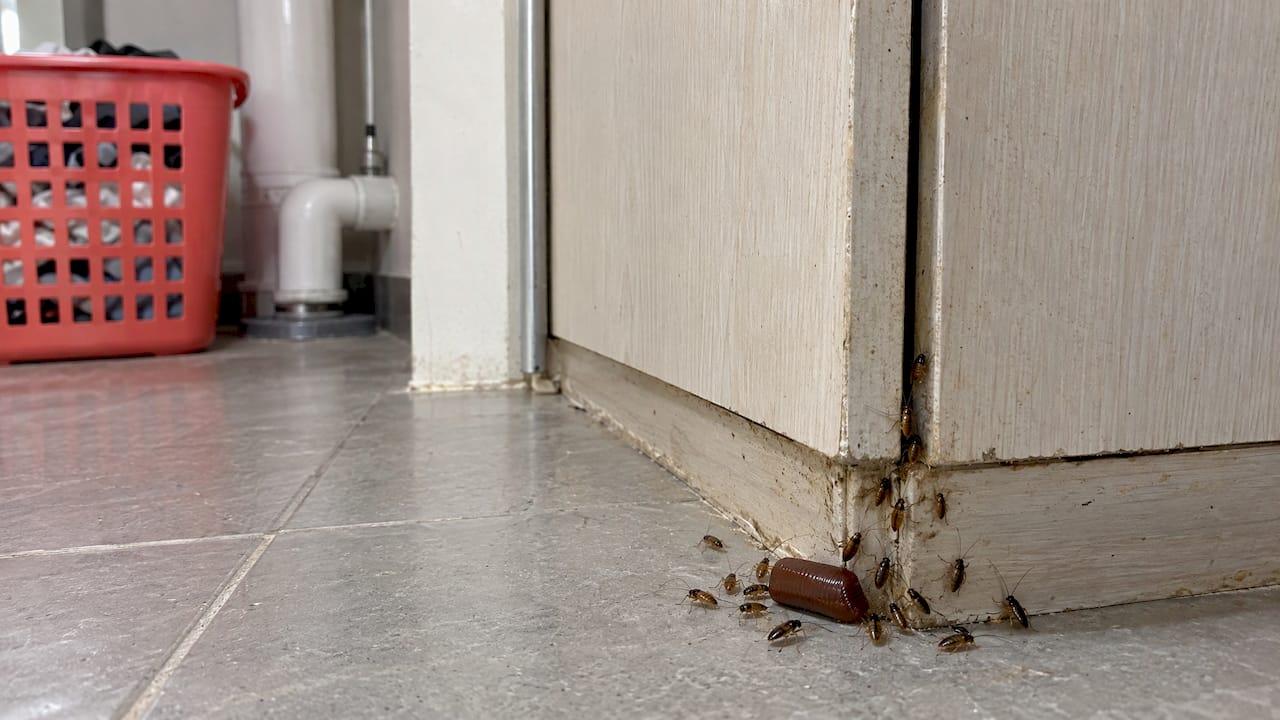
Seeing more cockroaches in the days after a treatment is common, and it often means the treatment has started to work. Bait and growth-regulator products disturb the hidden colony, so insects move into the open before they die or stop breeding. The sign that something is wrong is not a busy first week. It is a pattern: daytime sightings that do not fall over the following weeks, fresh egg cases, or droppings in new places. In that case you need a follow-up inspection, not another can of spray. If you are in Singapore and your sightings are not dropping, our general pest control service is built around NEA-licensed technicians who inspect, treat and return to check the result.
TL;DR
- More activity in the first days or weeks after treatment is common, because baits and growth regulators drive hidden cockroaches into the open before they die.
- Growth-regulator products can take four to six weeks to bring a visible drop, so judge progress over weeks, not hours.
- A first follow-up visit is typically scheduled seven to 10 days after the first treatment, and more visits follow until sightings stop.
- Do not spray store-bought insecticide over treated areas: it can repel cockroaches from the bait and undo the work.
- Rising numbers after the first few weeks, or several daytime sightings, mean it is time to call the provider back.
Table of Contents
- Why you can see more cockroaches after treatment
- Why eggs mean one visit is rarely the end
- What the timeline usually looks like
- How to tell whether the treatment is working
- What to do, and what not to do, after treatment
- Staying safe around treated areas
- For food businesses and shared premises
- When to ask for a follow-up or further treatment
- Cockroaches still coming back? Call a licensed team
- Our perspective
- FAQ
- Sources
Why you can see more cockroaches after treatment
Cockroaches spend most of their lives out of sight. They shelter in wall voids, behind cabinets, inside drains and around appliances, and come out at night to feed. A normal home infestation is therefore much larger than what you see on any one evening.
A professional treatment changes that picture in three ways.
- Baits take effect slowly. Cockroaches feed on the bait, return to their hiding place and die there. Others may feed on them or on their droppings, which spreads the active ingredient through the colony. During that time affected insects can move around more, so you may notice them in the open.
- Growth regulators work on the next generation. Insect growth regulators (IGRs) stop young cockroaches from developing into breeding adults. The University of Florida's extension guide notes that IGRs need four to six weeks to produce a noticeable decrease, though control lasts longer because exposed cockroaches can no longer reproduce. The same guide says seeing more cockroaches in the daytime after IGR use means the treatment is working.
- Disturbed colonies relocate. Treatment in one area pushes insects from their usual shelter. They may show up in rooms you rarely noticed them in, such as a bedroom or living room, before the population falls.
That is why a good technician tells you to expect this and does not promise a clean kitchen the next morning.
Why eggs mean one visit is rarely the end
Cockroaches lay eggs in protective cases, and most insecticides do not get through the case. A Singapore pest controller interviewed by Asia News Network explained that insecticides generally do not penetrate cockroach eggs. If the eggs cannot be found and removed, follow-up visits monitor the first treatment and target newly hatched nymphs, the young cockroaches, before they grow into egg-laying adults.
This is the main reason a single treatment can be followed by a second wave. The adults you saw die were the first generation. The nymphs that hatch two or three weeks later are the second. A treatment plan that includes a scheduled return is designed for exactly this gap.

What the timeline usually looks like
Exact timing depends on the species, the size of the infestation, the products used and the state of the home. The figures below come from the sources cited and give a realistic frame, not a guarantee.
| Stage | What you may see | What it usually means |
|---|---|---|
| First days | More cockroaches in the open, some slow or on their backs | Bait and treatment are reaching the hidden population |
| Seven to 10 days | A planned follow-up visit | The technician checks monitors, replaces aged bait and treats active spots (Syngenta guide) |
| Four to six weeks | Clear drop in sightings, especially with growth regulators | Reproduction is being cut off (UF/IFAS) |
| After sightings stop | No live cockroaches, no new droppings | Visits move to a monthly or quarterly maintenance schedule |
The Syngenta cockroach management guide describes the initial follow-up as taking place seven to 10 days after the first treatment. It includes inspection, evaluation of monitors and trap counts, removal of aged or uneaten gel bait and new bait near active harborages (the places where cockroaches rest). Further visits are weekly, bi-weekly or as needed until cockroaches are no longer found. If no activity remains, monitoring shifts to a monthly or quarterly schedule.
In short, expect a busier first week, a quieter second to fourth week and a clear improvement by about the sixth week, with at least one inspection visit in between.
How to tell whether the treatment is working
Counting cockroaches by memory is unreliable, because your attention is highest right after a treatment. Use a simple log instead.
- Note the time of each sighting. Cockroaches are mostly active at night. A cockroach seen in daylight can point to a crowded hiding place. The Singapore pest controller mentioned above considers more than two daytime sightings very serious.
- Note the place. Write down the room and spot: under the sink, behind the fridge, near the rubbish chute, in the bathroom.
- Note the size and condition. Small, pale nymphs mean recent hatching. Adults with twisted wings or unusual behavior can indicate exposure to a growth regulator, as the UF/IFAS guide describes.
- Check for other signs. Singapore Food Agency (SFA) guidance lists droppings, egg cases, an odorous smell and live sightings as signs of infestation. Fewer of each over the weeks is a good sign.
- Compare week by week. A downward trend from week one to week four is the result you want. A flat or rising line after the first month is the signal to act.
Signs that point to a real problem
- Sightings that stay the same or rise after four weeks.
- Several cockroaches in the daytime.
- New egg cases or droppings in areas that were clean before.
- Cockroaches coming back repeatedly through the same drain, vent or shared pipe.
If you see these, tell your provider and ask for an inspection. The cause is often a missed harborage, a food or water source the treatment cannot overcome or an entry route from a neighboring unit or shared pipework.
What to do, and what not to do, after treatment
Leave the bait and treated areas alone
The most common mistake is panic spraying. The UF/IFAS guide warns never to spray liquid insecticide where baits are placed, because it repels cockroaches from the bait. Cockroaches that avoid the bait do not carry it back to the colony. You then have a bait that does not work and a colony that does not shrink.
Also avoid wiping away bait placements or cleaning the spots where the technician applied gel. Ask where bait was placed before you clean.
Keep removing food and water
Cockroaches need very little. Crumbs, grease, pet food left overnight, wet sponges and a dripping tap are enough. The UF/IFAS guide notes that greasy surfaces reduce the effectiveness of insecticide, so surfaces should be scrubbed with hot soapy water before treatment, and that liquid sprays are generally not effective on wooden surfaces such as cabinets and shelves. Sanitation is part of the treatment. Practical habits for your home:
- Wipe counters, stove tops and the area behind the stove every night.
- Store dry food in sealed containers and keep fruit off open surfaces.
- Empty the kitchen bin every day and use a bin with a lid.
- Rinse and cover floor drains, and do not leave standing water in the kitchen or bathroom.
- Remove cardboard boxes and paper bags, which give cockroaches shelter and hide egg cases.
- Fix leaking taps and pipes.
Do not rely on household aerosol sprays
The Singapore Pest Management Association (SPMA) says that household aerosol sprays are at best a temporary solution. They cannot reach sewer runs, rubbish chutes, manholes or inspection pits where cockroaches settle and breed. The SPMA recommends engaging a pest management company for lasting results. In an apartment block, the source can be a shared pipe or chute, which no spray in your kitchen will reach. For a deeper look at the choice, see our guide to DIY versus professional pest control in Singapore.
Staying safe around treated areas
The SPMA states that in most cases you do not need to leave your home during pest control. You only need to vacate when insecticidal gassing or misting is involved, and you can usually re-enter after a few hours. Before a visit, store food and kitchen utensils properly. Afterwards, wash toys and kitchen appliances before using them again.
If you have a baby or toddler at home, plan the visit the way you would plan other household safety work: clear floors, cover or store feeding items, and keep crawling children out of treated rooms until your technician says they are safe to use. Our partner-free tip is simply to use a good checklist, and this babyproofing checklist is a practical place to organize the household side of preparing for any visit. Ask your technician where bait has been placed and for how long pets and children should stay away from those spots.
Our technicians are NEA-licensed and use non-toxic, environmentally safe methods that prioritize the safety of people and pets. Tell us at booking if you have infants, pets, someone who is pregnant or anyone with a health condition at home, so we can plan around them. If a household member has a medical condition that may react to treatment products, speak to your doctor as well.

For food businesses and shared premises
If cockroaches keep appearing after treatment in a restaurant, stall, canteen or food factory, the stakes are higher: it affects licensing, inspections and your reputation. The SFA's guidelines on preventing rat and cockroach infestations at food establishments make several points that apply directly to the post-treatment period:
- Pest-proof by removing food sources, shelter and entry points.
- Clean kitchens and equipment thoroughly at the end of each day.
- Clean drains and gullies daily and empty refuse bins at least once a day.
- Use foot-pedal bins lined with bags and kept covered.
- Leave pesticide use to trained personnel, with an NEA-licensed pest control company providing systematic service, including housekeeping advice, inspection, monitoring and suitable control methods.
The SFA also treats pest control as a shared responsibility. Operators should verify the checks done by the licensed company, understand the pest control report and make sure all staff know the follow-up actions. If your treatment report shows continuing activity, make sure your team follows the housekeeping advice, and request a review of the monitoring plan. Our article on pest control frequency for Singapore sites explains how to set visit schedules for commercial premises, and the guide to food manufacturing pest control covers larger operations.
When to ask for a follow-up or further treatment
Ask for a follow-up in these situations:
- Day seven to 10 after the first visit, if no return visit has been scheduled. This is the standard window for the first check.
- After four to six weeks, if daytime sightings, droppings or egg cases have not clearly dropped.
- When cockroaches appear in a new area, such as a bedroom, which can mean a nearby colony was disturbed or a new entry route exists.
- When you find nymphs weeks after treatment, which suggests eggs hatched after the first visit.
- When a neighbor's unit or a shared pipe or chute is the likely source, because the problem will keep returning until the building-level cause is addressed.
When you call, bring your log: dates, times, rooms and what you saw. It helps the technician choose where to inspect and which method to use. Our technicians use advanced technology, including thermal imaging, for inspections, and we are available 24/7 if the situation cannot wait.
Prevention after the problem is under control
Once the sightings stop, protect the result. Seal gaps around pipes and skirting boards, keep drains clean and covered, and keep the kitchen dry at night. Our resource on how to prevent cockroaches in an HDB flat goes through the habits that matter most in Singapore apartments, and our integrated pest management guide explains why inspection, sanitation and targeted treatment work better together than any single product. If you have recently bought or moved into a home, a move-in pest inspection can find the harborages before the first night.
Cockroaches still coming back? Call a licensed team
If your numbers are not dropping, the next step is a proper inspection, not more spray. Our general pest control service covers cockroaches in homes, offices, shops and industrial sites in Singapore, with NEA-licensed technicians, non-toxic treatments built on integrated pest management and 24/7 availability. Tell us what you have logged and where you have seen them, and we will take it from there. Pricing is quoted per job, so contact us through the page for your quote.
For a full-property treatment or after-hours needs, you can book through our site.
Our perspective
Cockroach control is a process, not a single spray. The hardest part for customers is the first week, when the insects they could not see start to appear. We tell people to expect it, because it means the treatment has reached the colony.
We build our approach on integrated pest management: inspection to find where the cockroaches live and why, treatment that is non-toxic and safe for people and pets, and follow-up to catch what hatches later. Our technicians are NEA-licensed, and we use technology such as thermal imaging in inspections to understand a property before we treat it.
The result lasts when the building and the treatment work together. Clean surfaces, covered bins and dry kitchens help our treatments reach the cockroaches, and a scheduled return visit deals with the nymphs that eggs leave behind. If you are seeing more cockroaches after a treatment, do not spray over the bait. Keep a log of what you see and let us inspect.
Bespoke-Enviro Services
FAQ
How long do cockroaches keep appearing after treatment?
You can expect higher activity in the first days and then a gradual fall. Products with growth regulators need around four to six weeks for a noticeable decrease, according to the University of Florida's extension guide. If sightings are not dropping by then, ask for a follow-up inspection.
Is it normal to see cockroaches in the daytime after treatment?
It can be, particularly in the first weeks, when bait and growth regulators drive insects out of hiding. The UF/IFAS guide says more daytime sightings after growth-regulator use indicate the treatment is working. Several daytime sightings that continue beyond the first few weeks should be reported to your provider.
Should I spray insecticide myself if I see cockroaches after treatment?
No. Liquid insecticide sprayed near bait can repel cockroaches from it, which stops them carrying it back to the colony. Household aerosols also cannot reach drains, chutes and pits where cockroaches breed. Call your provider and let them decide whether to retreat.
Do I need to leave home during cockroach treatment?
Usually not. The SPMA says you only need to vacate when gassing or misting is involved, and you can generally return after a few hours. Store food and utensils before the visit and wash toys and kitchen appliances before using them afterward.
When should the first follow-up happen?
A first follow-up is typically scheduled seven to 10 days after the initial treatment. The technician checks monitors, replaces aged bait and treats active spots. More visits follow until no cockroaches are found.
Sources
- Cockroaches and Their Management, University of Florida IFAS Extension
- I study them, then strike: This Singapore ex-soldier now wages war on pests, Asia News Network
- Buyers of Pest Control Services, Singapore Pest Management Association
- Guidelines on Prevention of Rat and Cockroach Infestations at Food Establishments, Singapore Food Agency
- Cockroach Integrated Pest Management Guide, Syngenta