
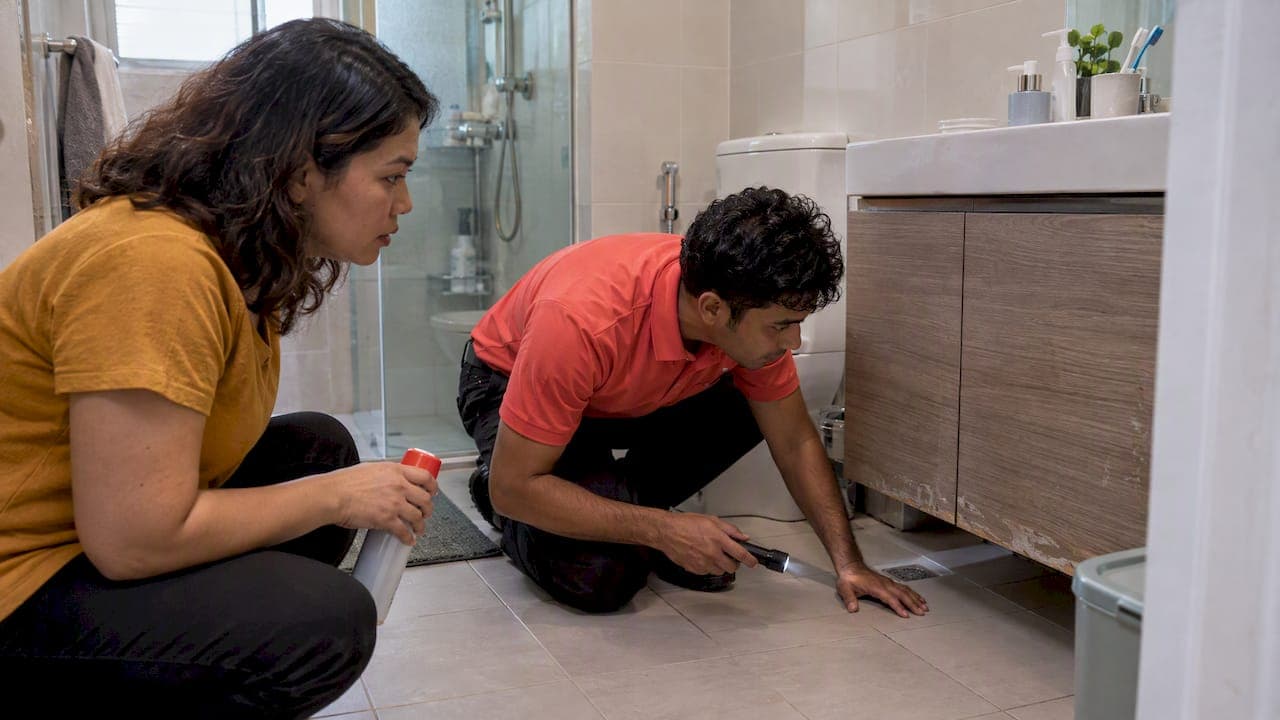
DIY pest control works for small, early problems: a few ants, an occasional cockroach, a single insect you can identify. Professional pest control is the better choice when you cannot name the pest, when it keeps coming back, when it is in walls, ceilings or roofs, or when children, pets, pregnant women or people with asthma live in the home. In Singapore there is also a legal side: pest management work is regulated, and that changes the calculation.
Below we set out what each route does well, what it costs, where DIY fails, and how to decide in about ten minutes.
TL;DR
- DIY suits minor, early-stage problems such as a few ants or cockroach prevention with gel baits. It does not suit termites, bed bugs, established rodent activity or pests you cannot identify.
- Pest management in Singapore is regulated by the NEA. Operators must be registered and their technicians licensed, which a DIY job cannot offer.
- DIY looks cheaper on day one. Repeat purchases, a spreading infestation and structural damage can reverse that quickly.
- Households with young children, pregnant women, pets or asthma sufferers should avoid consumer chemicals and ask for low-toxicity, professional treatment.
- If you are unsure, a professional inspection costs far less than a wrong guess.
Table of Contents
- What DIY pest control really covers
- What professional pest control adds
- The legal side: licensing and records
- Cost: what you really pay
- Where DIY fails, pest by pest
- Safety: people, pets and the environment
- Commercial sites and offices
- Our perspective: inspect first, treat second
- A quick decision guide
- Book an inspection with Bespoke Enviro
- FAQ
- Sources
What DIY pest control really covers
DIY means you buy a product (spray, gel bait, trap, aerosol bomb, powder) and apply it yourself. It is fast and needs no appointment. For a narrow set of situations it is a sensible first step.
DIY is reasonable for:
- An occasional ant trail in the kitchen
- A single cockroach sighting, with gel baits placed as prevention
- Sealing obvious gaps and removing food and water sources
- Mosquito prevention such as emptying standing water, which is part of how the NEA approaches vector control
The NC State Extension guidance on selecting pest control services makes the same split: DIY is suitable for minor, early-stage issues, while professionals are needed when the pest is hard to identify, needs restricted-use chemicals, or sits in hazardous or inaccessible areas such as roofs or near electrical equipment.
The US EPA also notes that many households can control common pests through prevention, sanitation and good maintenance. The most effective DIY work is usually not chemical at all. It is cleaning, sealing and storing food properly.
What professional pest control adds
A professional visit differs from DIY in four ways.
- Identification. The right treatment depends on the exact species. A technician reads droppings, rub marks, mud tubes and bite patterns. A shopper in a hardware aisle is guessing.
- Inspection of hidden areas. Colonies and nests are rarely where you see the pest. Our technicians use tools such as thermal imaging during inspections to find activity behind surfaces without opening walls blindly.
- Targeted treatment. Professional methods follow integrated pest management (IPM): find the source, remove what attracts the pest, block entry, monitor, and apply products only where needed.
- Follow-up and records. A contract or warranty means someone returns if the problem does not clear.
The Singapore standard: IPM
Singapore treats IPM as the benchmark for the industry. The NEA describes Singapore Standard SS 721:2025 as a code of practice for pest management services, developed by a working group co-led by the NEA and the Singapore Pest Management Association. Its emphasis is on prevention, habitat modification, monitoring and source reduction, with pesticides as a targeted last resort.
That matches how we work. IPM is the core of our approach, and it is why our treatments are non-toxic and eco-friendly wherever the pest allows it.
The legal side: licensing and records
This is the part many DIY comparisons from overseas leave out.
The NEA states that vector control operators must have a certificate of registration before they start work, and that every technician and worker deployed to a client's premises must be licensed or certified. The industry is governed by the Control of Vectors and Pesticides Act, among other laws.
For you as a customer, this means:
- Ask any provider for their NEA registration and their technicians' licences. Our technicians are NEA-licensed.
- Be cautious with an unlicensed individual who offers to spray your home. KakiList's guide warns that this creates public health risk and can void an insurance claim if family members or pets react.
- Expect documentation. Operators are expected to log each pesticide application, including product name, NEA registration number, concentration, target pest and location. A DIY spray leaves no such trail.
If you are a property manager or an MCST, records matter even more. See our guide to the four-part IPM every MCST needs for what audit-ready looks like.
Cost: what you really pay
DIY wins the first receipt. Cans, baits and traps cost little and you can buy them today. That is why most competing guides concede that DIY is cheaper up front.
The full cost is different. You pay for repeat purchases, your own time, and, if the problem spreads, a larger treatment later.
For professional work, published market ranges vary by pest, premises size and frequency. One Singapore comparison site lists one-off visits at roughly S$200 to S$600, with recurring plans costing less per visit. KakiList reports that quarterly contracts run 15 to 25% cheaper than one-off bookings. Treat these as market indications, not our prices. We quote after an inspection because the right scope depends on your premises.
Cost by pest
| Pest | DIY realistic? | Why | Typical route |
|---|---|---|---|
| Ants, occasional cockroach | Often yes | Surface-level, small numbers | Gel baits, cleaning, sealing |
| Cockroach infestation | Rarely | Colonies hide in voids and drains | Professional IPM treatment |
| Rodents | Seldom | Need runway mapping and entry-point proofing | Professional inspection and proofing |
| Bed bugs | No | Hide in frames, seams and walls, resist surface sprays | Professional multi-visit treatment |
| Termites | No | Damage is hidden and structural | Professional inspection and treatment |
| Pest birds | No | Needs proofing and humane methods as permitted | Professional bird management |
For deeper figures, read our guides to termite treatment cost in Singapore and bed bug treatment cost.
The cost of getting it wrong
Termites show the gap best. KakiList notes that termite damage in a landed home or condo can reach S$50,000 in structural repair, and that a can of cockroach spray can hide a colony rather than kill it. A S$15 spray bought to save a call-out is poor value in that scenario.
Where DIY fails, pest by pest
Cockroaches
Sprays kill the roaches you see and can scatter the rest deeper into cabinets and wall voids. Gel baits help in small numbers, but a heavy infestation needs inspection to find harbourage and food sources first.
Rodents
Rats follow walls and fixed pathways, and they avoid new objects for days. Traps and bait placed in the middle of a room tend to be ignored. Poison without proofing also risks rodents dying inside walls, and bait is a hazard to pets and children. Our rodent control service starts with finding the runways and entry points, then proofs them.
Bed bugs
Bed bugs live in mattress seams, bed frames, skirting and sockets. Consumer sprays rarely reach them, and partial treatment sends them into neighboring rooms or units. Professional treatment is usually planned across more than one visit. Read about our bed bug control and treatment.
Termites
By the time you see a mud tube or discarded wings, the colony has been active for some time. Retail products do not reach it. A professional can sometimes treat locally, as we explain in when one mud tube is enough, but only after inspection. Our termite control service covers inspection and treatment.

Pest birds
Spikes, netting, repellents and trapping where permitted all need correct installation to work and to stay humane. Poor DIY netting traps birds or leaves gaps that they use. See our bird control and proofing service.
Safety: people, pets and the environment
Consumer products are used by people who do not read every label, in homes where children crawl and pets lick floors. NC State's guidance advises that households with pregnant women, asthma sufferers or young children should skip consumer chemicals and prioritize low-toxicity professional treatments.
This is also where IPM helps. Because it starts with prevention and monitoring, chemical use is smaller and more targeted. If your home has a baby, a pregnant family member, a cat that sleeps on the sofa or an elderly relative with respiratory trouble, tell the provider before the visit. Ask for the product names and whether the treated rooms need to stay empty. A specific product list is a sign of a provider that keeps records.
If you have a doctor-diagnosed condition such as asthma, check with your doctor before you re-enter a treated room, and with a vet if a pet shows any reaction after a treatment.

Commercial sites and offices
Businesses face an extra problem: pests become a compliance, reputation and inspection issue. Food premises, offices, warehouses and construction sites cannot rely on a can of spray. A scheduled IPM programme with reports is what auditors and landlords expect. Our guide to pest control frequency in Singapore explains how schedules are set.
If your office has indoor plants, the same logic applies to plant pests. This comparison of DIY and professional pest treatment in offices shows how facilities teams decide when expert help is needed.
Our perspective: inspect first, treat second
We have worked in Singapore pest control for more than 30 years, and the pattern is consistent. The customers who call us late are rarely those who tried a DIY product once. They are those who tried it three or four times, because each failed attempt gives the pest more time.
Our view is simple:
- We do not oppose DIY. For a few ants, cleaning and gel baits are fine. We would rather tell you that than book an unnecessary visit.
- We oppose guessing. Termites, bed bugs and rodents reward early, correct action and punish repeated wrong action.
- Eco-friendly is a method, not a label. We work to IPM: inspection, source removal, proofing and monitoring first, then non-toxic treatments suited to homes with people and pets.
- Licensing is the minimum. Our technicians are NEA-licensed, and we are available 24/7 because pests do not keep office hours.
If you cannot say what the pest is, or you have treated twice already, you have reached the point where inspection is cheaper than another attempt.
— Bespoke-Enviro Services
A quick decision guide
Answer these in order. Stop at the first "yes".
- Do you have termites, bed bugs or signs of rats (droppings, gnawing, greasy rub marks)? Call a professional.
- Is anyone at home pregnant, an infant, asthmatic, elderly, or are there pets that cannot be kept out of treated areas? Choose a professional low-toxicity treatment.
- Is the pest in a ceiling, roof, wall void or near electrical equipment? Call a professional.
- Have you already tried two DIY treatments without lasting results? Call a professional.
- Are you a landlord, property manager or business needing records? Use a licensed operator. See who pays under tenancy clauses.
- None of the above, and it is a few ants or a lone cockroach? DIY prevention is reasonable. Clean, seal, bait, and watch for a week or two.
A sensible DIY routine for minor problems
- Store food in sealed containers and clear crumbs nightly
- Fix leaks and wipe away standing water
- Seal gaps around pipes and door frames
- Use gel baits in small amounts, away from children and pets
- Check again after a week. If activity grows, stop and book an inspection
Book an inspection with Bespoke Enviro
If your problem has passed the DIY stage, our general pest control service covers cockroaches, ants, mosquitoes and other common household pests for homes, businesses and industrial sites. For structural or specialist problems we also offer fumigation. Contact us through our website and we will arrange an inspection and a plan that fits your premises.
FAQ
Is DIY pest control cheaper than hiring a professional in Singapore?
Usually only on the first purchase. If the pest is minor, DIY stays cheaper. If it spreads or returns, repeat products and delayed treatment can cost more than one correct professional job.
Is it legal to do pest control myself at home?
Buying and using consumer products in your own home is common. Commercial pest management work, however, falls under the NEA's licensing framework, so anyone you hire should be a registered operator with licensed technicians. Check this before you pay.
Can I get rid of termites or bed bugs on my own?
It is very unlikely. Both hide in places consumer products do not reach, and partial treatment can spread them. Book an inspection so the species and extent are confirmed first.
Is professional pest control safe for pets and children?
It can be, when the provider follows IPM and uses low-toxicity products. Tell the technician about every child, pet and health condition before treatment, and ask which rooms to stay out of and for how long.
Sources
- NEA: Vector Control Operator, Vector Control Technician and Vector Control Worker
- NEA: Singapore Standard SS 721:2025 on pest management services
- NC State Extension: Tips on Selecting Pest Control Services
- US EPA: Tips for Selecting a Pest Control Service
- KakiList: Pest Control Singapore guide
- KakiList: Best Pest Control in Singapore
- Best in Singapore: Pest Control Companies price ranges