
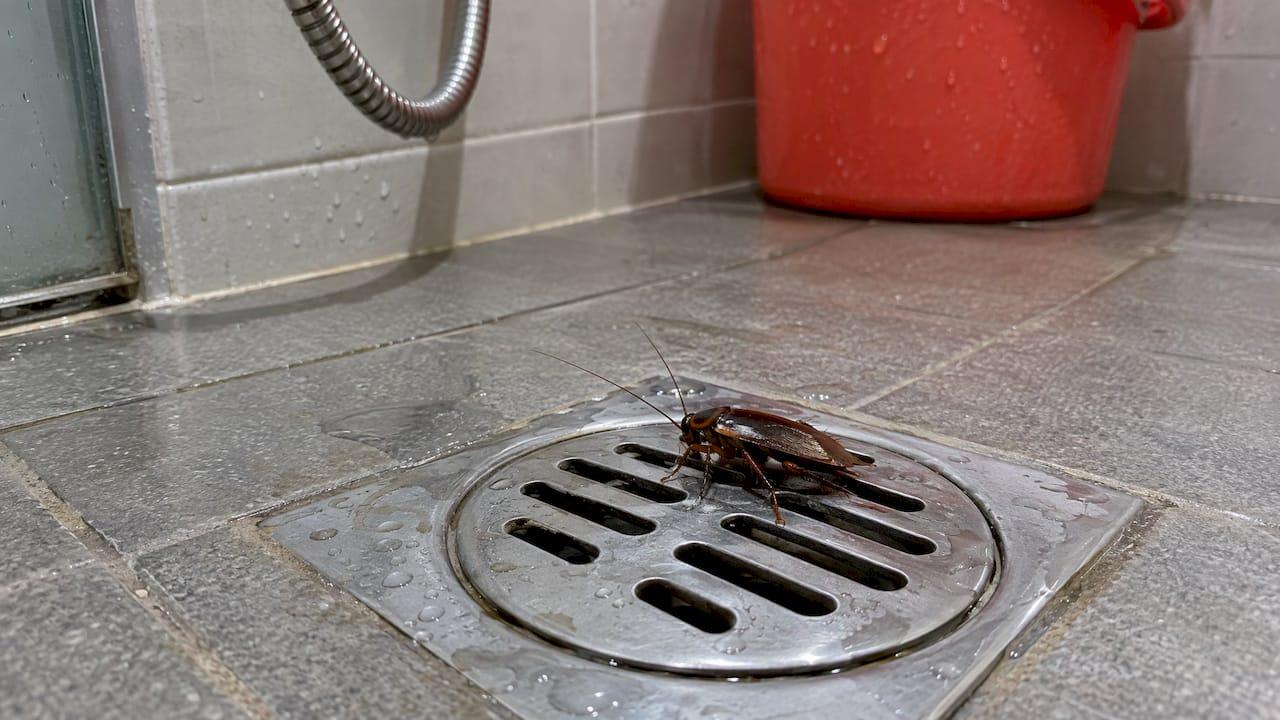
Cockroaches come up through drains because drains give them what they look for: darkness, moisture and food residue. In Singapore the usual causes are a dry or damaged floor trap, a missing grating or gaps around pipes. Most cases can be reduced by restoring the water seal, covering the drain and removing food residue. If roaches keep appearing, the colony is probably living inside the wall, pipe duct or sewer line, and that needs a licensed technician.
This guide explains why it happens, what to do today, how to check the plumbing barrier in your home, and when to bring in professionals.
TL;DR
- Cockroaches are drawn to dark, damp spaces with water and organic matter, which describes most floor drains and pipes.
- A floor trap that holds water and has a grating is your first barrier. Singapore's plumbing code requires a water seal of at least 50 mm.
- Clean drains and gullies daily, keep the area under sinks dry, and seal holes around pipes.
- Droppings, egg cases, a musty smell and live roaches in daytime point to an infestation, not a stray visitor.
- Do not pour pesticide into drains yourself. Call a licensed pest controller if sightings continue.
Table of Contents
- Why cockroaches come up through drains
- What to do the moment you see one
- The plumbing barrier: your floor trap
- Where roaches appear and what it tells you
- Signs of an infestation, not just a stray roach
- Bleach, boiling water and home remedies
- When to call a licensed professional
- Our perspective
- Professional help for drain cockroaches
- FAQ
- Sources
Why cockroaches come up through drains
A cockroach is looking for three things: water, shelter and food. A drain offers all three. A US municipal utility district explains that cockroaches are attracted to dark, damp spaces, water and decaying organic matter, including floor drains and pipes. It adds that a well-maintained, regularly used P-trap makes entry through sewer pipes highly unlikely, while an unused floor drain can give them access.
That last point matters in Singapore homes. Floor traps in service yards, spare bathrooms and balconies often go weeks without water. The water seal evaporates, and the drain becomes an open path to the pipe network.
The pipe network is also where many roaches live in the first place. The Straits Times reported in 2018 that American cockroaches, the most common species in Singapore, typically inhabit rubbish chutes and sewerage areas. It also noted that dark, humid places with food and water are favorable breeding sites. So when a large, reddish-brown roach appears from a bathroom or kitchen drain at night, it is usually this species, coming from the pipe system.
Common triggers at home
- A dry floor trap. No water seal means no barrier.
- A missing or loose grating. Roaches walk straight through.
- Food residue in the drain. Grease, rice and scraps feed them and make the drain a place to stay.
- Gaps around pipes. Holes where pipes pass through walls or cabinets give them a route into the unit.
- Persistent damp. Leaks under the sink or wet floors keep the area attractive.
What to do the moment you see one
One roach near a drain is a warning, not yet a crisis. Act the same day.
- Check the water seal. Look into the floor trap. If it is dry, pour in water until it fills. Do this weekly for drains you rarely use. Utility guidance recommends flushing unused floor drains weekly to recharge the trap, or fitting closable lids or rubber stoppers.
- Make sure there is a grating. The Singapore Food Agency's guidelines say floor traps and downpipes should be covered with grating. Replace any that is missing or damaged.
- Clean the drain and gully. The same SFA guidance advises cleaning drains and gullies daily. At home, remove hair, food bits and grease from the strainer after each use.
- Dry the area under the sink. Keep it clean and dry, and fix slow leaks.
- Remove food and clutter. Store dry food in sealed containers, take out rubbish nightly and clear cardboard stacks near drains.
- Seal holes. Fill gaps around pipes and cracks near the drain.
These steps are the core of what pest professionals call integrated pest management (IPM). NEA's code of practice for vector control operators describes an IPM process that covers identifying the pest, monitoring, prevention, a combination of management tools and assessment after action. It includes removing food, water and shelter where feasible, alongside physical or chemical control.
The plumbing barrier: your floor trap
The water seal in a floor trap is the simplest defense against pests, odors and sewer gases. Singapore's plumbing rules take it seriously. PUB's Code of Practice on Sewerage and Sanitary Works, 3rd edition (March 2025) requires floor traps to retain a water seal of at least 50 mm and to have a grating cover. The earlier 2019 edition set the same minimum of 50 mm.
In practice, a functioning water-sealed trap interrupts the path up the drain. A dry, damaged or missing trap removes that barrier, and cockroaches then follow moisture, darkness and food residue upward.
A five-minute trap check
| What to look at | What you want to see | If not |
|---|---|---|
| Water in the trap | Standing water in the bend | Refill, then repeat weekly for unused drains |
| Grating | Fitted, intact, no wide gaps | Replace it |
| Drain edge | Sealed against the floor | Re-seal cracks |
| Pipes around the drain | No gaps in walls or cabinet backs | Fill holes |
| Smell | No sewer odor | Possible dry or damaged trap, call a licensed plumber |
If the trap will not hold water, or the pipe looks cracked, that is a plumbing fault. A pest treatment alone will not fix it, and roaches will keep returning until the barrier works again. A licensed plumber should repair it.
Where roaches appear and what it tells you
Bathroom and shower drains
Roaches in shower drains are often sewer-dwelling American cockroaches. They come up at night when the bathroom is quiet. A dry floor trap in a rarely used bathroom is the most common cause. Fit a grating or stopper and refill the trap weekly. Keep the floor dry between uses where you can.
Kitchen sink and floor drains
Kitchens offer food as well as water. Grease and scraps build up in the strainer and trap, so the drain becomes a feeding spot. Clean the strainer daily, keep the cabinet under the sink dry and seal gaps around the pipes. Food businesses have stricter duties. If you run one, our guide to the NEA kitchen pest checklist and the SFA licensing steps for restaurants cover what inspectors look for.
Service yards, balconies and common areas
Unused floor drains in service yards are the classic entry point. They are rarely cleaned, often uncovered, and sit close to bin areas. Cover them, flush them weekly and keep bins sealed.

Signs of an infestation, not just a stray roach
One sighting can be a lone wanderer. Several signs together mean a breeding population. SFA lists these warning signs:
- Cockroach droppings
- Egg cases
- An odorous smell
- Live cockroaches
Seeing roaches in the open during the day is a further sign, because they are nocturnal and only come out when the hiding places are crowded. Look in cabinet corners, behind appliances and along the pipe ducts. If you find a brown, capsule-shaped case, our egg case identification guide shows what oothecae look like and what they mean.
Bleach, boiling water and home remedies
Many searches ask whether pouring bleach down the drain works. Our advice is to treat the cause, not the symptom. Liquids poured down a drain reach only the first stretch of pipe. They do not deal with roaches living in wall voids, ducts or the wider sewer line, and they do nothing about a dry trap or a missing grating.
There is also a regulatory reason to leave chemical treatment of drains to trained people. NEA's code of practice says that near water tanks, fogging or pesticide spraying must be supervised and must not be directed into water tank enclosures, water tank pipes or drain outlets. In food premises, SFA says pesticide use must be handled by trained personnel because of food-contamination and user-health risks, and that physical measures are preferred where pesticides could contaminate food.
So the safe home routine is physical: water seal, grating, cleaning, sealing and dryness. Placing a cup or stopper over an unused drain is a simple physical block that many households find useful.

When to call a licensed professional
Bring in help when any of these apply:
- Roaches return within days of you fixing the trap and cleaning
- You see droppings, egg cases or daytime roaches
- Sightings come from several drains or rooms
- The smell stays after cleaning
- You run a food business, manage a property or oversee a construction site and need documented control
If you see cockroaches on your property, utility guidance suggests considering a pest management company. A good inspection finds where roaches are entering and nesting, not only where you saw them. If rats are also showing up near drains, see our rodent control service. Roaches can also be mistaken for other household pests, so correct identification helps. Our bed bug control page explains how those differ.
Our perspective
Drain roaches are rarely a drain problem alone. The drain is the doorway, and the colony usually sits in the pipe network, ducts or cracks nearby. Wiping the surface or pouring something down the pipe treats the doorway and leaves the colony.
That is why we work through integrated pest management. Our NEA-licensed technicians identify the species, find the entry points and harborage areas, and use non-toxic, environmentally safe methods designed with the safety of people and pets in mind. We use advanced tools such as thermal imaging during inspections to help locate problem areas.
We then advise on the physical fixes that keep roaches out: restoring water seals, fitting gratings, sealing gaps and improving sanitation. Treatment without prevention brings the roaches back. Prevention without treatment leaves an existing population in place. Done together, they give results that last.
Bespoke-Enviro Services
Professional help for drain cockroaches
We offer general pest control services in Singapore for homes, offices, restaurants, industrial sites and construction sites. Each job starts with an inspection to find how cockroaches are getting in and where they are breeding. We then recommend a treatment and prevention plan, as a one-time job or an ongoing maintenance contract. We are available 24/7.

If roaches keep coming up your drains, contact Bespoke Enviro Services to arrange an inspection.
FAQ
Does pouring bleach down the drain help with cockroaches?
Not reliably. It only reaches the first part of the pipe and does not remove roaches living in ducts, walls or the sewer line. It also does not fix a dry trap or a missing grating. Near water tanks, NEA's code says spraying must not be directed into drain outlets, so leave chemical treatment to licensed technicians.
Does one roach mean an infestation?
Not always. A single roach can be a wanderer, especially if you have an unused floor drain. Look for droppings, egg cases, an odorous smell and live roaches, which SFA lists as signs of infestation. If you find more than one sign, or sightings repeat, arrange an inspection.
Why do roaches come out of the shower drain at night?
Cockroaches are most active in the dark, and a bathroom drain offers moisture and shelter. In Singapore, American cockroaches commonly live in sewerage areas, so they can come up through a drain that has no water seal or grating. Refilling the trap and fitting a cover usually reduces the problem.
How often should I flush unused floor drains?
Weekly is a sensible routine. Utility guidance recommends flushing unused floor drains weekly to recharge the trap. Singapore's plumbing code requires floor traps to keep a water seal of at least 50 mm, and regular flushing helps maintain it.
Can I fix drain cockroaches without a pest controller?
Mild cases can improve with a restored water seal, a grating, daily cleaning and sealed gaps. If sightings continue after a week or two of these steps, the colony is likely out of your reach. An NEA-licensed pest controller can inspect, treat and advise on prevention.
Sources
- Cockroach Frequently Asked Questions, South Placer Municipal Utility District
- Phone receivers, wall sockets among cockroach hot spots, The Straits Times
- Guidelines on Prevention of Rat and Cockroach Infestations at Food Establishments, Singapore Food Agency
- Code of Practice for Vector Control Operator, Technician and Worker, NEA
- Code of Practice on Sewerage and Sanitary Works, 3rd edition, PUB
- Code of Practice on Sewerage and Sanitary Works, 2nd edition, PUB