
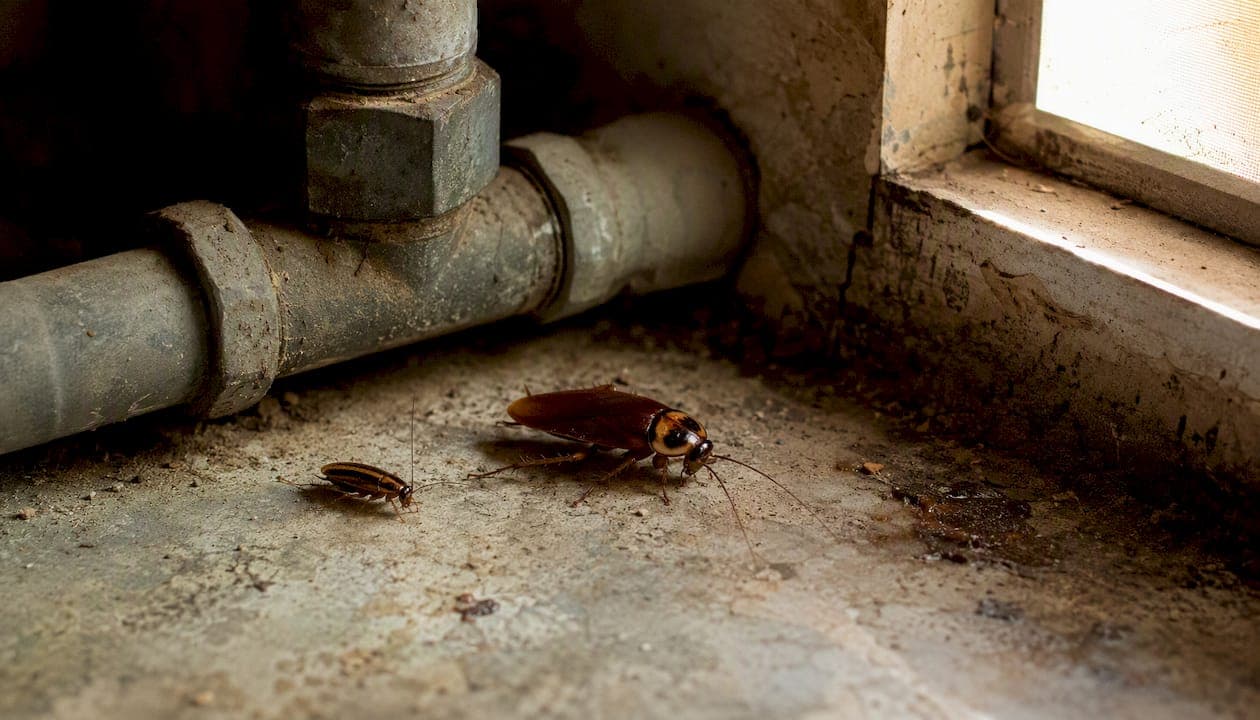
If it's about ½ inch long, light tan with two dark parallel stripes behind its head, you're looking at a German cockroach. If it's closer to 1¼–2 inches, reddish-brown with a yellowish figure-8 marking on its pronotum, that's an American cockroach. The species matters because the right response is completely different.
Three fastest visual checks:
- Size: German = roughly ½ inch; American = 1¼ to 2 inches
- Pronotum marking: Two dark stripes = German; yellow figure-8 halo = American
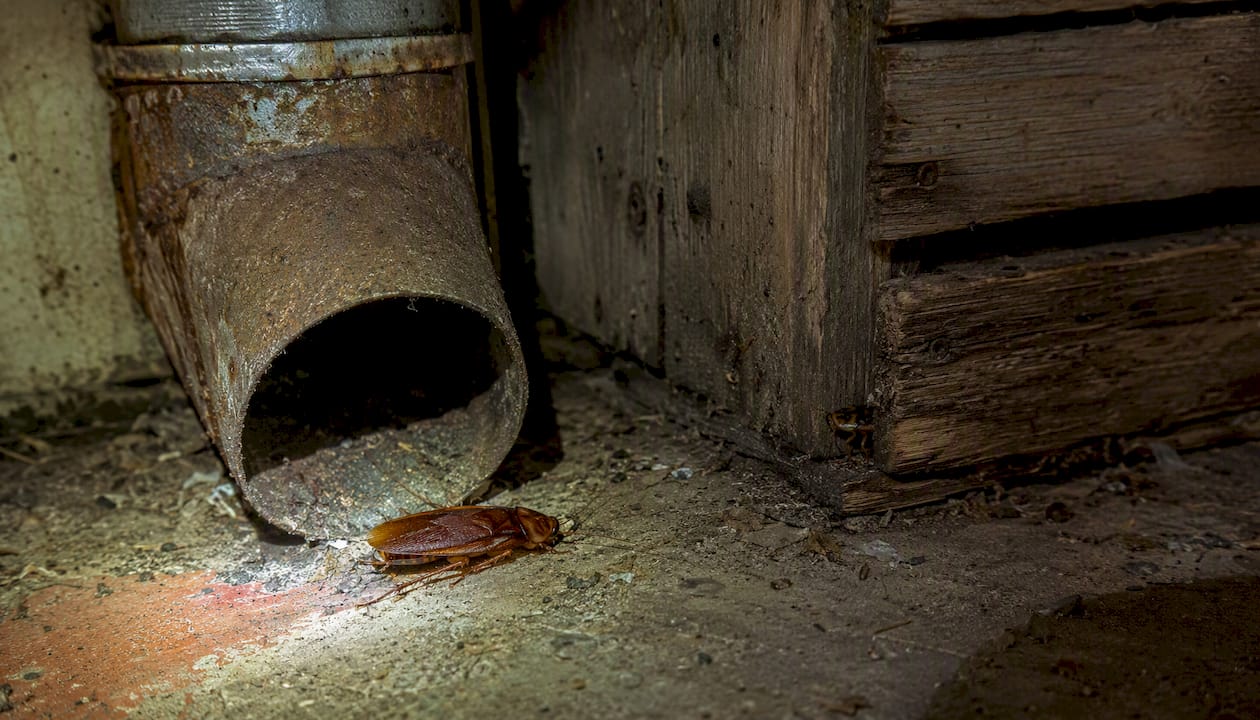
- Where you found it: Kitchen cabinet or appliance gap = almost certainly German; basement, drain, or garage = likely American
Finding a German cockroach indoors almost always signals an established, breeding infestation. Finding an American cockroach is more often a stray entry from outside. Act accordingly: a single German roach warrants immediate inspection and baiting; a single American roach warrants sealing entry points and checking drains.
Key Takeaways
Correct species identification is the single most important step before any cockroach treatment, because the control strategies for German and American cockroaches are fundamentally different.
| Point | Details |
|---|---|
| ID rule: size and stripes | German = ½ inch, two dark stripes; American = 1¼–2 inches, yellow figure-8 on pronotum. |
| German = established infestation | A single German cockroach indoors almost always signals a breeding colony, not a stray entry. |
| German cockroaches are harder to control | Egg-carrying behavior, harborage in appliance voids, and bait aversion make targeted gel bait plus IGR necessary. |
| American cockroaches need exterior control | Interior baiting alone rarely works; seal entry points and address outdoor harborage first. |
| Nymphs of multiple sizes = act now | Mixed nymph stages confirm active breeding and are the clearest trigger for professional IPM treatment. |
Inspect early, identify correctly, and treat the source rather than the symptom.
Table of Contents
- How do German and American cockroaches compare side by side?
- What signs tell you there's an active infestation?
- Why are German cockroaches usually harder to eliminate?
- What health risks do cockroaches pose in your home?
- How do you control German vs. American cockroaches?
- How do you prevent roaches from coming back?
- When should you call a pest-control professional?
- Sources
How do German and American cockroaches compare side by side?
The difference between German and American cockroaches goes well beyond size. Behavior, habitat preference, and reproductive pace all affect which treatment actually works.
| Feature | German Cockroach | American Cockroach |
|---|---|---|
| Adult length | ½–⅝ inch | 1¼–2 inches |
| Color and markings | Light tan; two dark parallel stripes on pronotum | Reddish-brown; yellow figure-8 on pronotum |
| Typical indoor locations | Kitchen, bathroom, appliance voids, cabinets | Basement, drains, utility rooms, garage |
| Flight ability | Rarely flies despite having wings | Can fly, especially in warm weather |
| Reproductive pace | Very fast; female carries egg case until near hatching | Slower; female glues egg case near harborage |
| Infestation implication | Almost always an established indoor colony | Often a single entry from outdoors |
| Ease of control | Harder; requires targeted indoor baiting | Easier; exterior exclusion usually resolves it |
According to the University of Maryland Extension, finding a German cockroach usually indicates an interior, established infestation, while finding an American cockroach more often reflects an outdoor entry from sewers or drains.
Single clearest diagnostic sign for each species:
- German cockroach: Two thin, dark parallel stripes on the pronotum, visible even on small nymphs
- American cockroach: Yellowish figure-8 pattern on the pronotum, combined with its noticeably larger reddish-brown body
Pro Tip: If you spot a roach in your kitchen and it's small enough to fit under a dime, photograph the area behind its head. Two dark stripes there confirm German cockroach — and that means you need to check every appliance void in the room, not just where you saw it.
What signs tell you there's an active infestation?
A single roach sighting is one data point. The real question is whether a colony is already established and breeding in your walls.
Inspection checklist — work through these in order:
- Droppings: German cockroach droppings look like dark pepper grains or small smear marks in corners and along edges; American cockroach droppings are larger, cylindrical, with ridged sides
- Smear marks: Dark, irregular smears along baseboards or wall junctions indicate heavy German cockroach traffic
- Egg cases (ootheca): German females carry the ootheca until just before hatching, so you rarely find intact cases; American females glue their cases near harborage, making them easier to spot
- Nymphs of multiple sizes: Seeing nymphs at several different growth stages is the clearest field signal of an active, breeding population
- Musty odor: A strong, oily smell in a kitchen or bathroom cabinet often precedes a visible German cockroach outbreak
NC State Extension entomology notes that early-instar nymphs staying close to primary harborage are among the most reliable indicators of an active German cockroach colony.
Lifecycle numbers that help you gauge severity
The University of Florida IFAS Extension documents that active German cockroach populations often contain a majority of nymphs, which is why a small adult sighting can mask a much larger hidden colony. American cockroach egg cases hold roughly 10–20 eggs and are glued near harborage, making them more vulnerable to surface treatments than German cockroach cases, which are protected inside the female's body until nearly ready to hatch.
For photos and detailed ID keys, university extension pages (Penn State, NC State, UMD) publish close-up images of nymphs, egg cases, and droppings that are far more useful than generic stock photos.
Why are German cockroaches usually harder to eliminate?
The biology stacks against you. German cockroaches are almost entirely indoor animals. They don't have an outdoor population to retreat to, so every generation lives, breeds, and dies inside your home. That closed loop means populations can grow fast without any external pressure reducing them.
The egg-carrying behavior is a major factor. Because the female keeps the ootheca attached until just before hatching, surface insecticide sprays rarely reach the eggs. You can kill every visible adult and still have a new generation emerge two weeks later from eggs that were never exposed.
German cockroaches have also developed bait aversion in some populations, particularly resistance to older glucose-based baits. Rotating active ingredients and using modern non-repellent gel formulations improves results significantly in these cases. Correct bait selection matters as much as correct placement.
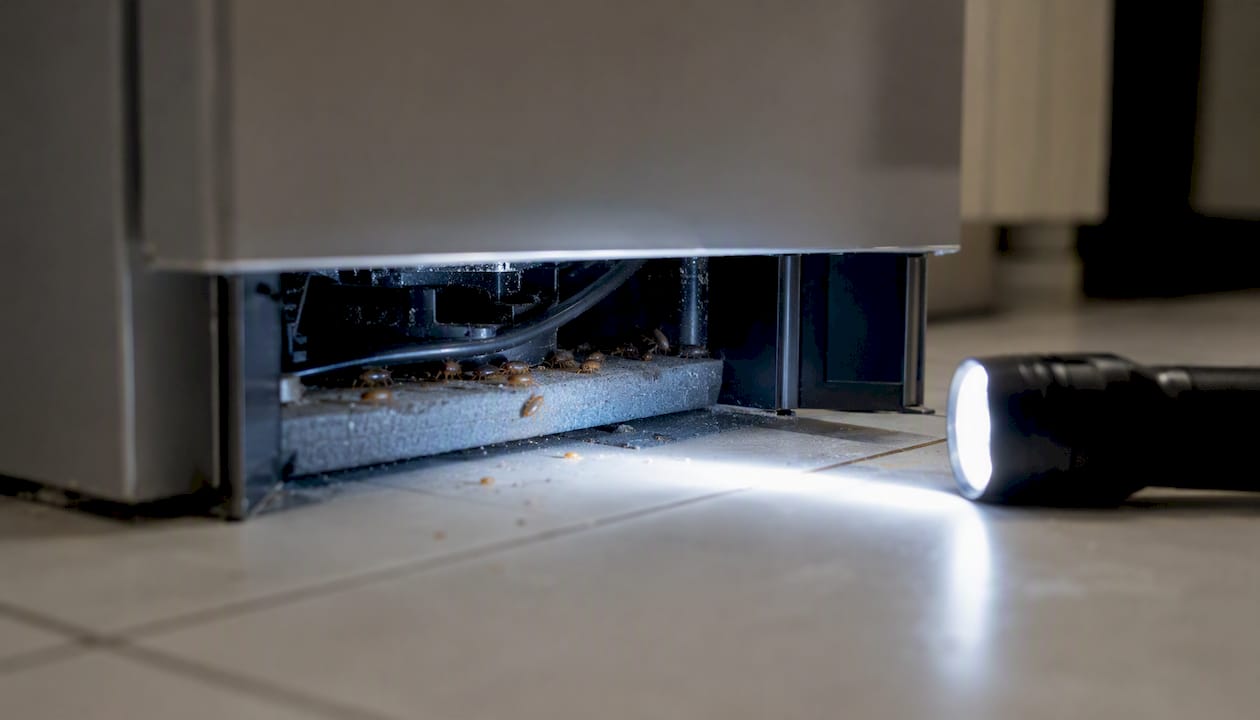
Harborage behavior compounds the problem. German cockroaches pack into tight voids — behind refrigerator motor housings, inside dishwasher door panels, under stove burner boxes — where sprays don't penetrate and where the population density can be extreme. According to NC State Extension, early-instar nymphs rarely wander far from primary harborage, which is why locating and treating the specific void is more effective than broad spraying.
Bait transfer (secondary kill) is the mechanism that actually works: properly placed gel bait lets affected roaches carry active ingredient back into harborage through feces and contact, reaching individuals that never touched the bait directly. That's why placement precision matters far more than product volume.
German cockroaches are also classic hitchhikers. They arrive in grocery bags, used appliances, and corrugated cardboard boxes. Even a spotless home can get an infestation from a single infested delivery.
Pro Tip: Pull your refrigerator away from the wall and shine a flashlight at the motor housing. If you see tiny dark nymphs no bigger than a sesame seed, that's your primary harborage. Place gel bait in small dots around that void — not on open surfaces where roaches rarely feed.
What health risks do cockroaches pose in your home?
Both species contaminate food and surfaces, but German cockroaches carry a heavier health burden simply because they live where you prepare food.
Contamination and health risks to know:
- Pathogen transport: Cockroaches physically transfer bacteria including Salmonella and E. coli from drains and waste to food-contact surfaces
- Allergen production: Cockroach body parts, shed skins, and feces produce proteins that trigger allergic reactions and worsen asthma, particularly in children
- Food adulteration: Droppings, shed skins, and secretions contaminate stored food and food-preparation surfaces
- Asthma triggers: German cockroaches' close association with kitchens makes them a primary source of indoor allergen exposure
The National Pest Management Association confirms that cockroaches can carry and physically transfer pathogenic organisms and produce allergens that aggravate asthma, with German cockroaches particularly linked to indoor allergen exposure due to their kitchen harborage.
German cockroaches' kitchen-centric lifestyle means their allergens accumulate in the same spaces where food is stored and prepared. American cockroaches, spending more time in basements and drains, contribute less directly to kitchen allergen load, though they still carry pathogens from sewers.
How do you control German vs. American cockroaches?
Treatment strategy differs sharply between the two species. Using the wrong approach wastes time and money.
German cockroach control: step by step
- Inspect and map harborage. Pull appliances, check cabinet hinges, look behind backsplash tiles. Mark every location where you find droppings, nymphs, or egg cases.
- Place gel bait in small dots near harborage. Apply pea-sized amounts in cracks, hinges, and voids close to where roaches are active. Multiple small placements outperform large globs.
- Add an insect growth regulator (IGR). IGRs disrupt nymph development and break the reproductive cycle. They work alongside bait, not instead of it.
- Remove competing food sources. Store food in sealed containers, fix leaks, and clean grease from stove surfaces. Competing food reduces bait uptake.
- Place sticky monitors. Position monitors near harborage zones to track whether activity is declining. Expect to see a drop within 2–4 weeks with correct baiting.
- Replace bait before it dries out. Dried or contaminated bait is ignored. Refresh placements every few weeks until monitors show no activity.
American cockroach control: step by step
- Find and treat the exterior source. Check mulch beds, storm drains, and foundation gaps. American cockroaches often originate outside in sewers and drains, so interior baiting alone rarely solves the problem.
- Seal entry points. Caulk gaps around pipes, utility penetrations, and door sweeps. Pay attention to basement windows and floor drains.
- Apply bait at entry points. Place bait stations near foundation vents, garage doors, and drain covers — where roaches enter, not deep inside living spaces.
- Flush and treat drains. Pour a diluted enzyme cleaner into floor drains monthly to reduce organic buildup that attracts American cockroaches.
- Monitor interior sightings. After exterior source control, interior sightings typically drop within 2–3 weeks. Persistent sightings after that point suggest an unaddressed entry route.
When DIY is likely to fail:
- You're seeing nymphs at multiple sizes (active breeding, not just strays)
- Sightings continue after two weeks of correct baiting
- You live in a multi-unit building where roaches move between units
- The infestation is in a wall void or structural space you can't access
- You've used sprays that may have scattered the population and contaminated bait sites
Cornell CALS Integrated Pest Management recommends directed baiting and IGRs over routine broad sprays, which can drive roaches deeper into harborage and increase resistance pressure.
How do you prevent roaches from coming back?
Control without prevention is a short-term fix. These steps address the conditions that attract both species.
High-impact prevention actions:
- Seal gaps around pipes and utilities with caulk or copper mesh; even a gap the width of a credit card is enough for a German cockroach nymph
- Fix leaks immediately — both species need moisture, and a dripping pipe under a sink is a prime harborage
- Store food in hard-sided sealed containers, including pet food; cardboard boxes are both food and shelter for German cockroaches
- Move mulch and leaf litter at least 12 inches from your foundation to reduce American cockroach harborage near entry points
- Flush floor drains monthly with hot water or an enzyme cleaner to remove organic buildup
- Inspect secondhand appliances and furniture before bringing them inside; German cockroaches hitchhike in refrigerator motor housings and behind dishwasher panels
Seasonal note: American cockroach activity increases in summer heat and after heavy rain, when outdoor populations seek cooler, drier indoor spaces. Inspect foundation gaps and drain covers in late spring before peak season.
Multi-unit buildings require a different approach. German cockroaches spread between units through shared plumbing chases and wall voids, so individual-unit treatment without building-wide coordination often fails. If you're a tenant, report sightings to building management and ask about a coordinated treatment program. A single treated unit surrounded by untreated neighbors will re-infest within weeks.
When should you call a pest-control professional?
Some situations are beyond what gel bait and a caulk gun can fix.
Call a professional when:
- You're seeing nymphs of multiple sizes, which confirms active breeding rather than a stray entry
- Sightings persist after two full weeks of correct DIY baiting
- You find roaches in multiple rooms or on multiple floors
- Anyone in the household has asthma or allergies that are worsening
- You live in a multi-unit building where neighbors have also reported roaches
- The infestation is in a wall void, drop ceiling, or other inaccessible space
Questions to ask a pest-control technician before hiring:
- Do you use an IPM approach, or do you default to broadcast spraying?
- Which gel bait products do you use, and how do you rotate active ingredients?
- Are the products safe for children and pets, and what's the re-entry time?
- What does your follow-up schedule look like, and how many visits are included?
- For multi-unit buildings: can you coordinate treatment across affected units?
On cost: Residential cockroach treatment in the U.S. typically ranges based on infestation severity, property size, and whether a one-time or ongoing maintenance contract is needed. A single-visit treatment costs less than a quarterly maintenance program, but for German cockroaches, a single visit rarely resolves a moderate-to-heavy infestation. Ask for a written scope of work that specifies the number of follow-up visits before you sign anything.
Professional IPM-based pest control differs from a spray-and-go visit in one critical way: the technician locates harborage first, then applies targeted bait and IGR at the source, monitors results, and adjusts on follow-up. That process consistently outperforms broadcast spraying for German cockroaches.
A practical note from Bespoke-Enviro Services
The single most common mistake homeowners make is treating before identifying. Spraying a German cockroach infestation with a general contact insecticide scatters the population, contaminates bait sites, and makes the problem harder to resolve. Identify the species first, locate the harborage second, then apply the right tool — targeted gel bait and IGR for Germans, exterior exclusion and entry-point bait for Americans.
When you do bring in a professional, ask specifically about their IPM approach. A technician who inspects before treating, uses directed gel bait, and schedules a follow-up visit is giving you a real treatment plan. One who arrives with a sprayer and leaves in 20 minutes is not.
Sources
Photos, detailed ID keys, and in-depth biology are available at the university extension pages below. These are the sources pest professionals and extension entomologists rely on.