
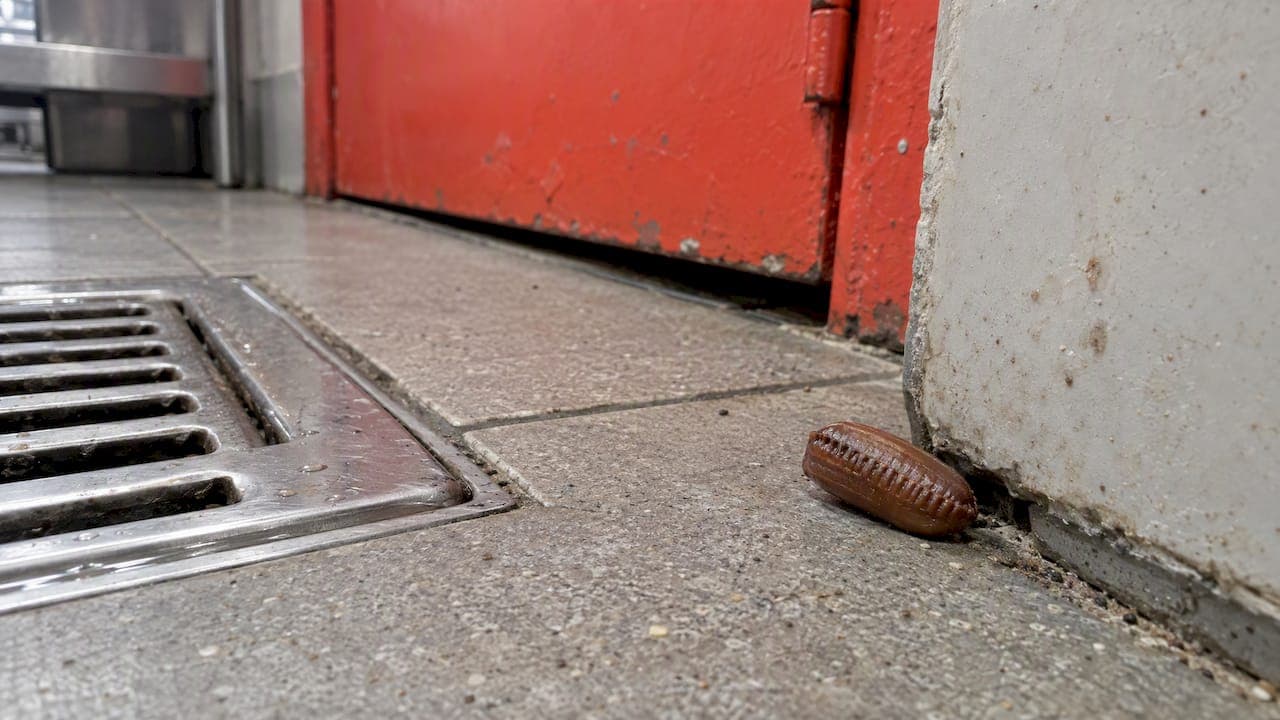
A cockroach egg case, called an ootheca, is a small, hard, brown capsule, usually shaped like a bean or a tiny purse, with a ridged seam along one edge. Most are between a quarter and three-eighths of an inch long (about 6 to 10 mm). Each holds a double row of eggs sealed inside a tough shell. If you have found something that fits this description in a cabinet, behind an appliance or inside a cardboard box, this guide helps you confirm what it is, which species laid it, and what to do next.
We are a Singapore pest control company, and we are asked to identify these capsules often. The short version: the case tells you a cockroach has been breeding nearby, but it does not tell you how big the problem is. The sections below show you how to read the clues.
TL;DR
- A cockroach ootheca is a brown, hardened, bean-shaped or purse-shaped capsule with a ridged seam on one edge, roughly 6 to 10 mm long depending on species.
- Size and color point to the species: German and brown-banded cases are small and light, American and Oriental cases are larger and darker.
- One case can hold roughly 12 to 40 eggs, so finding one means more cockroaches may be close by.
- Photograph both sides next to a ruler, note where you found it, and look nearby for droppings, shed skins and live roaches before you decide anything.
- Removing the case is not enough. The adults and the food, water and shelter they use have to be dealt with.
Table of Contents
- What a cockroach egg case looks like
- How to tell the species by its egg case
- Is it really a cockroach egg case?
- Full, hatched or empty: reading the condition
- How many eggs, and how long until they hatch
- Where egg cases turn up in Singapore homes and buildings
- Confirming your find: a five-minute method
- What to do once you have found a case
- Our perspective on egg cases
- When to call a professional
- FAQ
- Sources
What a cockroach egg case looks like
Cockroach eggs are not laid one by one. The female packs them into an ootheca, a protective case that shields the eggs from drying out and from most household threats. Washington State University's cockroach guide describes these cases as leathery, bean-shaped or purse-like structures whose size, color and shape differ by species.
When you hold one up, look for these features:
- Shape: an oval or bean outline, slightly flattened, like a very small handbag or purse.
- Seam: a raised ridge along one long edge, often with small, evenly spaced bumps or notches. Each bump matches an egg compartment inside.
- Surface: smooth, leathery and slightly glossy when fresh, then dull and dry as it ages.
- Color: tan to reddish-brown to near black, depending on species and age.
- Hardness: firm and slightly springy, not soft or sticky like a gel or a fungus.
The ridged seam is the single most useful feature. Seeds, dried beans, pieces of rubber, mouse droppings and some snail or spider egg cases can look vaguely similar at a glance, but they do not have that segmented keel running along one side.
How to tell the species by its egg case
Species matter because they hide in different places and respond to different treatments. Entomologists treat the ootheca as a useful identification aid because the cases are distinctive from one species to the next, as the Washington State University guide explains. Kansas State University's cockroach publication gives these working descriptions:
| Species | Case color | Case length |
|---|---|---|
| German cockroach | Light tan | About ¼ inch |
| Brown-banded cockroach | Light brown | About ¼ inch |
| American cockroach | Brown when laid, turning black | About ⅜ inch |
| Oriental cockroach | Dark reddish-brown | About ⅜ inch |
Those figures come from the Kansas State University cockroach guide. Two more species are worth knowing here in the tropics.
American cockroach
This is the large reddish-brown roach many Singapore residents see near drains, bin centers and food areas. The National University of Singapore's species entry describes the ootheca as a brown, hardened, purse-shaped case placed near food, either dropped or glued to a surface. The same entry notes that an average female can produce one about once a month for ten months, which is why a single overlooked case matters.
Australian cockroach
The University of Florida's fact sheet reports that the Australian cockroach's ootheca can reach 11 mm and may contain 24 embryos. The female carries it on her abdomen for a time before depositing it in a hidden crack or crevice. If your case is on the larger end of the range, this species is a candidate alongside the American cockroach.
Oriental cockroach
University of Florida research reports that Oriental-cockroach capsules contain about 16 eggs and incubate for roughly 42 to 81 days. The dark reddish-brown color is the giveaway.
German cockroach
The German cockroach produces the smallest case of the group, light tan and around a quarter inch. It is the species most often linked with kitchens and food premises. Females of many small species carry the case until shortly before the nymphs emerge, so you often see a case attached to a live female rather than one lying loose. If you see small roaches and a pale case together, read our comparison of the German cockroach versus the American cockroach to confirm which one you are dealing with.
Is it really a cockroach egg case?
A brown capsule does not always mean cockroaches. Run through this short check before you assume.
- Check for the seam. A ridge with evenly spaced bumps on one edge is the strongest sign. A smooth pellet with no seam is more likely a dropping, a seed or debris.
- Measure it. Use a ruler marked in millimeters. A genuine case in a Singapore home will usually fall between about 5 and 12 mm.
- Press it gently with a tissue, not your fingers. A true ootheca is hard. A soft, crumbly object is probably droppings or dirt.
- Look at where it is. Cases sit in sheltered, hidden places: behind furniture, in cracks and crevices, under shelves, inside cardboard, and in cabinet and storage corners.
- Look around it. Cockroach droppings resemble ground pepper or small dark cylinders. Shed skins, a musty smell and live roaches at night all strengthen the case.
If you also see tiny dark pellets with ridges, they may be from a different pest. Our guide to rodent droppings identification shows how to tell the two apart by size and shape.
Full, hatched or empty: reading the condition
This is the question most people want answered, and it needs caution. Appearance helps, but it is not a guarantee.
- Plump, firm and sealed: the capsule looks swollen and the seam is tight. It is likely still holding eggs, or has not yet been opened.
- Split, hollow or flattened: the seam is open or lifted along the ridge, and the case feels light and papery. This usually means nymphs have already emerged.
- Dull, dried and crumpled: often an old case that has been sitting for a while.
Treat any of these as evidence that cockroaches have bred in that spot. A hatched case is not harmless: it means the young have gone somewhere, and that somewhere is probably within a few meters. A sealed case does not tell you whether the eggs are viable, and a split case does not tell you how long ago it hatched.
So do not use the condition of one case to decide whether you have an active problem. Use it alongside what else you can find: live nymphs, droppings, shed skins or more cases. One lone case in a long-empty storage box is very different from three cases behind the refrigerator plus droppings.
How many eggs, and how long until they hatch

Kansas State University gives a range of 12 to 40 eggs per ootheca, and says the egg stage lasts from a few weeks to a few months. The exact figure depends on the species. For example, the Oriental cockroach's roughly 16 eggs hatch after about 42 to 81 days, and the Australian cockroach case may hold around 24.
In practical terms, that means:
- One case can release a couple of dozen or more nymphs at once.
- A female can produce further cases over her life. The American cockroach, for instance, can produce about one a month for ten months.
- Warm, humid conditions typical of Singapore do not slow this down, so waiting rarely helps.
Where egg cases turn up in Singapore homes and buildings
Cockroaches choose spots that are warm, dark, close to food and close to moisture. In Singapore homes and commercial premises, we most often find cases in:
- Kitchen cabinets, especially in corners and behind hinges.
- Behind and under refrigerators, cookers and dishwashers.
- Under sinks, near pipe entry points and drain traps.
- Cardboard boxes, delivery cartons and stored paper.
- Behind skirting boards, in door frames and in wall cracks.
- Bin areas, service ducts, storerooms and pantry shelving.
The NUS entry on the American cockroach explains that the female places the case near a food source, and that the case contains enough water for the eggs to develop. That is why a case can survive in a dry-looking cabinet: it does not need the surroundings to be damp.
If you recently moved in, cases are one of the things a careful check can catch early. Our guide on a move-in pest inspection in Singapore lists what to check before you unpack.
Confirming your find: a five-minute method
You do not need special equipment to gather good evidence. This is the same first step we would take before a visit.
- Put on gloves and wear a mask if the area is dusty.
- Photograph the object from both sides, with a millimeter ruler beside it, in good light.
- Note exactly where you found it and the date.
- Check nearby protected spots for droppings, shed skins, live roaches and other cases.
- If you want to keep the specimen, place it in a closed container so it is not crushed.
- Place sticky traps along floor and wall edges near likely hiding places. Kansas State University extension guidance explains that sticky traps monitor populations and reveal hiding places and help judge whether control is working.
If you want to compare what you see with other signs, our list of signs of cockroach infestation covers droppings, smears, odor and nighttime sightings.
What to do once you have found a case
Removing the case is a reasonable first step, but it is only a first step. Here is what we advise.
- Remove it carefully. Use a paper towel or tissue, seal it in a bag and bin it outside. Crushing a case can release nymphs.
- Clean the area. Wipe surfaces, vacuum cracks and gaps, and remove grease, crumbs and food spills.
- Cut off food and water. Store food in sealed containers, fix dripping pipes, empty bins daily and break down cardboard.
- Seal entry points. Fill gaps around pipes, skirting boards and cabinets.
- Keep monitoring. Check traps for a few weeks. New nymphs or fresh droppings mean breeding is continuing.
A case that has been found in a food business needs a faster response. If you manage a kitchen, our NEA-ready kitchen pest checklist sets out what to check and record each day.
Our perspective on egg cases
We have more than 30 years of experience in pest management in Singapore, and our view on egg cases is consistent: the case is a clue, not the problem. Cockroaches that laid it are still somewhere, and the conditions that attracted them are still there.

That is why we build treatment around integrated pest management (IPM). We inspect first, using tools such as thermal imaging where it helps us find hidden activity. We then identify the species, because a German cockroach and an American cockroach hide in different places and need different approaches. We favor non-toxic, eco-friendly methods where they are effective, because homes have people and pets in them. Our technicians are NEA-licensed, and we are available around the clock for urgent cases.
What we would encourage you to avoid is spraying the area where you found the case and hoping it works. It rarely reaches the harborage, and it can scatter cockroaches deeper into the structure. Proper identification, targeted treatment and follow-up are what give lasting results.
— Bespoke-Enviro Services
When to call a professional
Call a pest control company when you find:
- Several cases in different places.
- Live nymphs, which are small, wingless and pale to dark brown.
- Cases together with droppings, a musty odor or roaches in daylight.
- Any cockroach evidence in a restaurant, food shop, office or shared building.
- A recurring problem after you have cleaned and removed cases yourself.
Our general pest control service in Singapore starts with an inspection to locate the harborage, identify the species and decide on a treatment plan for homes, businesses and property managers. We also handle fly, mosquito and other common pests under the same program.

If you would like us to look at what you have found, send us your photos and the location, and we will help you work out the next step. You can reach us through the Bespoke-Enviro website.
FAQ
What do cockroach egg sacs look like?
They are small, hard, brown capsules shaped like a bean or a tiny purse, with a ridged seam along one edge. Depending on the species they range from light tan to near black and from about a quarter to three-eighths of an inch long. The seam often shows small evenly spaced bumps that match the egg compartments inside.
How many eggs are in one cockroach egg case?
Kansas State University gives a range of about 12 to 40 eggs per case. Oriental cockroach cases hold roughly 16 eggs, and Australian cockroach cases may contain around 24. The exact count depends on the species.
How long does it take for cockroach eggs to hatch?
The egg stage lasts from a few weeks to a few months, depending on the species and conditions. For the Oriental cockroach, University of Florida research puts incubation at about 42 to 81 days. Do not assume a case is harmless because it has been there a while.
Does finding an egg case mean I have an infestation?
It means cockroaches have bred nearby, but one case alone does not show how many roaches are present or where they live. Look for droppings, shed skins, nymphs and more cases, and use sticky traps to check activity. If you find signs in more than one place, book an inspection.
Can I just throw the egg case away?
Yes, seal it in a bag and bin it outside, but do not stop there. The female that laid it and any nymphs that have already hatched are still around, and the food, water and shelter that attracted them remain. Clean, seal gaps and monitor, or ask a licensed professional to inspect.
Sources
- Kansas State University, Cockroaches (MF2765)
- Washington State University cockroach guide
- National University of Singapore, Periplaneta americana entry
- University of Florida, Australian cockroach fact sheet
- University of Florida, Oriental cockroach fact sheet
- Kansas State University, Cockroaches: Household Pests