
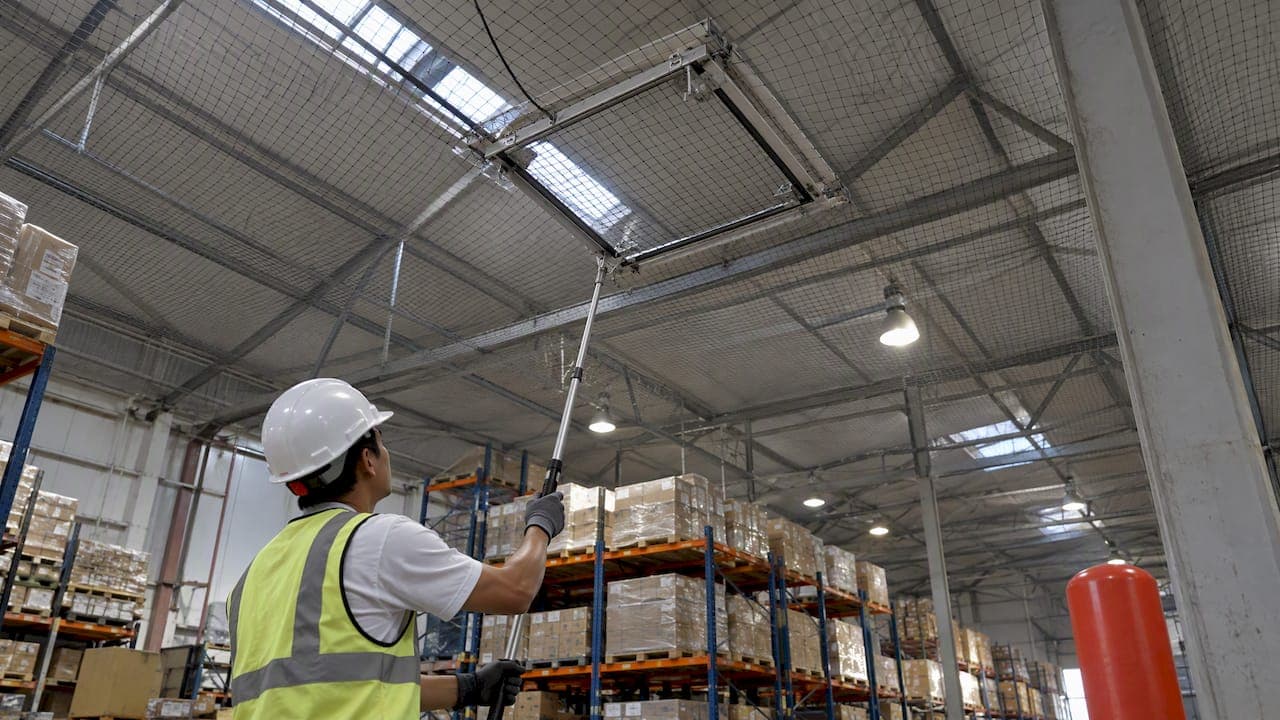
For warehouses, the most reliable bird control approach is a layered Integrated Pest Management program that prioritizes physical exclusion and housekeeping, then adds targeted deterrents. Netting, sealed entry points, and spikes or wires each play a role, but exclusion carries the program. Most facilities also need an active pest control contract to meet food safety and compliance expectations.
TL;DR:
- Use sun resistant netting across rooflines and rafters, then add spikes or wires on ledges and beams where complete coverage is impractical.
- Food storage sites should maintain a written pest control contract lasting 12 months with an operator licensed by NEA, monthly inspections, and documented corrective actions.
- Do not disturb active nests; use a licensed contractor for established nesting sites, unclear species, or removals requiring roof or ceiling access.
- Lasers and sound devices provide temporary relief outdoors, but birds habituate to fixed deterrents, so rotate them or combine them with exclusion.
- Trapping individual birds rarely solves recurring problems; seal entry gaps and remove food waste, or replacement birds can quickly occupy the same site.
Table of Contents
- Exterior Warehouse Bird Control for Rooflines, Ledges and Dock Areas
- Interior Controls for Ceiling Voids, Loading Bays and Racking
- Handling Nests and Removing Birds Without Breaking the Law
- Compliance, Contracts and Inspections Facilities Should Require
- Installation and Maintenance Details That Prevent Common Failures
- How a Licensed Contractor Applies IPM to Warehouse Sites
- Why Proofing Beats Repeated Reactive Fixes
- Get a Bird Proofing Survey for Your Warehouse
- FAQ
- Sources
Exterior Warehouse Bird Control for Rooflines, Ledges and Dock Areas
Rooflines, parapets, and loading dock canopies give pest birds the ledges and rafters they prefer for roosting. Heavy-duty, UV-stable netting is the primary tool here because it seals off entire roof sections and rafter bays rather than just discouraging birds from a single perch. Netting that degrades under sun exposure fails within a season, so material specification matters as much as installation.
Spikes, anti-perch wires, and low-voltage electric wire systems work as secondary measures on ledges, signage, and beams where full netting coverage is not practical. Lasers and acoustic devices can offer short-term relief in open yard areas, but research reviews show birds habituate to a fixed deterrent unless it is rotated or combined with another method.
- Use UV-stable netting across rooflines and rafter bays for the most durable exterior barrier.
- Add spikes or anti-perch wires on ledges and beams where netting is impractical.
- Treat lasers and acoustic tools as short-term supplements, not standalone solutions.
- Stage rooftop and dock work with proper fall protection, since large industrial roofs carry real safety risk during installation.
Interior Controls for Ceiling Voids, Loading Bays and Racking
Birds that get past the perimeter still need somewhere to land and nest, so interior proofing focuses on the ceiling void, dock doors, and storage zones where droppings and nesting debris cause the most damage.
- Install overhead netting in patterns that seal rafters and ceiling voids while leaving zippered access panels at every light fixture, sprinkler head, and HVAC unit.
- Manage dock doors with air curtains, strip curtains, or stricter dock scheduling so doors are not left open longer than loading requires.
- Place soft spikes or wires on interior beams and signage where full netting coverage is not feasible.
- Give food storage and fragile stock areas extra attention, since droppings there create contamination risk beyond simple property damage.
Dock discipline also intersects with general warehouse layout. Facilities reviewing their overall floor plan for safety reasons, including OSHA-compliant floor marking and traffic flow, often find that the same walkthrough is a good opportunity to flag open doors, gaps in roller shutters, and other spots birds exploit.
Handling Nests and Removing Birds Without Breaking the Law
A single bird trapped inside a warehouse can usually be guided out by dimming interior lights, opening the nearest exterior door or skylight, and giving the bird a clear, unobstructed path toward daylight. Forcing it toward people or equipment tends to make the situation worse.
Nests are a different matter. Under the Animals and Birds (Pigeons) Rules, it is illegal to keep, harbor, or feed pigeons without a license, and authorities can require removal of roosting or nesting sites, with enforcement ranging from advisory letters to fines and remedial work billed to the owner.
- Avoid disturbing an active nest during breeding periods; timing matters as much as technique.
- Trapping individual birds without closing entry points rarely solves the problem, since replacement birds move in quickly once attractants remain.
- Escalate to a licensed contractor when nests are established, when the species or location is unclear, or when removal requires rooftop or ceiling-void access.
Compliance, Contracts and Inspections Facilities Should Require
Regulatory expectations give facilities a clear baseline to hold contractors and their own teams to. NEA's code of practice expects food-storage premises to maintain ongoing pest control arrangements, typically a 12-month contract with an NEA-licensed Vector Control Operator and regular site inspections, alongside housekeeping measures that reduce vector and bird attractants. NEA and NParks also emphasize coordinated waste management, since uncollected food waste is one of the strongest draws for pest birds.
- Require a written 12-month pest control contract, not a one-off callout, for any food-handling or storage site.
- Specify monthly inspections with written proofing plans and corrective-action logs attached to each visit.
- Keep inspection records, photos, and correspondence on file in case of an audit or enforcement inquiry.
- Confirm the contractor's license status and ask how feeding or harboring violations on neighboring sites are handled, since enforcement can extend beyond a single property.
Our guide to SFA pest control requirements walks through what documentation an audit typically expects.
Installation and Maintenance Details That Prevent Common Failures
Most proofing failures trace back to two things: cheap materials and maintenance crews cutting into netting to reach a fixture. Specifying the right details up front avoids both.
- Specify UV-stable netting and stainless steel fixings rated for exterior exposure, anchored to structural points rather than to the netting's own edges.
- Build zippered access panels into every netting run near lights, sprinklers, and HVAC units so maintenance staff never need to cut the material.
- Schedule a pre-season inspection ahead of breeding periods and a monthly walkthrough the rest of the year to catch tears or gaps early.
- Checklist every installation against anchor points, panel locations, and material certifications before signing off.
Pro Tip: Photograph every access panel location at installation so future maintenance teams know exactly where to unzip instead of cut.
How a Licensed Contractor Applies IPM to Warehouse Sites
Our approach follows a layered IPM workflow: a site survey to identify entry points and attractants, exclusion work, a housekeeping plan addressing waste and food sources, targeted deterrents where full exclusion is not possible, and ongoing inspections. We rely on humane, non-toxic methods, including MA Vapor and Nicarbazin, applied by NEA-licensed technicians. Deliverables typically include a documented site survey, an installation plan built around maintenance access, and monthly reports. When vetting any contractor, ask about license status, workmanship guarantees, and the maintenance service level in the contract.

Why Proofing Beats Repeated Reactive Fixes
Facilities that treat bird problems reactively end up paying for the same callout repeatedly. Exclusion done right the first time, backed by housekeeping discipline and a maintained contract, costs less over a building's life than cycling through traps and one-off cleanups. It also protects stock integrity and audit readiness, which matter more than any single bird sighting.
— Bespoke-Enviro Services
Get a Bird Proofing Survey for Your Warehouse
We handle bird control and proofing as part of our wider general pest control services, so a warehouse can address birds, rodents, and other pest pressures under one contract instead of juggling separate vendors. A first engagement starts with a site survey covering rooflines, dock areas, and interior voids, followed by a proofing plan with maintenance access built in, installation, and monthly inspection reports.

If your warehouse has recurring roosting, droppings near stock, or an upcoming audit to prepare for, our bird control and proofing services page outlines what a survey and installation involve. Reach out to schedule a site visit and get a proofing plan built around your facility's layout.
FAQ
What is the best way to keep birds away from a warehouse?
The most reliable method is physical exclusion, mainly UV-stable netting across rooflines and rafters, combined with sealed entry points and consistent housekeeping around waste and food sources. Research reviews point to exclusion as the longest-lasting solution, with deterrents like spikes or lasers serving as secondary support.
How do I remove a bird from a warehouse?
Dim interior lights, open the nearest exterior door or skylight, and give the bird a clear path toward daylight without crowding it toward people or machinery. If the bird has built a nest, avoid disturbing it, since nest removal may fall under legal restrictions depending on timing and species.
How do I get pigeons out of a warehouse?
Start by closing the gaps or open doors pigeons are using to enter, since removing individual birds without sealing access points leads to quick re-colonization. Established roosts or nests usually need a licensed contractor, particularly where the Animals and Birds (Pigeons) Rules restrict feeding, harboring, or disturbing a nesting site.
What is the most effective bird deterrent?
Exclusion tools like netting outperform standalone deterrents because they physically block access rather than relying on birds staying away. Visual and acoustic deterrents can help in the short term but lose effectiveness as birds habituate, so they work best layered alongside exclusion rather than used alone.
Sources
- Animals and Birds (Pigeons) Rules - Singapore Statutes Online
- A review of nonlethal and lethal control tools for managing invasive birds (REABIC, 2023)