
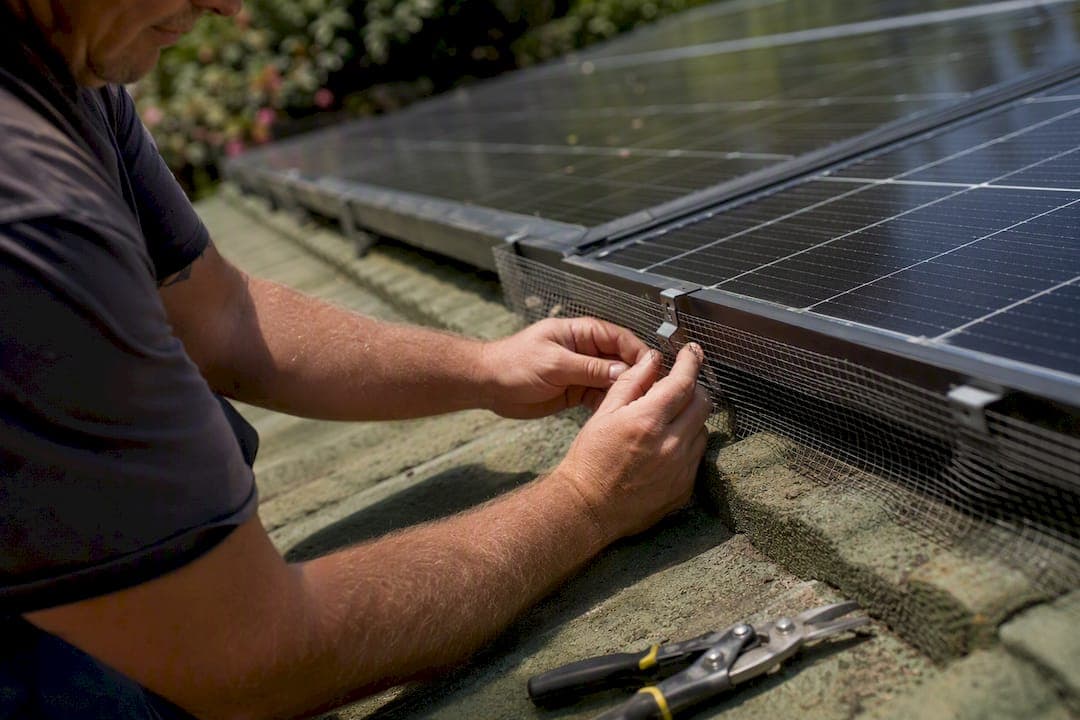
The most reliable way to stop pigeons nesting under solar panels is a full-perimeter mesh or clip-on solar skirt fitted with purpose-made clips, not spikes or decoys alone. This closes the gap birds use for shelter while keeping air flowing under the panels.
Before you do anything else:
- Check for signs first. Cooing, scratching, visible twigs, or droppings mean birds may already be nesting.
- Never seal an active nest. Trapping birds underneath panels is inhumane and can create a bigger cleanup problem.
- Call a professional if access is unsafe or nests are present. Roof height and biohazard cleanup are not DIY territory.
- DIY mesh kits exist, but most homeowners hire a specialist to protect their panel warranty and handle infestations correctly.
Key Takeaways
Clip-on mesh or solar skirts installed by a specialist who also handles safe nest removal is the only fix that solves pigeon problems permanently rather than temporarily.
| Point | Details |
|---|---|
| Mesh beats deterrents | Full-perimeter clip-on mesh stops nesting at the source; spikes, decoys, and ultrasonic devices only manage symptoms. |
| Never seal active nests | Remove nesting material and guano first, and check local wildlife protections before disturbing an active brood. |
| No-drill clips protect warranties | Purpose-made clip systems avoid drilling or adhesives that can void your solar panel manufacturer's warranty. |
| Check twice a year | Inspect corners and clips each spring and fall, since that's where gaps reopen first. |
| Combined pest-control approach | Bespoke-enviro pairs eco-friendly nest removal with warranty-safe mesh installation and follow-up monitoring. |
Table of Contents
- Why Pigeons Nest Under Solar Panels and What It Costs You
- What Actually Stops Pigeons: Mesh, Skirts, and Everything Else
- DIY or Professional Installation: How to Decide
- What Pigeon Proofing Costs and How Long It Takes
- Spotting Trouble Early and Keeping Panels Protected
- Why a Pest-Control Specialist Handles This Better Than a Handyman
- Keeping Your Roof Pigeon-Free for the Long Haul
- When to Schedule Proofing Around Nesting Season
- The Advice Most Homeowners Get Wrong
- Get a Warranty-Safe Pigeon Proofing Quote from Bespoke-Enviro
- Frequently Asked Questions
- Sources
Why Pigeons Nest Under Solar Panels and What It Costs You
Pigeons treat the gap beneath a solar array like a built-in shelter. It is warm, dry, hidden from predators, and rarely disturbed, which makes it one of the most attractive nesting spots on an entire roof.
That comfort comes at your expense. Nesting material and droppings block airflow under the panels, and blocked airflow raises operating temperature, which directly lowers cell efficiency. Left unchecked, the damage compounds over time.
- Shading from debris and nests reduces output.
- Guano is acidic and corrodes wiring, connectors, and mounting hardware over years of exposure.
- Chewed cables and displaced fittings can trigger costly repairs.
- Some manufacturers exclude bird-related damage from warranty coverage entirely.
A single pigeon pair can produce several broods a year, and each cycle adds more debris under the array.
What Actually Stops Pigeons: Mesh, Skirts, and Everything Else
Mesh skirting is the gold standard, and it is not close. A full-perimeter barrier made from stainless or PVC-coated mesh closes off the entire gap around the array rather than just discouraging perching, which is the difference between a permanent fix and a temporary annoyance for the birds.
Good mesh installations share three traits. They attach with purpose-made clips instead of screws or adhesive, so nothing penetrates the panel frame or roof covering. They use UV-stable material, since cheap plastic mesh turns brittle and cracks within a season or two of sun exposure. And they include a foam filler wherever the mesh meets roof tiles, closing the small gaps birds are surprisingly good at finding.
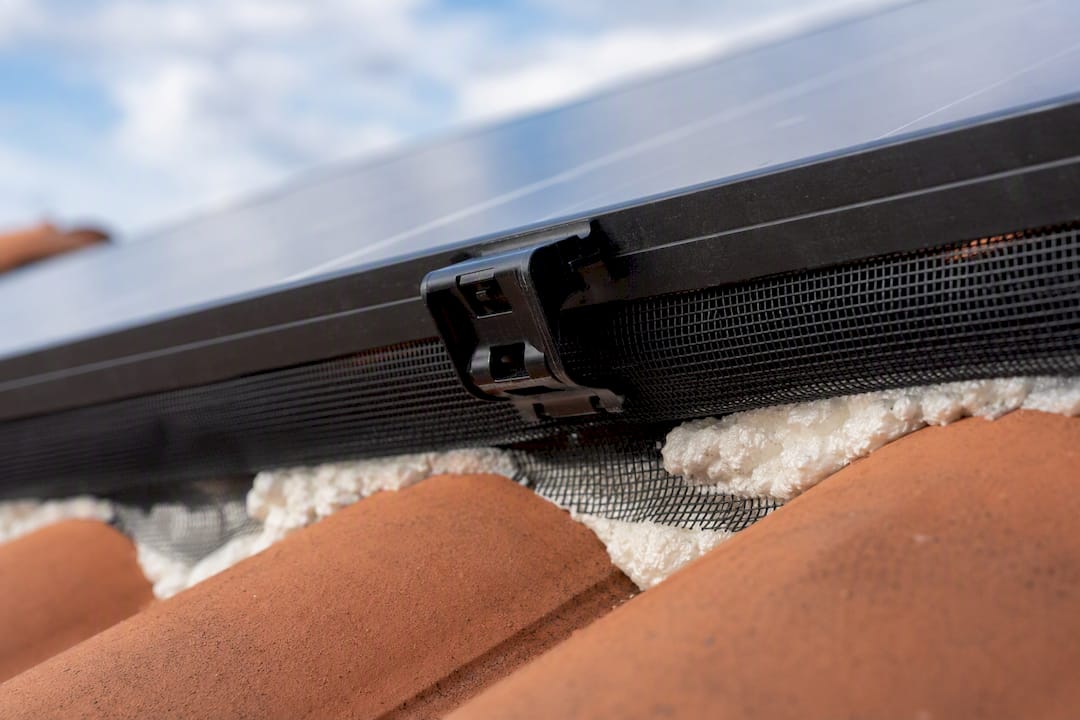
Solar skirts are a finished, factory-cut version of the same idea. Instead of a roll of mesh trimmed on-site, a skirt is a pre-formed clip-on trim that matches the panel edge. They cost more per panel but look tidier on street-facing slopes, which matters if your homeowners' association or your own eye cares about curb appeal.
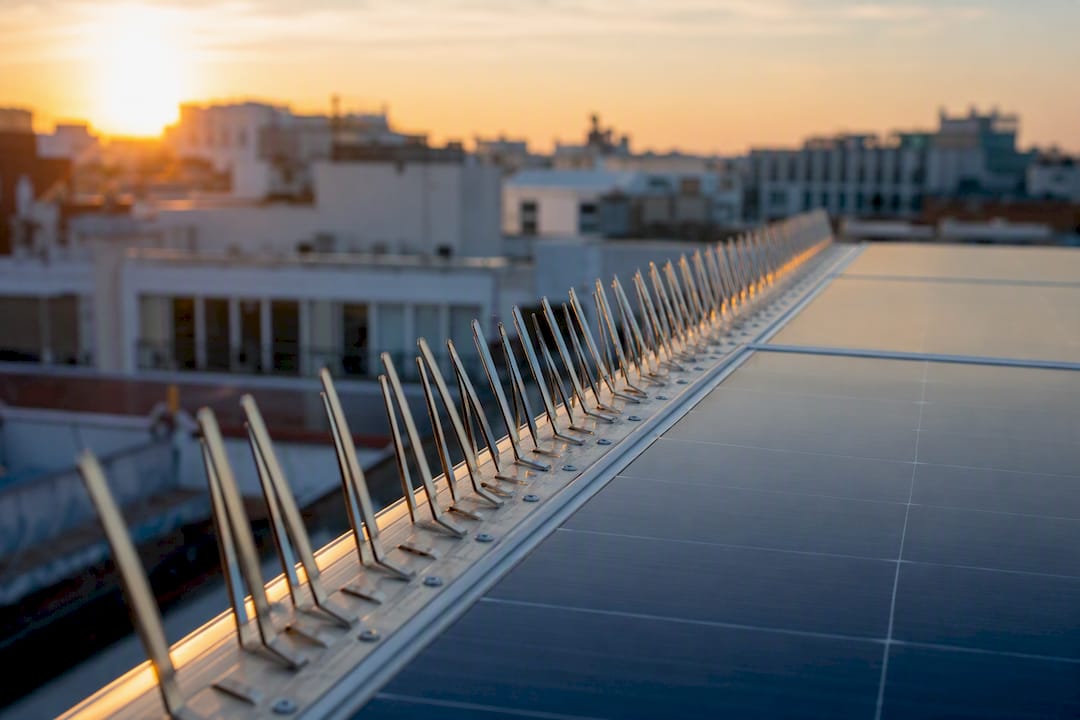
Perch spikes and bird wire solve a different problem. They stop pigeons from perching on the panel edges or roof ridge, but they do nothing about a bird that walks straight under the array from an open side. Spikes work well as a secondary layer, not a standalone fix.
Decoys, reflective tape, and ultrasonic devices are the least effective options on this list. Pigeons habituate quickly. A fake owl that scares birds for a week becomes a convenient perch by week three. None of these address the actual attraction, which is the sheltered, temperature-stable gap under the panel.
For most homes, one solution does the job. For larger commercial arrays or repeat problem sites, combining full mesh with tidy cable management and a few strategic spikes on nearby ledges gives the most complete coverage.
Pro Tip: If pigeons have already targeted your roof once, they will try again on any neighboring section left unprotected. Mesh the entire array in one pass rather than patching the worst-affected panels first.
DIY or Professional Installation: How to Decide
A proper mesh installation follows a set sequence, and skipping steps is where most DIY jobs go wrong.
- Inspect the full perimeter of the array for existing nests, droppings, or gaps.
- Remove nesting material and clean guano before fitting anything, unless a nest is active and protected.
- Measure the perimeter and choose mesh or skirt sized to the panel height and roof pitch.
- Attach clips along the frame edge, no drilling into the panel or roof structure.
- Fit the mesh snugly and seal the roof-tile meeting point with foam filler.
- Walk the full perimeter again checking for gaps, loose corners, or missed sections.
Working at height changes the calculus quickly. Steep pitches, tile roofs, and anything requiring scaffolding push a job firmly into professional territory, both for safety and because ladder-only access rarely lets you check every corner properly.
- Warranty risk is the other big factor. Drilling or adhesive-based mounting can void a panel manufacturer's warranty, while clip systems designed for no-drill installation leave the panel untouched.
- Call a pest-control specialist rather than a general handyman when there is an active infestation, visible biohazard buildup, or a nest that needs legally compliant removal.
What Pigeon Proofing Costs and How Long It Takes
Retrofit mesh proofing on a typical home is a modest, system-size-dependent job. Pricing usually covers mesh, clips, foam sealant, and labor, with scaffolding added as a separate line item on steep or hard-to-reach roofs.
- Straightforward retrofit (no scaffold): Often a single-day job for a standard residential array.
- Combined infestation clearance + proofing: Costs more because it adds nest removal, guano cleanup, and disinfection before the mesh goes on.
- Price drivers: Roof pitch, panel count, scaffold requirements, and the severity of any existing infestation all push the number up.
- Multi-day jobs: Usually reserved for larger commercial arrays or roofs needing full scaffold access.
Getting a quote that itemizes cleaning versus proofing separately makes it much easier to compare bids apples to apples.
Spotting Trouble Early and Keeping Panels Protected
Once mesh is fitted, the job shifts from installation to monitoring. Catching a problem early keeps a small fix small.
Watch for cooing or scratching sounds from under the array, fresh nesting material poking through gaps, concentrated droppings near one section of roofline, or an unexplained dip in one inverter string's output that isn't matched elsewhere in the system.
- Do a visual perimeter check once or twice a year, ideally around spring and fall.
- Look specifically for torn mesh, popped clips, or gaps opening at corners, since these are the failure points birds exploit first.
- A snapped clip or small tear is a quick repair; a full section pulling away from the frame is worth calling a professional back for.
- Good mesh installation should still leave clear access points for routine panel cleaning and inspection, so check that maintenance access hasn't been sealed off along with the birds.
Pro Tip: Take a photo of your finished mesh installation from ground level right after it's fitted. It gives you a quick visual baseline to compare against during your next seasonal check.
Why a Pest-Control Specialist Handles This Better Than a Handyman
Mesh installation is only half the job when pigeons have already moved in. The other half is safely clearing what's left behind, and that's where general contractors tend to fall short.
Bespoke-enviro brings over 30 years of pest management experience built on integrated pest management (IPM) principles, which means every job prioritizes eco-friendly, non-toxic methods over harsh chemical treatments.
- Legal, humane nest handling that respects active nesting periods.
- Biohazard-grade cleaning for accumulated guano and debris.
- Warranty-safe clip-on mesh and skirt installation, no drilling into panel frames.
- Follow-up monitoring built into the service rather than a one-and-done visit.
A roof with an active pigeon problem needs pest-control expertise first and mesh installation second. Skipping the removal step and going straight to sealing traps birds inside and turns a manageable job into a biohazard cleanup.
Property managers dealing with recurring bird complaints across multiple units should request a combined pest-control and mesh quote rather than booking a general handyman for the mesh alone.
Keeping Your Roof Pigeon-Free for the Long Haul
Proofing is not a one-time purchase you forget about. Mesh and clips are durable, but roofs move, weather cycles, and birds are persistent testers of any barrier's weak points.
Build a simple annual rhythm around it. Check the full perimeter twice a year, once before nesting season ramps up in early spring and once after fall storms have had a chance to loosen fittings. Look at corners first. Corners are where clips separate, where mesh bunches or sags, and where a determined pigeon eventually finds a half-inch gap that undoes months of protection.
Keep a simple log, even a basic photo taken each check, dated and stored on your phone. When you compare this year's photo to last year's, subtle changes like a sagging mesh panel or a rust spot on an unprotected clip become obvious instead of invisible.
Pay attention to seasonal patterns specific to your area. If pigeons attempted to nest once, the same roof section tends to attract repeat attempts the following year, since local bird populations remember reliable shelter spots. That makes the previously affected section your priority check point, not an equal-weight stop on a general walkthrough.
If you notice recurring attempts at the same spot despite intact mesh, the fix usually isn't more mesh. It is often a gap at a corner or roof-tile junction that needs re-sealing with foam filler. Small, targeted repairs done promptly prevent the kind of full reinstallation that costs far more than routine upkeep ever would.
When to Schedule Proofing Around Nesting Season
Timing your installation matters as much as the materials you choose. Pigeons and many other bird species have protected nesting periods under wildlife regulations in most regions, and installing mesh over an active nest, even accidentally, can create both an ethical problem and a legal one.
The safest window for proofing work is outside peak breeding season, when nests are less likely to be active and birds haven't yet established a brood on your roof. Exact breeding windows vary by region and species, so check local wildlife guidance before scheduling major roof work, particularly if you already know birds have nested there in prior years.
If you spot an active nest with eggs or chicks, the right move is to wait. A pest-control professional familiar with local wildlife protections can assess whether the nest needs to complete its cycle before removal and installation proceed. Attempting to relocate or disturb an active nest without that assessment risks both harming the birds and running afoul of protections that exist specifically to prevent this kind of interference.
Scheduling proofing during the off-season also tends to be more practical logistically. Contractors have more availability outside peak spring demand, and installing mesh on an empty, debris-free roof space is a faster, cleaner job than working around nesting material that still needs careful removal first.
The Advice Most Homeowners Get Wrong
Most guides treat pigeon proofing as a materials question: which mesh, which spikes, which gadget. That misses the actual failure point. The mesh itself rarely fails. Installation shortcuts and skipped removal steps are what let pigeons back in within a season.
The conventional wisdom oversells quick fixes like ultrasonic devices and decoys, and undersells the cleanup step. A roof mesh installed over an unremoved nest or unwashed guano doesn't just look bad, it traps moisture, odor, and biohazard material against your panels indefinitely.
What we'd prioritize first, based on everything covered here: treat this as a pest-control job with a construction step attached, not the other way around. Get the removal and cleaning right, choose clip-on materials that respect your warranty, and check corners twice a year. Homeowners who skip straight to buying mesh online and skip the inspection step are the ones who call back six months later with the same problem, just messier.
Get a Warranty-Safe Pigeon Proofing Quote from Bespoke-Enviro
If pigeons have already claimed the space under your panels, a mesh kit alone won't undo the mess they've left behind. Bespoke-enviro handles the full sequence in one visit: survey the affected area, safely clear any active nesting material and guano, fit warranty-safe clip-on mesh or skirting, and follow up with monitoring so the problem doesn't quietly return next spring.

That combined approach is the real advantage over piecing together a DIY kit and a separate cleanup crew. Every step follows integrated pest management principles built over more than 30 years of eco-friendly, non-toxic pest work, so you get a roof that's genuinely bird-free without harsh chemicals or warranty-voiding fixes. If your panels are showing signs of nesting or you just want ahead-of-season protection, request a survey and quote from Bespoke Enviro Services and get a clip-on mesh installation scheduled before the next breeding season starts.
Frequently Asked Questions
Does pigeon mesh reduce solar panel airflow or efficiency? No. Properly fitted mesh, especially open-weave stainless or PVC-coated material, is designed to let air pass freely underneath the panel while blocking birds. It's the pigeons and their nesting debris that actually restrict airflow and raise operating temperature.
Can I install bird mesh on solar panels myself? DIY kits exist and can work on simple, low-pitch roofs if you follow the correct sequence: inspect, clean, measure, clip, and seal corners with foam filler. Steep roofs, existing infestations, or any work requiring scaffolding are safer left to a professional.
Will pigeon proofing void my solar panel warranty? Only if the installation drills into the panel frame or uses adhesive-based fixings. Clip-on systems that attach without penetrating the frame or roof are the standard warranty-safe approach most installers recommend.
How do I know if pigeons are already nesting under my panels? Listen for cooing or scratching sounds, check for visible nesting material or feathers at the panel edges, and watch for concentrated droppings below one section of the array. An unexplained dip in output from a single inverter string is another possible sign.
Is it legal to remove a pigeon nest from under solar panels? It depends on whether the nest is active and which species is involved, since many regions protect nesting birds during breeding season. Check local wildlife guidance or ask a pest-control professional to assess the nest before any removal work begins.
Sources
- Solar Panel Bird Protection — Professional Bird Guard | PV Protector
- Bird Proofing Solar Panels UK: What Works
- Solar Panel Bird Proofing: What It Is, Costs & Methods