
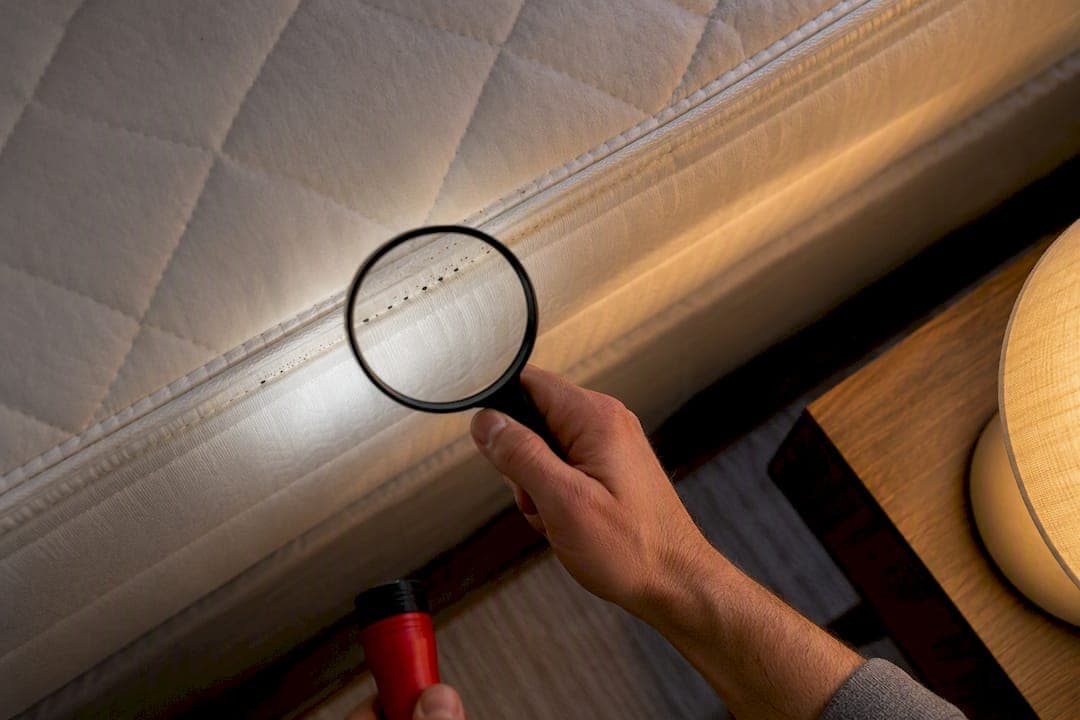
The most reliable early signs of bed bugs are physical evidence, not bites: dark fecal spots, rusty blood stains, shed skins or eggs, live bugs, or a musty sweet odor in heavier infestations. Bites alone don't confirm anything, since reactions can take up to 14 days to appear or never show at all. Start by checking mattress seams and the furniture next to your bed.
TL;DR:
- Physical evidence such as fecal spots, shed skins, eggs, or live bugs indicates the presence of bed bugs before bites appear.
- Fecal spots smear reddish-brown under damp tissue, and pale shells are about 1 millimeter long, mostly found along mattress seams and furniture joints.
- Regular inspections focused on mattress seams, picture frames, electrical outlets, and baseboards are crucial, especially after travel or secondhand furniture purchases.
- Bites are unreliable indicators since reactions can be delayed, absent, or resemble other skin conditions, making physical signs more reliable for detection.
- Immediate containment includes hot laundering, vacuuming, and sealing encasements, while persistent or widespread signs warrant professional pest control intervention.
Table of Contents
- Visual Signs on Bedding, Mattress, and Furniture
- Where Bed Bugs Hide Beyond the Mattress
- How to Check for Bed Bugs, Step by Step
- Bed Bug Bites vs. Rash: Why Bites Alone Don't Confirm Anything
- Immediate Steps If You Find Signs
- When to Call a Pest Control Professional
- What the Research Actually Tells You to Prioritize
- Sources
Visual Signs on Bedding, Mattress, and Furniture
Four types of evidence show up before you ever spot a live bug, and each one tells you something different about how long an infestation has been active.
- Blood spots: Rusty or reddish stains appear when a feeding bug gets crushed against the sheet, usually as small smears rather than pools, clustered near where you sleep.
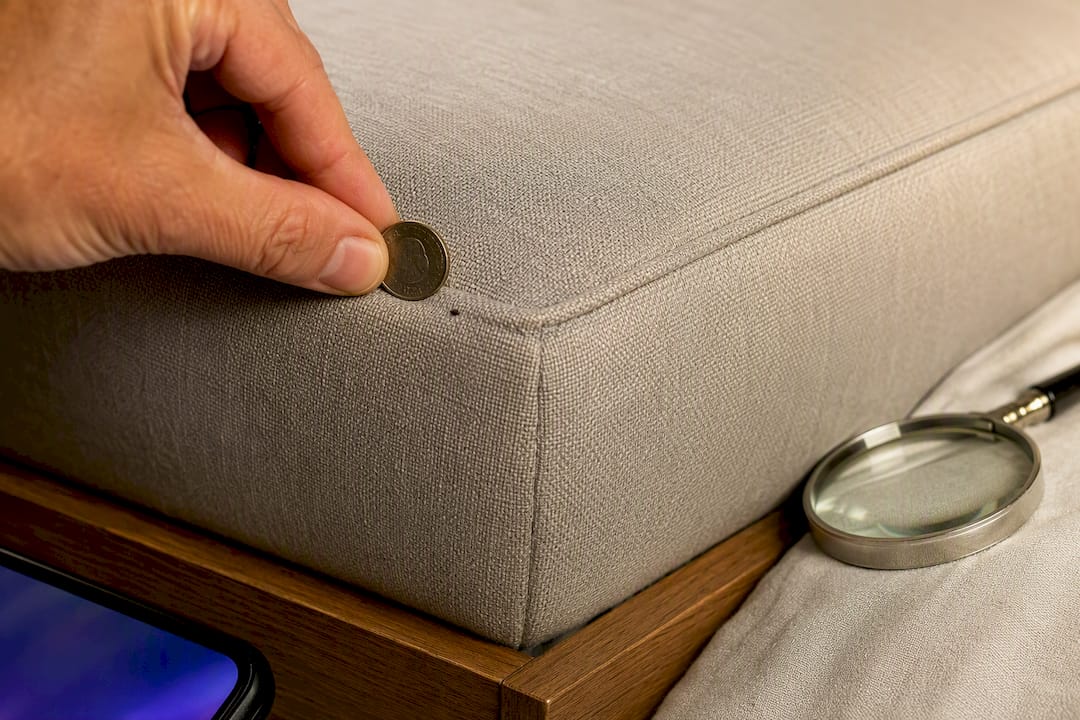
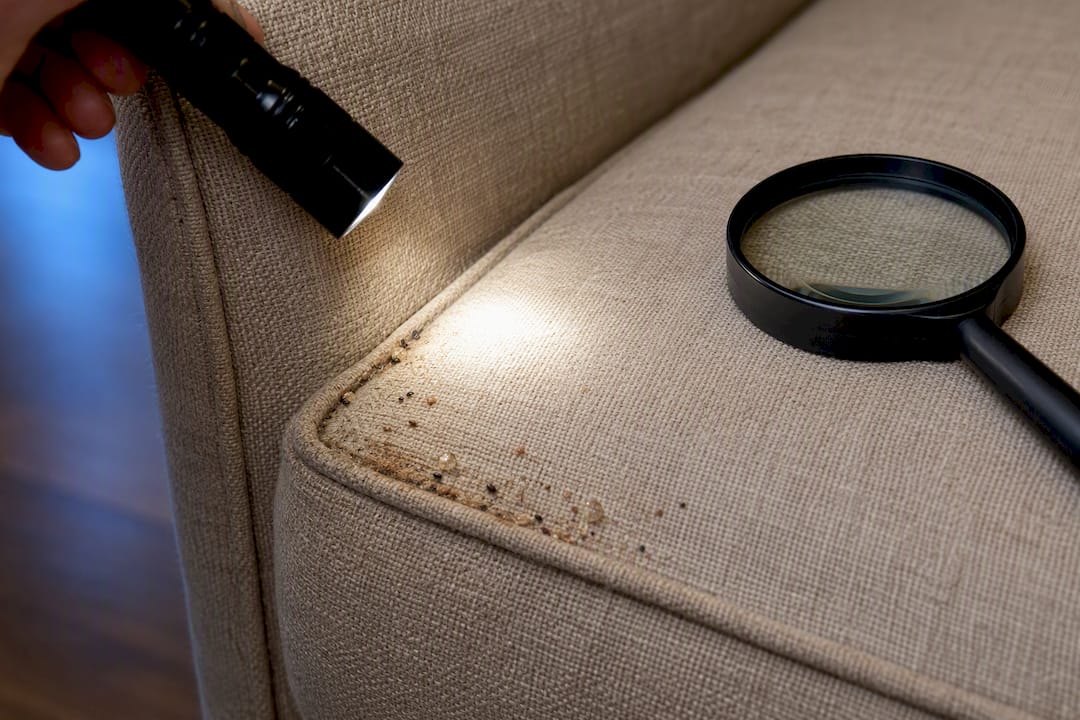
- Fecal spots: Tiny dark specks, often no bigger than the period at the end of this sentence, sit along seams and tags. The EPA notes that dampening a suspect spot causes it to smear or bleed into the fabric like a marker, which separates bed bug waste from ordinary dust.
- Shed skins and eggs: Pale yellow and about 1 millimeter long, according to an Ohio State University Extension factsheet, these collect in mattress piping and tag seams where bugs molt.
- Live bugs: Adults are flat, reddish brown, and roughly the size of an apple seed. Nymphs are smaller and nearly translucent until they feed, which makes them easy to miss in a quick glance.
- Odor: A sweet, musty smell tends to show up only once an infestation is well established, so its absence doesn't rule anything out.
Pro Tip: Press a damp white tissue against a suspicious dark speck. If it smears reddish brown instead of staying intact like dirt, treat it as confirmed fecal matter and keep inspecting nearby.
Where Bed Bugs Hide Beyond the Mattress
Bed bugs squeeze into gaps barely wider than a credit card, and EPA inspection guidance points to a handful of spots that get skipped in a casual glance.
- Mattress seams, piping, tags, and the underside of the box spring.
- Bed frame joints, headboard attachment points, and screw holes.
- Seams and cushion folds on upholstered furniture, plus drawer joints on nightstands and dressers.
- Baseboards, electrical outlet plates, curtain hems, and loose wallpaper edges around the room's perimeter.
- Less obvious spots: the inside seams of luggage, behind picture frames, and inside electronics near the bed.
Pro Tip: If you travel often, check luggage seams and zipper pockets before bringing bags into the bedroom. Our guide to preventing bed bugs while traveling covers this in more detail.
How to Check for Bed Bugs, Step by Step
A full inspection can take some time per bedroom if you work methodically instead of scanning at random.
Tools to gather first:
- A bright flashlight
- A magnifying lens
- A flat, rigid tool like an old credit card
- Disposable gloves
- Clear tape and sealed plastic bags for any samples
The inspection order:
- Start at the bed. Strip all bedding and examine it under bright light for stains and specks.
- Run your flat tool along mattress seams, tags, and piping, checking anything it catches on.
- Flip the mattress and inspect the box spring fabric from underneath.
- Check the bed frame, headboard joints, and any screw holes with the flashlight and magnifier.
- Move to adjacent furniture: nightstand drawers, upholstered chair seams, and dresser joints.
- Finish at the room's perimeter, tracing baseboards, outlet covers, and curtain hems.
A smear that bleeds like ink under a damp tissue, or a cluster of 1 millimeter pale shells, both count as confirmatory evidence, not just suspicion.
Pro Tip: Photograph anything suspicious with a coin next to it for scale, and log the date and room. If you need professional follow-up later, this record saves an inspector time. Do a full check every one to two weeks after travel or a secondhand furniture purchase.
Bed Bug Bites vs. Rash: Why Bites Alone Don't Confirm Anything
Bites usually appear as small red welts in a cluster or a line, most often on arms, shoulders, and legs, since bed bugs feed on any exposed skin during sleep. What makes them unreliable as a stand-alone sign is timing: the CDC notes that reactions can show up immediately or take as long as 14 days to appear, and repeat exposure tends to shorten that window over time.
Bed bugs inject a mild anesthetic and an anticoagulant while feeding, which is why a bite often goes unnoticed until the welt shows up days later. Some people never react at all, which means a household member can carry an active infestation with zero visible bites while a partner sleeping beside them breaks out in welts.
- Bites often overlap in appearance with mosquito bites, flea bites, and contact dermatitis.
- A cluster pattern is suggestive but not diagnostic on its own.
- Seek medical care if a bite site shows spreading redness, fever, or signs of secondary infection.
Immediate Steps If You Find Signs
Once you confirm fecal spots, stains, or shed skins, contain the problem before you do anything else.
- Don't move bedding, clothing, or clutter between rooms. That's how a single-room problem becomes a whole-apartment problem.
- Double-bag affected sheets, pillowcases, and clothing before carrying them to the laundry.
- Wash everything on the hottest water setting the fabric allows, then dry on high heat for at least 30 minutes.
- Vacuum the mattress seams, bed frame, and surrounding carpet, then seal the vacuum bag or canister contents in a plastic bag before disposal.
- A mattress encasement rated for bed bugs can trap remaining bugs and stop new ones from getting in while you arrange treatment.
Pro Tip: Skip the store-bought fogger. DIY pesticide sprays often scatter bugs deeper into wall voids instead of eliminating them, which turns a one-room problem into a building-wide one. Keep photos, dates, and inspection notes together so a professional can pick up exactly where you left off.
When to Call a Pest Control Professional
Call in a professional once you find live bugs, bites keep recurring, more than one room shows signs, or your own containment steps haven't stopped new activity within a week or two.
A professional inspection reaches places a homeowner check can't: wall voids, behind outlet plates, and gaps a flashlight alone won't reveal. Harvard Health points out that low-level infestations are often confirmed only through this kind of hidden-harborage search, since most homeowners spot indirect signs long before they ever see a live bug.
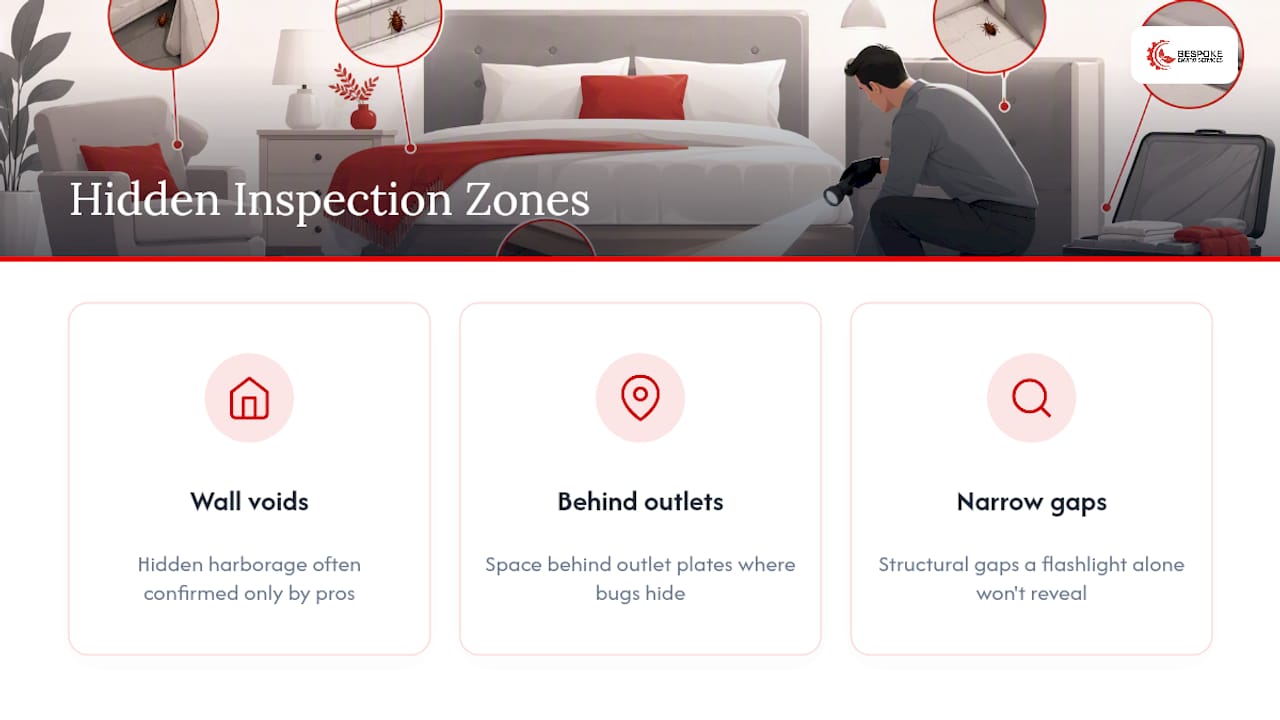
A typical professional response includes inspection, targeted treatment, heat treatment options where appropriate, mattress encasement, and scheduled follow-up monitoring. Bring your photos and inspection notes to the visit, and ask any provider how their approach limits chemical exposure in the home. Bespoke-enviro's bed bug control service in Singapore builds on an integrated pest management approach that starts with inspection and containment before any treatment decision.
Pro Tip: If your unit shares walls with neighbors, mention that during booking. Bed bugs travel through shared plumbing and electrical conduits, so a thorough provider will factor in adjacent units, not just your own space.
What the Research Actually Tells You to Prioritize
Most guidance on this topic still leads with bites, and that's backwards. Bites are the least useful signal you have, since reaction timing varies by up to 14 days and some people never react at all. The physical trail, stains, fecal spots, shed skins, is what actually holds up under a flashlight and a magnifier, and it's available to check the same day you get suspicious.
The gap we see most often isn't a lack of information, it's a lack of routine. Homeowners check once, find nothing conclusive, and stop looking. A five to ten minute check of mattress seams and headboard joints every couple of weeks catches problems while they're still confined to one room. That's also the window where containment steps, hot laundering, vacuuming, encasements, actually work instead of just buying time.
Where we'd push back hardest: don't wait for a bite to justify calling someone. If you've found a smear that bleeds like ink under a damp tissue, that's confirmation enough to act on.
— Bespoke-Enviro Services
This article is general information, not a substitute for advice from a qualified doctor. Consult a qualified healthcare professional about your own circumstances before acting on anything here.
Sources
- About Bed Bugs | CDC
- How to Find Bed Bugs | EPA
- How to check for bed bugs — Harvard Health
- Bed Bugs factsheet | Ohio State University Extension (OHIO)