
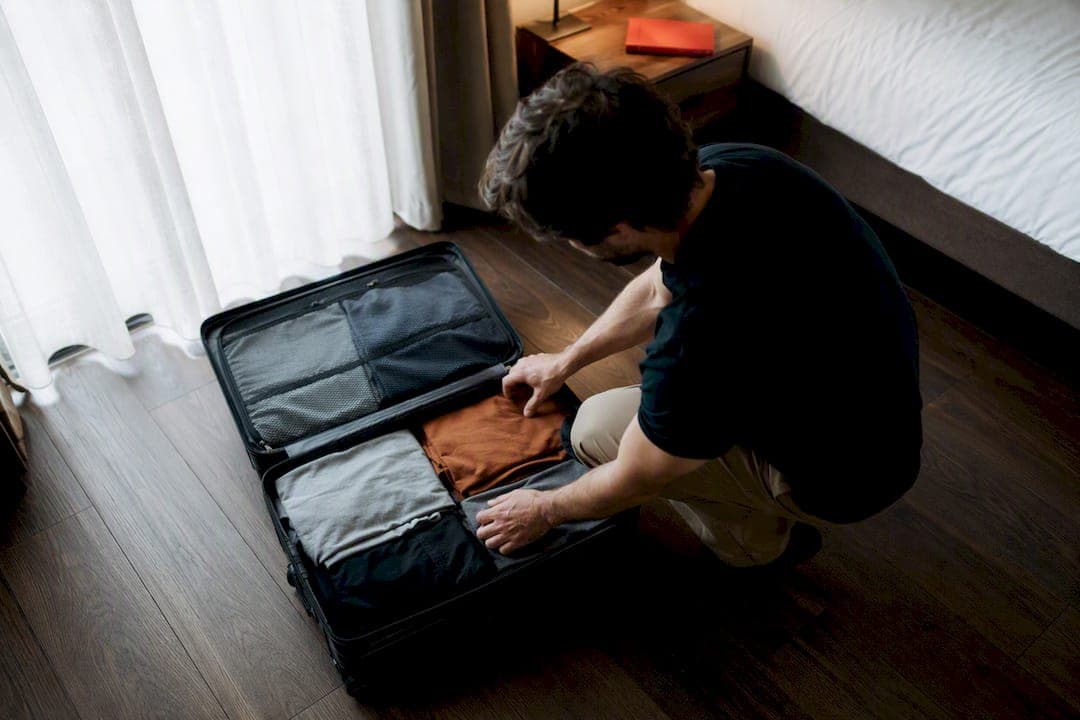
To avoid bringing bed bugs home, stage your luggage on a hard surface or luggage rack, inspect the mattress seams and headboard as soon as you arrive, and heat-treat every piece of clothing in a hot dryer once you're back. Bed bug travel prevention comes down to these three habits repeated on every trip, no exceptions.
- Pack: Use sealable plastic bags for clothes.
- Inspect: Check seams, headboard, and baseboards with a flashlight.
- Store: Keep luggage off the bed and floor.
- Heat: Dry all clothing on high for 30+ minutes.
- Isolate: Bag suspect items before they touch anything else.
Bed bugs can consume up to four times their own body weight in a single 15-minute feeding, and both the EPA and CDC publish traveler guidance built around exactly the routine above.
Key Takeaways
Bed bug travel prevention works because it combines hard-surface luggage staging, a five-minute arrival inspection, and a mandatory post-trip heat cycle for every fabric item you packed.
| Point | Details |
|---|---|
| Stage luggage smart | Keep bags on a rack or bathroom floor, never on the bed or carpet. |
| Inspect within minutes | Check seams, headboard, and baseboards with a flashlight before unpacking. |
| Heat-treat everything | Dry all clothing and soft items on high heat for at least 30 minutes after every trip. |
| Isolate suspect items | Seal anything questionable in plastic before it touches other belongings. |
| Call a professional when needed | Bespoke-Enviro Services offers IPM-based inspections and follow-up treatment for confirmed infestations. |
Table of Contents
- Bed Bug Travel Prevention Starts With How You Pack
- How to Check a Hotel Room for Bed Bugs in Five Minutes
- Simple Habits That Keep Bed Bugs Out of Your Bags During Your Stay
- What to Do the Moment You Spot Bed Bugs
- Your Post-Trip Routine for Bed Bug Travel Prevention at Home
- Keeping Bed Bugs Out of Your Home Between Trips
- When to Call a Pest Control Professional
- Small Habits, Not Big Fixes, Stop Infestations
- Found Bed Bugs at Home? Here's What Happens Next
- Frequently Asked Questions About Preventing Bed Bugs While Traveling
- Sources
Bed Bug Travel Prevention Starts With How You Pack
What you pack, and how you pack it, determines how easily bed bugs can hitch a ride in the first place. Hard-shell suitcases give bugs fewer seams and zippers to hide in than soft fabric duffels, though neither is bug-proof on its own. The real defense is what goes inside.
- Pack worn and clean clothes in separate sealable plastic bags.
- Bring a couple of large garment bags for hanging items.
- Toss in a lint roller for quick spot-checks on fabric.
- Check recent guest reviews for any mention of bites or bugs before you book.
- Ask the property directly about its pest inspection routine if reviews raise doubts.
Pro Tip: Set up a "clean" bag and a "dirty" bag before you even leave home, and keep worn clothes zipped away from anything freshly laundered. It sounds fussy on day one of a trip, but it saves you from tossing your entire suitcase contents into quarantine on day seven.
How to Check a Hotel Room for Bed Bugs in Five Minutes
Set your luggage on the bathroom floor or a luggage rack before you touch anything else in the room. That single habit, recommended in EPA travel guidance, keeps your bags away from the two spots bed bugs favor most: the bed and the upholstered furniture nearby.
- Pull back the fitted sheet and check the mattress seams and piping corner by corner.
- Examine the headboard, bed frame, and box spring edge, since these are common daytime hiding spots.
- Check nightstands, drawer joints, and upholstered chairs.
- Look along curtain hems and baseboards near the bed.
- Use your phone flashlight to scan for live bugs, shed skins, tiny eggs, and rust-colored fecal specks.
Look specifically for:
- Live bugs (reddish brown, flat, roughly apple-seed sized)
- Small dark fecal spots that smear like a marker on fabric
- Pale, shed exoskeletons
- Rusty or reddish stains on sheets or mattress fabric
Photograph anything suspicious immediately, note the time, and tell the front desk before you unpack further. If a room change is necessary, avoid a room adjacent to, above, or below the affected unit. Bed bugs can move between connected units through wall gaps and shared fixtures.
Simple Habits That Keep Bed Bugs Out of Your Bags During Your Stay
A clean-looking room on arrival doesn't mean you can relax for the rest of the stay. Small daily habits matter just as much as the initial inspection.
Do:
- Keep your suitcase on the rack or in the bathroom for the entire stay.
- Store worn clothes in a sealed bag, not draped over a chair.
- Pack and unpack on a hard surface, not the bed.
Don't:
- Put luggage on the bed, even briefly.
- Slide bags under the bed.
- Leave laundry piled on carpet or upholstered furniture.
Pro Tip: Carry a few heavy-duty zip bags in an outside pocket. If anything looks even slightly suspicious, mid-trip, you can seal it on the spot instead of letting it ride loose in your suitcase for the rest of the week.
What to Do the Moment You Spot Bed Bugs
Stop unpacking immediately. Every additional item you pull out of the suitcase is another item that could carry bugs into your car, your next hotel, or your home.
- Photograph the evidence: live bugs, stains, or shed skins.
- Notify hotel staff or management right away, in person or by phone.
- Ask for a non-adjacent room, or request a full checkout and refund if evidence is confirmed.
- Seal any items you already unpacked in a plastic bag until they can be heat-treated.
- Carry sealed items through common areas rather than in an open bag.
- Never spray your own insecticide on the room. Public-health guidance warns that DIY sprays can scatter bugs into new hiding spots and complicate professional treatment later.
- Document everything in case you need to escalate a refund request with the property.
Your Post-Trip Routine for Bed Bug Travel Prevention at Home
The trip isn't over when you walk through your front door. Bring your suitcase into the garage, laundry room, or bathroom first, never straight into the bedroom. Set it on a hard floor and vacuum the seams, zippers, and wheel wells before it goes anywhere else in the house. Empty the vacuum canister into an outdoor trash bin immediately.
- Sort every piece of clothing worn or packed, whether it looks worn or not.
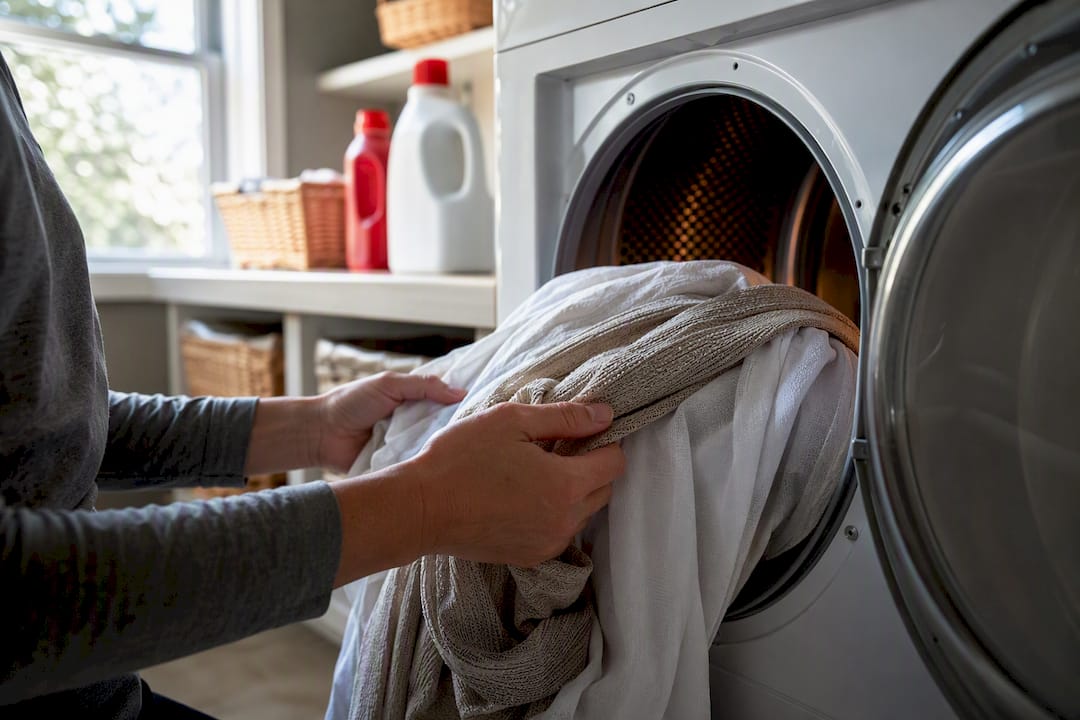
- Run it all through a dryer on high heat for at least 30 minutes.
- Wash first if items are visibly soiled, but treat the dryer as the step that actually does the work.
- Treat stuffed animals, linens, and soft travel accessories the same way.
- Store the empty suitcase away from the bedroom, ideally in a sealed storage bag in a closet, garage, or outdoor space.
A high-heat dryer cycle of 30 to 45 minutes is the most reliable household method for killing bed bugs at every life stage, from eggs to adults. Washing alone often isn't enough, since the wash cycle's water temperature typically doesn't get hot enough to kill eggs reliably. For items that can't tolerate a dryer, such as delicate fabrics or leather, professional steaming or an extended deep-freeze protocol is a safer bet than skipping heat treatment altogether.
- Items to heat-treat immediately: all worn clothing, packed-but-unworn clothing, linens, stuffed toys, and fabric accessories.
- Items that need an alternative: dry-clean-only garments, leather goods, electronics cases.
Keeping Bed Bugs Out of Your Home Between Trips
Preventing bed bugs after travel is really about closing the small gaps where an incursion could take hold before you notice it.
- Fit mattresses and box springs with encasements rated for bed bugs.
- Reduce clutter around beds and sofas, since piles of clothes and bags give bugs more places to hide.
- Inspect any secondhand furniture, especially upholstered pieces, before bringing it inside.
- Do a quick flashlight check of mattress seams every few months, or use interceptor traps under bed legs for ongoing monitoring.
- Store empty luggage in a closet or garage rather than under the bed or in the bedroom itself.
When to Call a Pest Control Professional
A single unconfirmed sighting doesn't always mean infestation, but certain signs cross the line from "monitor it" to "call someone now."
- Multiple sightings across more than one visit.
- New bites appearing on household members.
- Evidence spreading to more than one room.
- Eggs or shed skins found in more than one location.
A professional inspection typically maps out affected areas before recommending treatment, and integrated pest management (IPM) approaches favor non-toxic, targeted methods over blanket chemical spraying. Before hiring anyone, ask about their specific bed bug experience, treatment method, guarantee terms, safety around children and pets, and how many follow-up visits are included.
Pro Tip: Ask any pest control company how they confirm a job is finished, not just how they treat it. A reputable provider will schedule a follow-up inspection, not just a one-time spray and disappear.
Small Habits, Not Big Fixes, Stop Infestations
Bed bug prevention isn't about one dramatic intervention. It's about a handful of small, boring habits repeated every single trip: hard-surface luggage placement, a five-minute inspection, and post-trip heat treatment. That's IPM thinking applied at the traveler level, catching the problem early with minimal intervention rather than waiting for a full-blown infestation that demands aggressive treatment.
We've built our approach around that same principle over more than 30 years of field work: consistent, low-toxicity methods beat one-time chemical overkill. If you find evidence of bed bugs at home, don't wait for it to spread before calling a professional, and run the post-trip heat routine even on trips where you never saw a single bug.
Found Bed Bugs at Home? Here's What Happens Next
Catching bed bugs early with a hot dryer cycle is one thing. Finding them already established in your mattress seams or baseboards is another problem entirely, and that's where a travel checklist stops being enough.

Bespoke-Enviro Services runs inspections built around integrated pest management, which means we identify where bugs are hiding before deciding on treatment, rather than defaulting straight to blanket chemical spraying. A typical first visit includes a full inspection of sleeping areas, upholstered furniture, and adjoining rooms, followed by a treatment plan that's safe around children and pets and non-toxic where possible. We also schedule follow-up visits to confirm the treatment held, not just a single spray-and-go appointment. If your post-trip inspection turned up anything suspicious, or you just want a professional set of eyes on a persistent problem, book an inspection with Bespoke-Enviro Services and get a treatment plan built around your actual situation.
Frequently Asked Questions About Preventing Bed Bugs While Traveling
Does putting luggage in the bathroom actually help? Yes. Bathrooms have fewer upholstered surfaces and hiding spots than bedrooms, and the hard tile floor gives bed bugs nowhere comfortable to settle compared to carpet or bedding.
Can bed bugs infest luxury hotels, not just budget ones? Bed bugs don't discriminate by price tier. Infestations show up in five-star properties as often as budget motels, which is why the arrival inspection matters regardless of where you're staying.
Is washing clothes enough to kill bed bugs, or do I need to dry them too? Washing alone often isn't enough because water temperatures rarely get hot enough to kill eggs. The dryer's heat is what finishes the job, so always run clothes through a hot dryer cycle even if you've already washed them.
What if I can't heat-treat certain items, like leather or dry-clean-only clothing? Use professional steaming or an extended freezing protocol for anything heat-sensitive. Skipping treatment entirely on those items risks reintroducing bugs after you've cleared everything else.
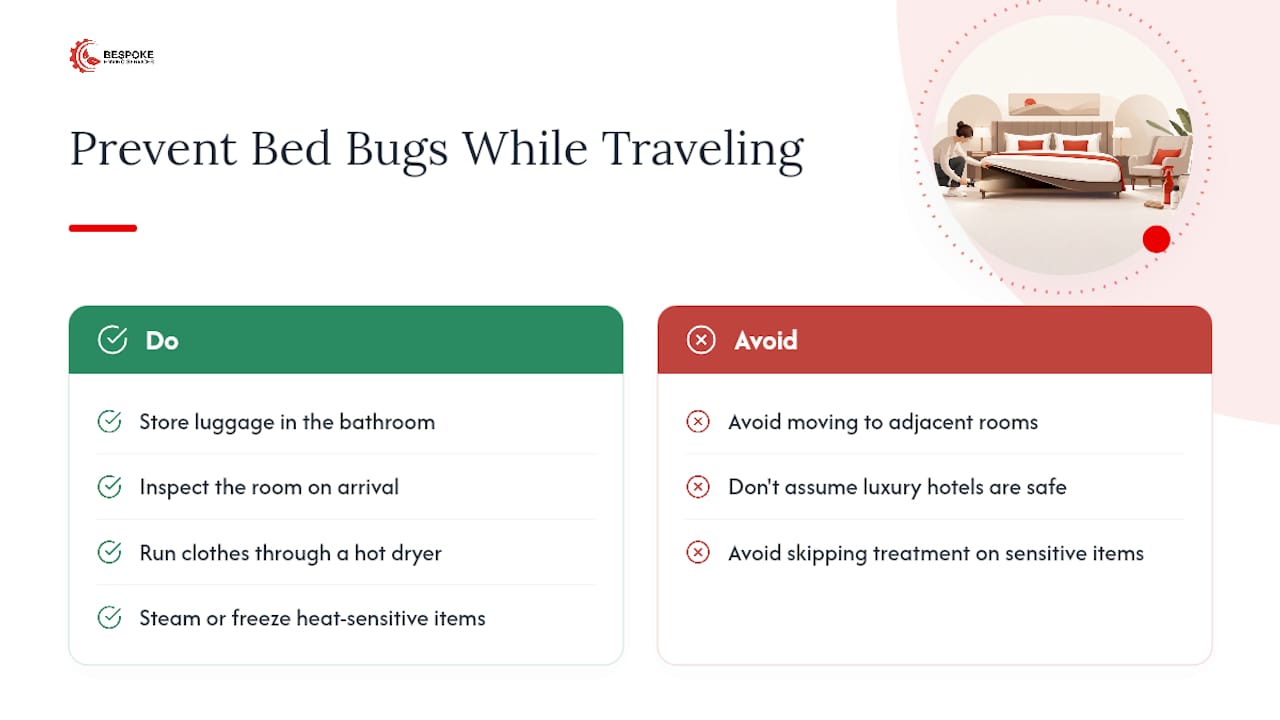
Should I move to a different room if I find bed bugs, or just leave the hotel? Either can work, but never move to a room adjacent to, above, or below the affected unit. If the evidence is confirmed, requesting a refund and leaving the property entirely is often the simpler option.