
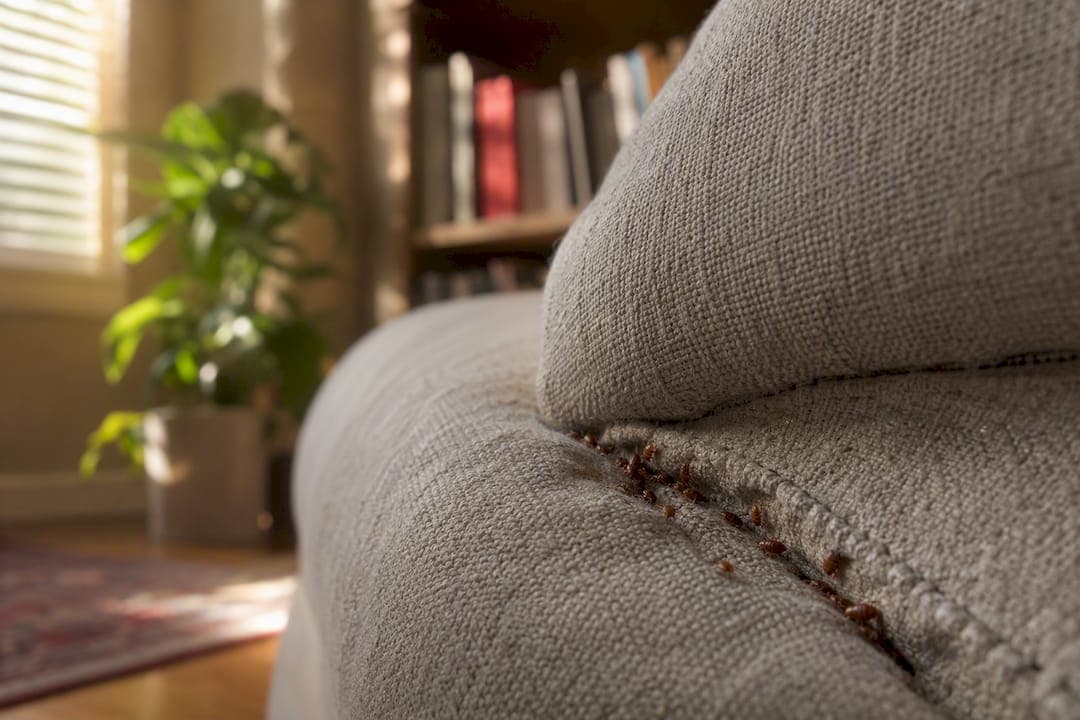
If you woke up with small, itchy bumps in a line or a tight cluster, especially on skin that was exposed while you slept, that pattern is consistent with bed bug bites. A single bump on its own is far less telling. Do these three things in the next hour: wash the area gently with soap and water, check your mattress seams and headboard for rust colored spots or shed skins, and watch for spreading redness or fever, which need medical attention.
Identifying bed bug bites reliably takes two things together: what your skin looks like, and what your bedroom shows. Neither one alone is proof.
- Wash first. Clean the bites with soap and water before you do anything else.
- Inspect second. Pull back sheets and check mattress seams, tags, and the headboard for dark spots or bugs.
- Escalate if needed. Fast-spreading redness, pus, or fever means it's time to call a clinician, not wait it out.
Roughly 20% to 30% of people bitten never develop a visible reaction, so a clear bedmate is not proof you're in the clear.
Key Takeaways
Bed bug bites are identified by pattern and environmental evidence together, not by the look of a single bump, and most bites heal within one to two weeks with basic home care.
| Point | Details |
|---|---|
| Pattern beats single lesions | Clusters or lines of three to five bites on exposed skin are a stronger clue than any one bump's shape. |
| Reactions can be delayed | Bites may not appear for up to 14 days, so a bite free morning doesn't rule out exposure. |
| No lack of reaction, no exclusion | Roughly 20% to 30% of people never show visible bites, so a clear housemate isn't proof of a clean bedroom. |
| Home care handles most cases | Soap and water, cold compresses, hydrocortisone, and antihistamines resolve the majority of bites. |
| Professional help closes gaps DIY can't | Bespoke-enviro combines inspection, targeted IPM treatment, and follow-up for infestations that outlast home measures. |
Table of Contents
- What Bed Bug Bites Are and Where Bed Bugs Hide
- How Do You Identify Bed Bug Bites?
- When Do Bed Bug Bites Appear, and How Long Do They Last?
- How Are Bed Bug Bites Diagnosed?
- How Do You Treat Bed Bug Bites at Home?
- How Can You Prevent Bed Bug Bites?
- What Should You Do About a Suspected Infestation?
- Sources
What Bed Bug Bites Are and Where Bed Bugs Hide
Bed bugs are small, flat, wingless insects that feed on human blood, typically at night. The two species behind almost all human bites are Cimex lectularius and Cimex hemipterus, and both behave the same way in a home: hide close to where you sleep, feed while you're still, then retreat.
They move through three life stages. Eggs are tiny and pearly white, barely visible without magnification. Nymphs are pale, translucent, and grow through several molts before reaching adulthood. Adults are reddish brown, oval, and roughly the size of an apple seed, about a quarter inch long.
They don't scatter randomly. They cluster in predictable spots:
- Mattress seams and piping
- Box spring frames and joints
- Headboards, especially where they meet the wall
- Seams and folds in upholstered furniture
- Luggage linings and seams
- Baseboards, and behind loose wallpaper
- Electrical outlet plates near the bed
If you're not sure what you're looking at, a side by side photo comparison of live bugs, shed skins, and fecal spots helps far more than a written description.
How Do You Identify Bed Bug Bites?
The single most reliable clue isn't the shape of one bump. It's the arrangement of several. Dermatologists lean on pattern recognition over single lesion appearance, because one bite can mimic a dozen other things, but a tidy row or cluster narrows the list fast.
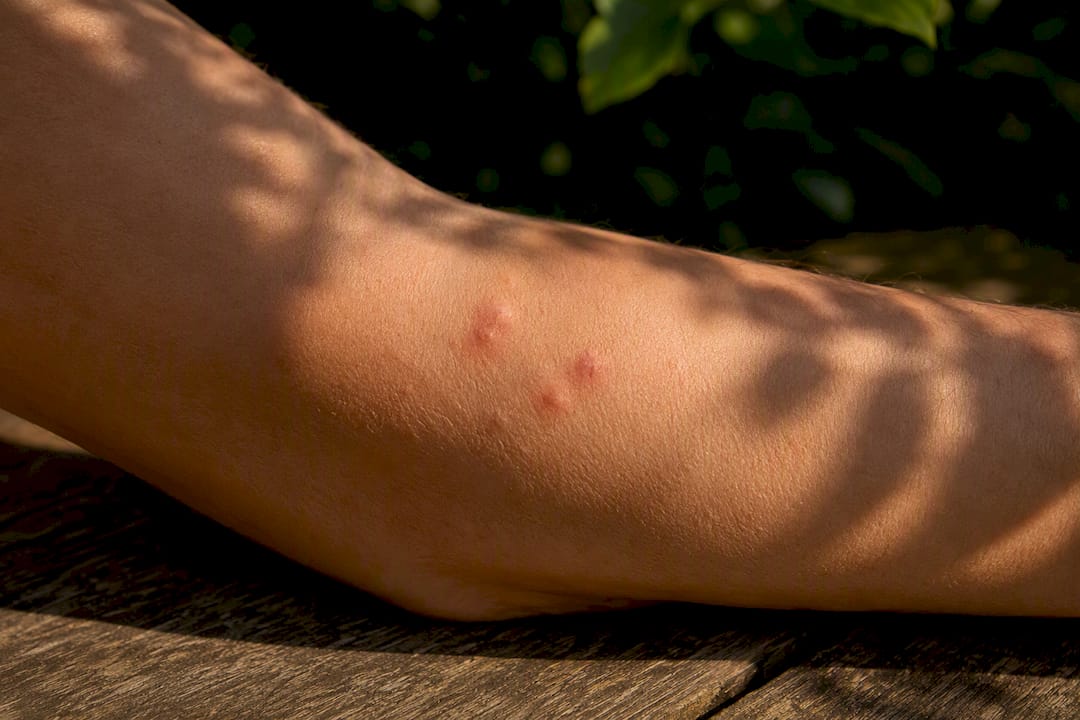
Bed bug bites usually appear as small, firm, raised bumps, sometimes with a tiny central dot where the bite occurred. The skin around them often reddens, and in people who react more strongly, bites can swell into raised wheals or even small blisters. Bites commonly show up in random clusters, straight lines, or zigzag patterns of three to five, on skin that was uncovered while you slept: arms, shoulders, neck, legs.
That pattern is what separates bed bug bites from most look-alikes.
- Mosquito bites tend to be scattered, appear the same day, and itch immediately.
- Flea bites cluster around ankles and lower legs, especially if you have pets.
- Scabies causes intense itching that's worse at night, with thread-like burrows often between fingers or on wrists, rather than a bite pattern on exposed skin.
- Hives or contact dermatitis spread irregularly, often with a clear trigger like a new lotion or fabric, and lack the tidy row or cluster shape.
If you're photographing bites for a clinician or pest professional, get one shot at a normal viewing distance to show the pattern, one close up with good lighting to show texture, and one of the surrounding bed area. That third photo often matters more than people expect. It's the environmental context, not the bump itself, that turns a guess into a diagnosis.
Pro Tip: Photograph bites the morning after you notice them, not days later once scratching and healing blur the pattern. A row of three to five marks is a strong clue, but it isn't universal. Some people show only one or two bites, and others show none at all despite being bitten repeatedly.
When Do Bed Bug Bites Appear, and How Long Do They Last?
Don't expect an instant reaction. Bed bugs inject a mild anesthetic and an anticoagulant while feeding, which is why most people don't feel the bite happen and reactions can take up to 14 days to surface. That delay is the reason so many people wake up puzzled by bumps that weren't there the night before.
Once bites do appear, they typically resolve within one to two weeks with basic care. Healing can stretch longer if the area gets scratched repeatedly, which breaks the skin and invites secondary infection.
Reactions vary widely from person to person. Some people develop pronounced, itchy welts after a single bite. Others show almost nothing.
- A meaningful share of people, roughly 20% to 30%, never develop a visible reaction at all, even with repeated exposure.
- Others develop stronger immune responses over time, sometimes reacting more severely to bites after prior exposure.
- Watch for red flags: spreading redness, warmth, pus, or fever suggest a secondary bacterial infection from scratching.
- Large, painful swelling or trouble breathing points toward a more intense allergic response and needs prompt medical attention.
- Persistent bites also take a toll beyond the skin. Sleep disruption and anxiety about being bitten again are common, and bed bugs do not transmit infectious disease, so the skin and the psychological impact are the actual medical concerns, not disease transmission.
How Are Bed Bug Bites Diagnosed?
There's no blood test or skin swab that confirms a bed bug bite. Diagnosis is clinical, built on the appearance of the bites plus evidence of an actual infestation, which is why the bedroom matters as much as the skin.
Work through your space methodically:
- Strip the bed and check mattress seams, piping, and tufting with a flashlight.
- Flip the box spring and inspect the frame, corners, and any fabric dust cover underneath.
- Check the headboard, especially where it meets the wall or bolts to the frame.
- Run your fingers along furniture seams, cushion piping, and the underside of nightstands.
- Open luggage linings and seams if you've traveled recently.
- Check baseboards, loose wallpaper edges, and electrical outlet plates near the bed.
Look for live bugs, shed exoskeletons, rust colored fecal spots, tiny pearly eggs, or a faint musty odor in heavier infestations. A flashlight and a stiff card, like a credit card, work well for probing seams. Pressing clear tape onto a suspected fecal spot lifts it cleanly for a photo without smearing the evidence.
Before contacting a clinician or pest professional, jot down when the bites appeared, your recent travel, and whether anyone else in the household has similar marks. That timeline speeds up whoever helps you next.
How Do You Treat Bed Bug Bites at Home?
Most bites need nothing more than basic care. Start by washing the area with soap and water, which lowers infection risk and calms the itch somewhat on its own.
From there, a stepwise approach works for most people:
- Apply a cold compress for 10 to 15 minutes to reduce swelling and itch.
- Use a topical antipruritic like calamine lotion or 1% hydrocortisone cream on the bites.
- Take an oral antihistamine if the itching is keeping you up at night or spreading discomfort.
- Trim nails and resist scratching. Broken skin is what actually invites infection, not the bite itself.
- Keep the area clean and dry while it heals over the next week or two.
This combination, soap and water, topical steroids, and antihistamines, is the standard recommended approach, and it resolves the vast majority of cases without further intervention.
See a clinician if redness spreads rapidly, if you notice pus or increasing pain, if a fever develops, or if a child or someone immunocompromised has numerous bites. Topical steroids may help with severe eruptions, and antibiotics only come into play if a secondary infection has actually set in; they don't do anything for the bites themselves.
Pro Tip: Hydrocortisone works best applied thin and often, not slathered on once. Two or three light applications a day beat one heavy one, and stop once the itch and redness settle rather than continuing out of habit.
How Can You Prevent Bed Bug Bites?
Prevention comes down to one idea: don't give bed bugs a ride home, and don't give them anywhere to hide once they're inside. Most infestations trace back to travel or secondhand furniture.
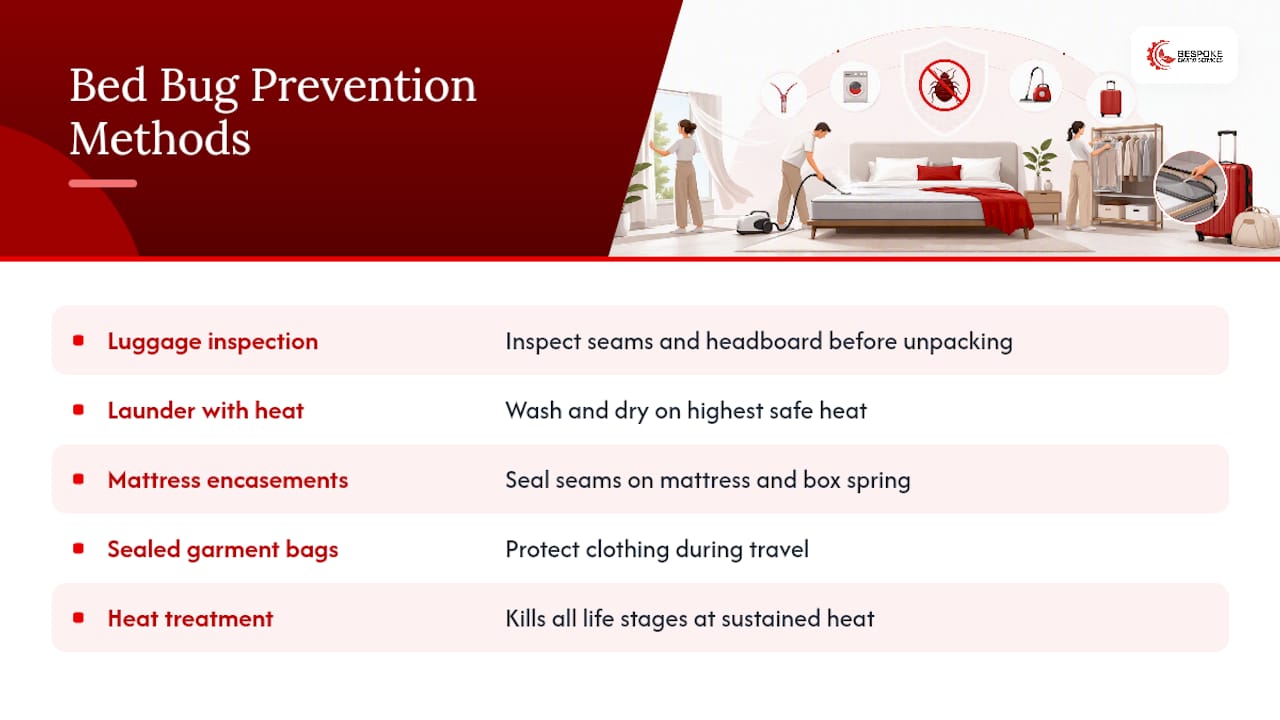
Before you unpack in a hotel room, check the mattress seams and headboard for the same signs you'd look for at home. Keep luggage on a rack or in the bathtub rather than on the bed or floor. When you get home, launder worn clothing on the highest heat setting the fabric allows, or run it through a hot dryer cycle, even if you didn't spot anything suspicious.
Secondhand furniture deserves the same scrutiny. Check joints, seams, and the underside of cushions before it comes through your door, and think twice about soft upholstered pieces you can't fully inspect.
A few tools add a real layer of protection. Mattress and box spring encasements seal off the seams bed bugs love, cutting off their favorite hiding spots. Sealed garment bags protect clothing during travel. Heat treatment kills bed bugs at all life stages but needs sustained temperatures, so a quick pass with a hair dryer won't do it.
What Should You Do About a Suspected Infestation?
A few isolated bites and one confirmed hiding spot sometimes respond to careful home measures. Bites recurring after cleanup, live bugs turning up in more than one room, or a household with young kids or older adults usually calls for a professional.
If you're handling it yourself, work through these steps in order:
- Strip all bedding and wash it on hot, then dry on high heat.
- Vacuum the mattress, box spring, and surrounding floor thoroughly, then seal the vacuum bag before disposing of it.
- Encase the mattress and box spring in a bed bug rated cover and leave it sealed for at least a year.
- Seal nonwashable items in plastic bags, and freeze small items for several days if a freezer is large enough.
- Reduce clutter around the bed so there are fewer places left to hide.
DIY measures have real limits. Consumer products exist, more than 300 are EPA registered, but effectiveness varies widely, and professionals combine inspection, targeted treatment, and integrated pest management for actual control. Call one once you've seen live bugs beyond a single spot, bites keep returning after cleanup, or the infestation spans more than one room.
A professional visit typically starts with a full inspection, followed by a treatment plan built around the size of the problem, sometimes chemical, sometimes heat based, sometimes both. You'll usually be asked to prep beforehand: laundering bedding, clearing clutter, and bagging nonwashables.
Pro Tip: If you have pets or small kids in the home, tell the technician before treatment starts. Pet- and people-friendly treatment options exist, but only if the provider knows to plan around them from the start.
A Pest Professional's View on What Actually Helps
We see the same pattern again and again: households that treat only the mattress and skip the rest of the room end up dealing with bites for months. Bed bugs hide in more places than most people check, which is exactly why integrated pest management, inspection paired with targeted treatment and follow-up, works where a single spray doesn't. Expect a realistic timeline, not an overnight fix, and expect the process to work better when environmental control and treatment happen together.
When It's Time for a Professional Inspection
If you've matched the pattern, checked the seams, and you're still finding bites or evidence, it's time for someone to look at the whole room, not just the mattress. Bespoke-enviro has spent over 30 years handling exactly this kind of infestation across homes and businesses, using integrated pest management strategies that combine inspection, targeted treatment, and follow-up rather than a single spray and a hope.

Our approach is eco-friendly and non-toxic by design, so treatment doesn't mean choosing between getting rid of bed bugs and keeping the house safe for kids or pets. Before you request an inspection, gather what you've already found: photos of the bites and any evidence from your bedroom check, roughly when the bites started, and any recent travel or secondhand furniture. That timeline helps a technician move faster once they arrive. Keep in mind that outcomes depend on the size of the infestation and how closely prep steps like laundering and decluttering get followed. You can request an inspection through Bespoke Enviro Services and get a treatment plan built around what's actually happening in your home, not a generic script.
Sources
- Bedbug Bites - StatPearls - NCBI Bookshelf
- Bed bug bites: How to identify them, get relief, and prevent future bites - Harvard Health
- Bed Bugs (Cleveland Clinic)
- Caring for Patients with Bed Bug Bites | CDC
Consult a clinician for persistent or severe symptoms, and a pest professional for infestation confirmation.
This article is general information, not a substitute for advice from a qualified doctor. Consult a qualified healthcare professional about your own circumstances before acting on anything here.