
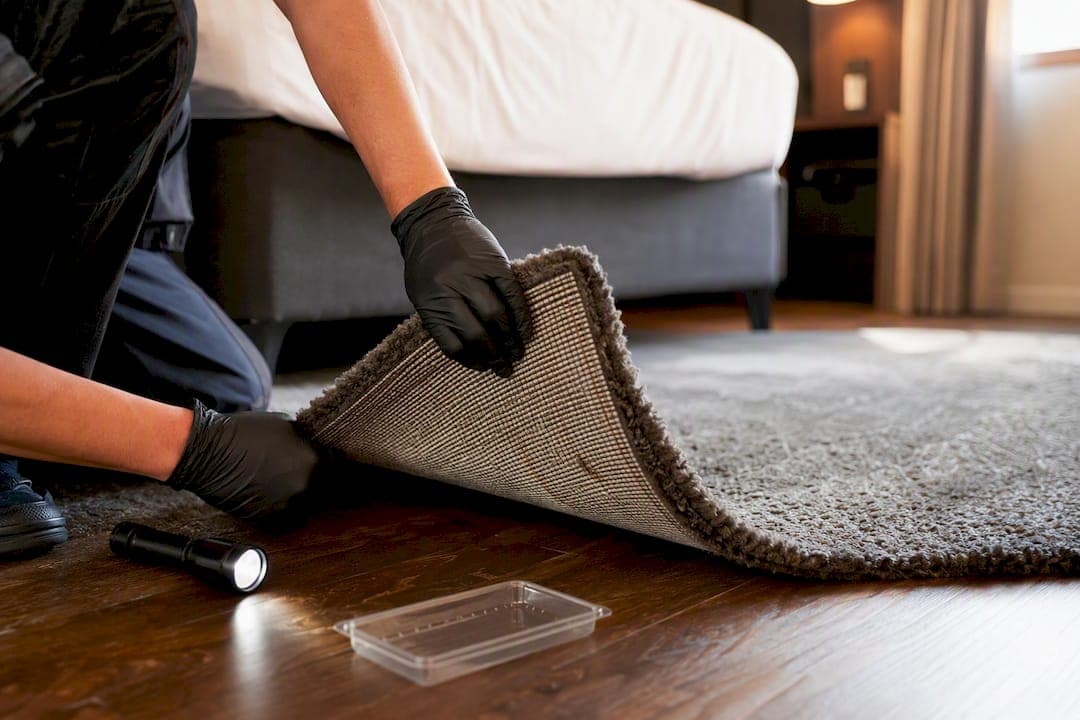
A hotel controls bed bugs by running a documented Bedbug Management Strategy (BBMS) or integrated pest management (IPM) program, not by reacting after a guest complains. That means trained staff who spot the early signs, routine professional inspections on a set schedule, and a rapid response protocol that isolates any suspect room until a licensed pest management contractor clears it. Everything else in a hotel's prevention effort builds on those four pillars.
TL;DR:
- Hotels must develop a documented Bedbug Management Strategy that includes routine inspections, trained staff, and a rapid response protocol to effectively control infestations.
- Regular layered inspections, including daily housekeeping, professional quarterly checks, and monitoring devices, are essential for early detection and prevention.
- Professional treatment options such as heat treatment and targeted chemical applications are recommended, while foggers and DIY pesticides should be avoided.
- Consistent staff training and meticulous documentation of inspections and treatments are critical to maintain accountability and demonstrate due diligence.
- Selecting a licensed, experienced pest management contractor with clear service guarantees and integrating their work into a structured IPM program strengthens hotel bed bug control efforts.
Table of Contents
- What a Bedbug Management Strategy Must Include
- How Should Hotels Run Routine Inspections and Monitoring?
- Staff Training and the Rapid Response Protocol
- Professional Treatment Options: What to Expect and What to Avoid
- Operations-Level Prevention: Laundry, Furniture, and Facility Maintenance
- Documentation and Metrics: Records to Keep and KPIs to Track
- Working With a Pest Management Contractor: Selection Checklist
- Provider Perspective: Lessons From Decades in Eco-Friendly Pest Management
- Get a Bed Bug Prevention Assessment for Your Property
- Sources
What a Bedbug Management Strategy Must Include
A BBMS is the written backbone of hotel bed bug prevention, and the NPMA protocol for lodging treats it as the baseline expectation, not an optional extra. Insurance carriers and legal counsel increasingly ask to see one after any incident, and a hotel without a documented plan is negotiating from a weaker position. We build every hotel program around four components.
- Scope and cadence: define which areas get inspected (guest rooms, laundry, employee break rooms, luggage storage) and how often, based on occupancy and turnover rates.
- Roles and escalation: name who inspects, who calls the contractor, and who has authority to pull a room from service.
- Guest handling policy: script how staff respond to a report, including compensation guidelines and when to loop in a general manager or PR contact.
- Contract and warranty terms: spell out what your pest management vendor guarantees, what voids that guarantee, and how re-treatment requests get triggered.
The NPMA protocol also recommends inspecting rooms adjacent to any confirmed find and keeping documentation on file for two to three months after treatment. A written plan sitting in a binder does nothing on its own. It works only when staff know it exists, know their specific role in it, and practice it before a real incident forces the question.
How Should Hotels Run Routine Inspections and Monitoring?
Early detection is cheaper than remediation, every time. AHLA's guidance calls for daily inspection routines that check mattress seams, headboards, and bedding folds before guests even unpack, and that habit alone catches a large share of infestations while they're still confined to a single room.
We recommend layering three levels of inspection so nothing depends on a single method catching everything:
- Daily housekeeping checks during turnover, focused on mattress seams, headboard cracks, and baseboards.
- Scheduled professional inspections, ideally quarterly for guest floors and more often for higher-risk properties (extended-stay, budget, or high-turnover hotels).
- Monitoring devices placed under bed legs or near headboards, including passive interceptors and active CO2 or pheromone-baited traps that catch bugs moving between hiding spots and feeding sites.
Canine detection deserves a specific mention because it scales well for large properties. A trained detection dog can clear a room in minutes and, with a good handler, can find a single viable egg that a visual inspection would miss entirely. The tradeoff is cost and handler variability. Not every canine team performs to the same standard, so ask any vendor for third-party accuracy data before you sign.
Pro Tip: Treat a single monitor hit as a trigger for a full-room inspection within 24 hours, not a wait-and-see signal. Bed bugs reproduce fast enough that a delay of even a few days can turn a one-room problem into a three-room problem.
Staff Training and the Rapid Response Protocol
Trained staff are your earliest warning system. Reception, housekeeping, and maintenance should all know to look for blood spots on sheets, cast skins, fecal specks along seams, and a faint musty odor in heavily infested rooms. Training costs get recovered quickly the moment a housekeeper catches an infestation before a guest does, because the alternative is a public review and a possible refund fight.
Once a report comes in, speed matters more than perfection. We advise every property to run this checklist within the first 15 minutes:
- Relocate the guest to a different room, ideally not adjacent to the original.
- Isolate the reported room and pull it from the booking system immediately.
- Bag the guest's luggage separately and inspect it before it moves anywhere else in the hotel.
- Call your licensed pest management contractor to schedule an inspection.
- Document the report: time, room number, staff member, and observed evidence.
Public health guidance from Minnesota's health department recommends confirming any specimen with a licensed professional rather than relying on a staff visual ID, since several other insects are commonly mistaken for bed bugs. Once confirmed, inspect the rooms directly above, below, and adjoining the affected room, since bed bugs travel along plumbing lines and through wall voids far more often than guests assume.
Keep a refresher training cycle on the calendar, at least annually, and log every completed session. That record matters as much as the training itself if you ever need to show due diligence.
Professional Treatment Options: What to Expect and What to Avoid
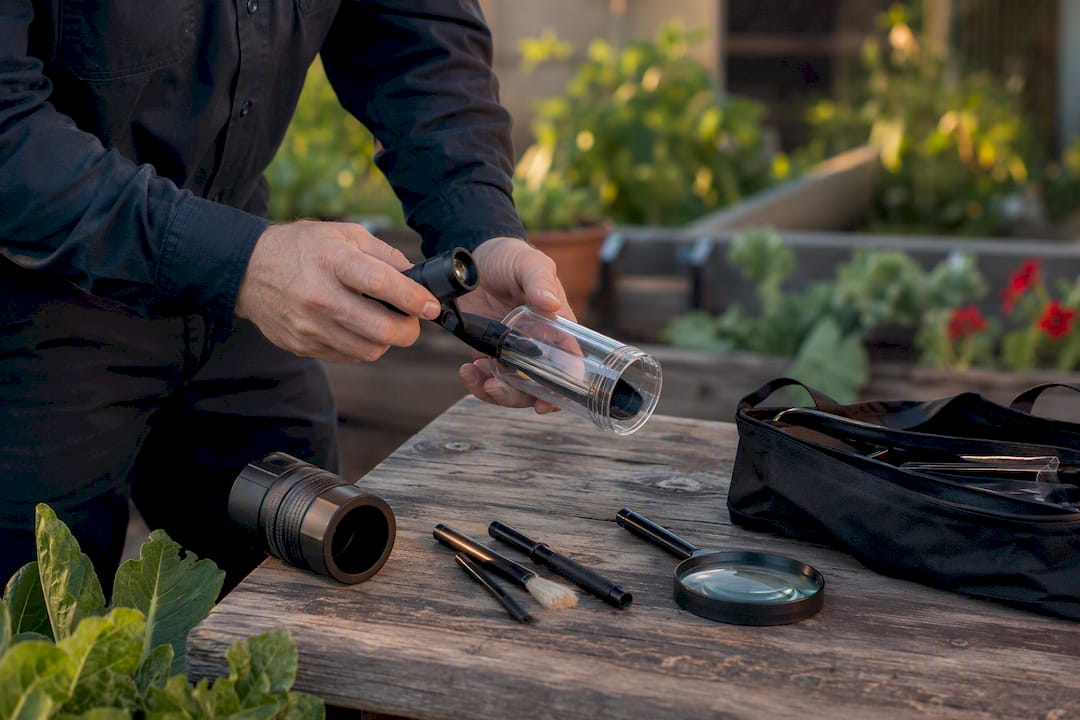
Professional treatment for hotels usually combines a few core methods, and understanding what each one actually does helps you evaluate a contractor's proposal instead of just taking their word for it.
- Whole-room heat treatment: technicians raise room temperature to around 130°F and hold it for several hours, which kills bed bugs at every life stage. Expect the room out of service for a full day when you count setup, treatment, and cooldown.
- Steam and targeted spot heat: used for localized hits along seams and crevices, often as a supplement to a broader treatment rather than a standalone fix.
- Non-chemical measures: mattress and box spring encasements, vacuuming, and sealing cracks reduce harborage and make chemical or heat treatments more effective when they're needed.
- Targeted chemical applications: limited by growing insecticide resistance in some bed bug populations, which is exactly why they belong in the hands of a licensed applicator who knows current resistance patterns, not a generalized spray schedule.
Avoid total-release foggers and any ad-hoc DIY pesticide application. Foggers don't reach the deep hiding places where bed bugs actually live, and the fumes often scatter surviving bugs into neighboring rooms instead of killing them, turning a one-room problem into a multi-room remediation job. No credible pest management authority recommends them for hotel use.
Operations-Level Prevention: Laundry, Furniture, and Facility Maintenance
Prevention doesn't stop with pest control vendors. Daily operations either support your IPM program or quietly undermine it.
- Run separate laundry flows for clean and dirty linens, use sealed carts for transport, and hold hot-wash and dryer cycles long enough to kill any hitchhiking bugs.
- Inspect any used or reconditioned furniture before it enters guest rooms, and wrap and quarantine anything removed from a suspect room rather than storing it in a shared back-of-house area.
- Install mattress and box spring encasements rated to resist tears and zipper failure, since a torn encasement defeats its own purpose within weeks.
- Reduce hiding places through design choices: seal baseboard cracks, keep guest rooms clutter-free, and favor white or light-colored bedding that makes early evidence easier to spot during turnover.
- Schedule engineering walkthroughs for door sweeps, gap sealing, and peeling wallpaper repair, since these small maintenance gaps become bed bug highways between rooms over time.
Documentation and Metrics: Records to Keep and KPIs to Track
Documentation is what separates a real IPM program from a filing-cabinet exercise. Digital, searchable IPM records let a property spot a pattern, such as repeat activity on one floor, and act on it before it becomes three separate guest complaints.
Every inspection and treatment log needs, at minimum:
- Room number, date, and inspecting technician or staff member
- Findings (live bugs, cast skins, eggs, or no activity)
- Products or methods used, with product identification numbers
- Clearance sign-off before the room returns to inventory
Track room-level history over time, not just single events, since a room with repeat activity needs a different response than a first-time isolated report. Keep training completion records alongside your treatment logs. Digital tracking beats paper here because it's searchable and time-stamped, which matters when you need to show an inspector, insurer, or corporate office exactly what happened and when.
Working With a Pest Management Contractor: Selection Checklist
Your BBMS is only as strong as the vendor executing it. Before signing, require documented proof of licensing, specific bed bug treatment experience, a written methodology, and references from other hospitality clients.
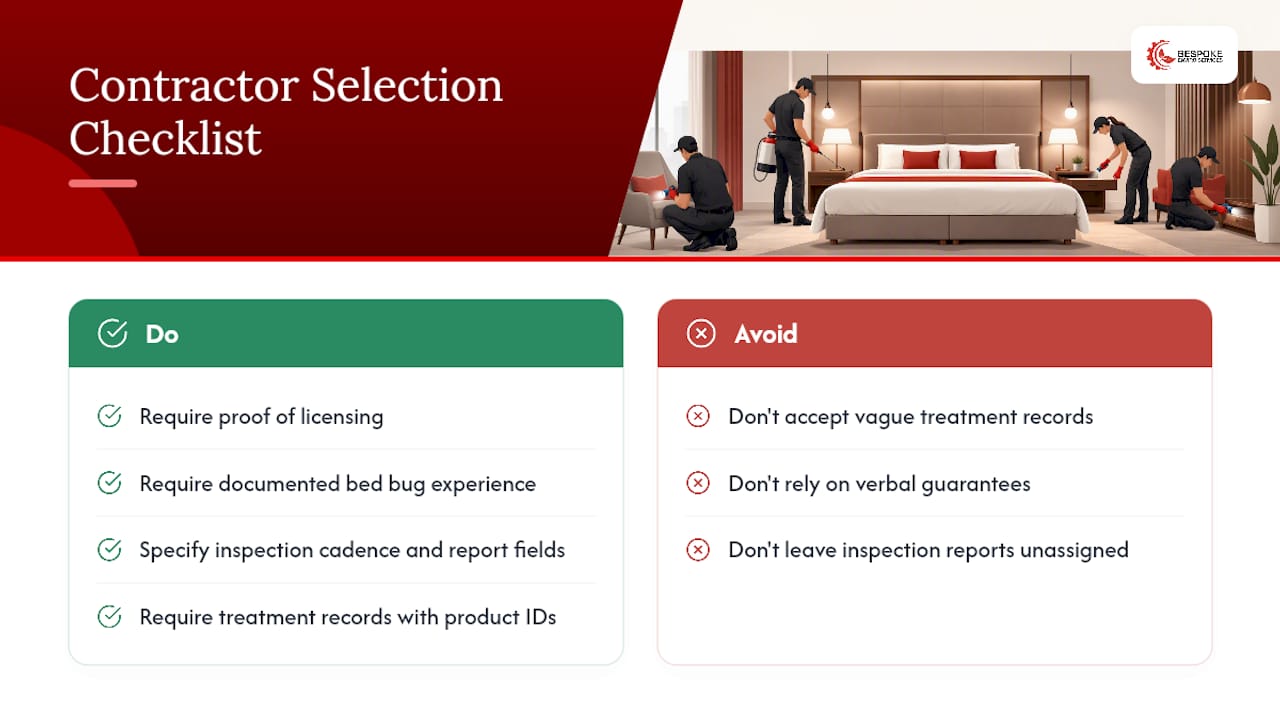
Your contract should spell out inspection cadence, the exact fields a report must include, response time commitments for suspected infestations, and clear terms for re-inspection and clearance before a room reopens. Ask what your vendor guarantees and what voids that guarantee.
Beyond the contract, demand real deliverables: staff training sessions delivered in person, input into your BBMS document itself, and treatment records tied to specific product IDs rather than vague summaries.
Pro Tip: Assign one internal staff member as the owner of vendor follow-ups. Inspection reports that nobody is responsible for closing out are the single most common way IPM programs quietly fail.
Provider Perspective: Lessons From Decades in Eco-Friendly Pest Management
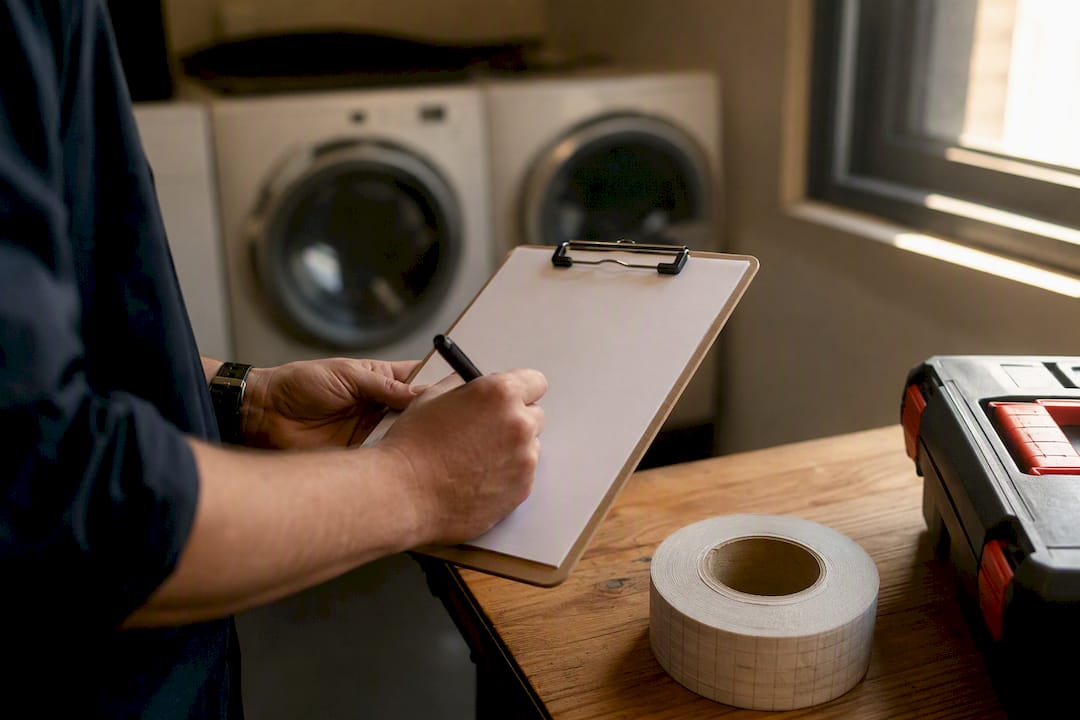
Across more than 30 years of pest management work, the properties that avoid public incidents share one habit: they act on inspection findings the same week, not the same quarter. The most common failure we see isn't a lack of inspections. It's inspection reports filed away with no clear owner assigned to close the loop, which quietly turns a documented program into a paper exercise. A hotel that pairs routine, eco-friendly IPM with fast internal follow-through protects both its guests and its reputation.
— Bespoke-Enviro Services
Get a Bed Bug Prevention Assessment for Your Property
Bespoke-enviro designs IPM programs specifically for hotels, combining BBMS documentation, routine inspections, heat and steam treatment, and staff training into one coordinated plan instead of a one-off spray visit. Where a generic pest contract leaves your team guessing what happens after an inspection, our approach builds the follow-through directly into the program, so findings turn into corrective action instead of a filed report nobody reads.
If your property needs a documented BBMS, a monitoring schedule, or a treatment plan that keeps rooms in service longer, request an on-site assessment through Bespoke Enviro Services and get a clear inspection quote before your next guest complaint forces the issue.