
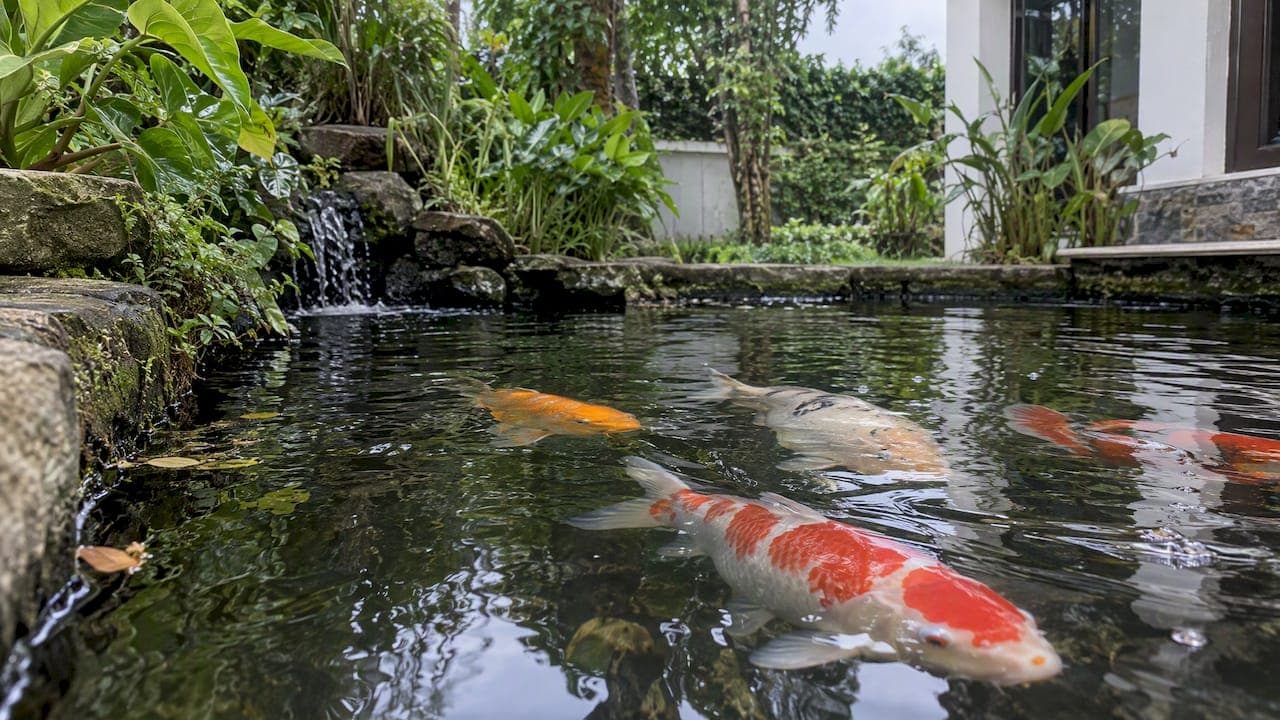
The safest and most effective approach to koi pond mosquito control combines three things: steady water movement, biological predators already living in your pond, and targeted Bti larvicide applied only where needed. This integrated method knocks down larvae without touching your koi or disrupting pond ecology. Broad-spectrum pesticides have no place in a koi pond, and a licensed pest control operator should step in if breeding persists despite good habitat management.
TL;DR:
- Mosquito larvae can mature in about a week during warm weather, so inspect after rain and keep circulation running through warm, still periods.
- Use Bti only in stagnant pockets the pump misses; one dunk treats roughly 100 square feet and lasts about 30 days, subject to its label.
- Do not add mosquitofish: their aggression can harm koi and koi fry, while existing koi or goldfish often provide larval predation.
- Never use general insecticide sprays near pond water, because runoff or overspray can harm koi, frogs, and beneficial pond insects.
- Call a licensed operator if mosquitoes persist despite aeration and clean margins, or breeding sites remain inaccessible; confirm treatment is safe for fish before service.
Table of Contents
- Quick Actions to Reduce Mosquito Breeding Today
- Fish and Biological Control: What Koi Can (and Can't) Do
- Water Movement and Aeration That Mosquitoes Can't Breed In
- Using Bti Larvicide Dunks Safely Around Koi
- A Maintenance Routine That Keeps Mosquitoes From Coming Back
- When to Call a Licensed Pest Control Operator
- Plant-Based Repellents That Won't Harm Your Koi
- Pond Design Changes That Keep Mosquitoes Out
- Mosquito Breeding Cycles and When to Watch Your Pond Closely
- Keeping Koi and Wildlife Safe While Managing Mosquitoes
- Building an Integrated Plan for Your Pond
- A Note From Our Team on Pond-Safe Mosquito Control
- How We Can Help With Mosquito Control at Your Pond
- FAQ
- Sources
Quick Actions to Reduce Mosquito Breeding Today
Mosquitoes need still water and about a week to complete their larval stage, so small changes can cut breeding fast. Start with the fixes that take the least effort and work outward from there.
- Turn on or add a fountain or pump to agitate the surface, focusing on shallow edges where water sits warm and calm.
- Place Bti dunks or bits only in stagnant pockets or sheltered margins the main circulation does not reach, following label directions for dosage.
- Confirm your koi or goldfish population is large enough to graze on larvae; do not introduce mosquitofish into a koi pond.
- Skim floating debris, pull matted vegetation, and check gutters, pots, and other containers near the pond for hidden breeding sites.
Pro Tip: Walk the pond perimeter after rain and look for any spot where water sits motionless for more than a few days; that is where mosquitoes lay eggs first.
Fish and Biological Control: What Koi Can (and Can't) Do
Koi and goldfish feed on mosquito larvae opportunistically, and in a well-stocked pond this grazing pressure reduces breeding substantially. Healthy ponds with fish and surface movement typically do not produce problem mosquito populations in the first place, according to pond management guidance from Purdue. Your koi are already doing part of the job; the question is whether they are doing enough of it.
Mosquitofish, or Gambusia, are the species most people associate with larval control, and for good reason: they are aggressive, efficient hunters. That aggression is exactly why they do not belong in a koi pond. Oklahoma State University Extension notes that Gambusia can harm other pond fish and disrupt established ecosystems, including by preying on koi fry. The same source points out that many ponds already have adequate fish populations to keep larvae in check without adding another species.
A few practical notes on stocking:
- Rely on your existing koi and goldfish rather than introducing a new predator species.
- Small, top-feeding minnows can help in shallow ornamental ponds that cannot support koi.
- Match fish numbers to pond surface area; an understocked pond leaves larvae with no natural check.
- Avoid releasing any fish into ponds connected to natural waterways, where they can spread beyond your property.
Fish alone rarely solve a persistent mosquito problem. They work best as one layer in a broader plan that also includes water movement and, when needed, a targeted larvicide.
Water Movement and Aeration That Mosquitoes Can't Breed In
Mosquito larvae need still water to develop and must break the surface to breathe. Agitating that surface, even modestly, interrupts both processes and is one of the most reliable nonchemical controls available, according to Natural Waterscapes.
You have a few reasonable options depending on your pond's size and layout:
- A decorative fountain offers low-impact, always-on agitation suited to small or mid-sized ponds.
- A submersible pump lets you target a specific problem corner, such as a sheltered cove that the fountain does not reach.
- Diffused aeration, which bubbles air from the pond bottom, covers larger ponds more evenly and also improves oxygen levels for your koi.
Place whichever option you choose near shallow, warm margins and sheltered coves first, since these are the spots mosquitoes prefer for egg-laying. Clean pump intakes and fountain heads regularly so debris does not choke the flow, and in cooler months, keep enough movement running to prevent the pond from going fully still, even if you dial back output.
Pro Tip: If your pond has a dead corner where current never reaches, a small clip-on pump aimed at that spot often does more than upgrading your main fountain.
Using Bti Larvicide Dunks Safely Around Koi
Bti is the larvicide most often recommended for ponds that already have koi, and NEA's mosquito control guidance lists Bti among the approved options for habitats that cannot simply be removed.
A few practical pointers for use:
- As a general rule of thumb, one dunk treats roughly 100 square feet of surface water, though you should always check the specific product label.
- Product technical information indicates Bti dunks and briquets typically release effective levels for about 30 days under typical conditions, though sunlight and heavy organic matter shorten that window.
- Anchor dunks in a mesh bag or floating basket in still pockets, away from areas where koi actively feed, to avoid disturbance.
- Try habitat fixes such as aeration and vegetation removal first; reach for Bti when a specific pocket keeps breeding despite those changes.
A Maintenance Routine That Keeps Mosquitoes From Coming Back
Consistent upkeep does more to prevent mosquitoes than any single product. Build these habits into your regular pond care.
- Keep shoreline margins steep where possible, since shallow pockets under about two feet are preferred breeding spots; a steeper slope discourages egg-laying.
- Thin dense emergent vegetation mats that create calm, sheltered water at the pond edge.
- Skim floating debris and clean filters weekly, and keep grass clippings and leaf litter out of the water.
- After heavy rain, check gutters, plant saucers, and any containers near the pond, since these small sites more often produce adult mosquitoes than the pond itself.
For a structured weekly routine, our mosquito calendar for condo managers and residents outlines inspection tasks that translate well to a backyard pond setting, and our 30-minute source reduction checklist covers the peripheral sites worth checking each week.
When to Call a Licensed Pest Control Operator
Most koi ponds stay mosquito-free with the habitat and biological controls above. A few signals suggest it is time to bring in a licensed operator rather than continuing to troubleshoot alone.
- Adult mosquitoes keep appearing near the pond despite steady aeration, adequate fish, and clean margins.
- You notice breeding in spots you cannot physically access or treat, such as deep crevices or under dense rockwork.
- There is a disease concern in your area, where delay carries higher stakes than a routine nuisance.
- You want confirmation that your pond setup aligns with current larviciding practices rather than guessing at dosing.
A licensed IPM-based visit typically includes a site survey of the pond and surrounding property, targeted larviciding with NEA-approved materials where appropriate, and a follow-up check to confirm the problem has cleared. NEA's scope-of-works guidance for professional mosquito programs outlines this kind of routine inspection and housekeeping approach for drains, gully traps, and similar habitats. Before booking, ask what products the technician plans to use and request written confirmation that the treatment is fish-safe. Having your pond's approximate size and current setup ready speeds up the visit considerably.
Plant-Based Repellents That Won't Harm Your Koi
Several plants have a reputation for discouraging adult mosquitoes nearby, and most pose no risk to koi when kept in pots at the pond edge rather than directly in the water. Citronella grass, lemongrass, and marigolds are commonly placed around patios and pond perimeters for this purpose. Their effect comes mainly from the scent compounds released by crushed or disturbed leaves, so potted placement near seating areas does more than simply having the plants nearby.
Floating plants deserve a separate note. Water lettuce and dense mats of duckweed can shade still corners of the water, and while some gardeners add them for aesthetics, thick cover can actually create the calm, sheltered conditions mosquitoes prefer for laying eggs. If you keep floating plants, thin them regularly so they do not form an unbroken mat across any one section of the pond.
None of these plantings replace the core controls already covered. Think of them as a supplementary layer around the pond's edge, not inside the water column where your koi live. A pot of lemongrass near a seating area, paired with steady aeration and a well-stocked pond, covers both the adult nuisance and the larval source without introducing anything that could affect water chemistry or fish health.
If you choose to add botanical plantings, keep them in containers rather than loose in the pond, and avoid any product marketed as a broad insect spray near the water's edge, since overspray can drift onto the surface.

Pond Design Changes That Keep Mosquitoes Out
Some of the most durable mosquito control comes from how a pond is built or modified rather than what you add to the water afterward. Steep margins, ideally sloping at a ratio of around 3:1, reduce the shallow, sun-warmed pockets mosquitoes favor for egg-laying, a detail echoed in Purdue's pond management guidance referenced earlier in this article.
Beyond slope, a few structural choices make a lasting difference:
- Eliminate isolated dead-end coves or bays where water sits apart from the main circulation.
- Grade the surrounding landscape so rainwater drains away from the pond rather than collecting in puddles nearby.
- Keep rock edging and biofilter media clean of silt buildup, since clogged crevices can hold small pockets of still water.
Drainage work around the pond's perimeter often matters as much as the pond itself. If standing water collects in the surrounding yard after rain, that runoff can seed breeding sites independent of the pond proper. For larger landscaping or drainage corrections, a contractor familiar with grading and drainage systems, such as Precision Outdoor Solutions, can advise on regrading low spots so water moves away from the pond instead of pooling beside it.
Covering a pond entirely with mesh netting is sometimes suggested for mosquito control, but fine netting mainly keeps out larger pests like raccoons and herons rather than mosquitoes, which are small enough to pass through most mesh sizes. Design changes that remove still water altogether tend to outperform barrier approaches for this particular pest.
Mosquito Breeding Cycles and When to Watch Your Pond Closely
Mosquito larvae typically complete their development in about a week under warm conditions, which means a pond can go from egg-free to producing adults faster than many owners expect. Warm, humid stretches accelerate that cycle, while cooler weather slows it down without stopping it entirely in a tropical climate.
This timing matters most right after rainfall, when temporary puddles and overflow areas around the pond offer fresh breeding sites even if the pond itself stays well managed. It also matters during any stretch of still, warm weather when your fountain or pump might be running at reduced output. A pond that is perfectly fine most of the year can still produce a breeding pocket during a brief lull in circulation.
Rather than treating mosquito control as a seasonal task, build inspection into your regular pond routine year-round, with extra attention after heavy rain. Our guide on weekly B-L-O-C-K checks walks through a simple weekly habit that catches new breeding sites before they produce adult mosquitoes, and it applies just as well to pond owners as to anyone managing standing water around a property.
Keeping Koi and Wildlife Safe While Managing Mosquitoes
Broad-spectrum insecticides are not designed with fish physiology in mind, and many compounds that kill adult mosquitoes effectively are toxic to koi, frogs, and the beneficial insects that share a healthy pond. This is the central reason pond-safe mosquito control relies on Bti and habitat management rather than general insecticide sprays near the water.
Bti works because it targets the digestive system of mosquito larvae specifically, a mechanism that does not affect fish, birds, or mammals when the product is used as labeled. That selectivity is what makes it the standard recommendation for ponds stocked with koi, rather than products aimed at adult mosquitoes.
A few safety habits protect the wider pond ecosystem:
- Never apply general insect fogging or spray products directly over or near open water.
- Read labels carefully before using any lawn or garden pesticide near the pond, since runoff can carry residue into the water.
- Avoid introducing non-native predator fish as a mosquito fix, since the ecological disruption often outweighs the benefit, as Oklahoma State Extension notes regarding Gambusia.
- When in doubt about a product's fish safety, treat it as unsafe until you can confirm otherwise with the manufacturer or a licensed technician.
Healthy, balanced ponds with fish and natural predators tend to control mosquitoes on their own, and unnecessary chemical use can disrupt the very food chain that keeps larvae in check.
Building an Integrated Plan for Your Pond
Integrated pest management treats mosquito control as a layered system rather than a single fix, and that framing fits koi ponds particularly well. The EPA's IPM principles describe this approach as prioritizing nonchemical controls and ongoing monitoring, with chemical treatment reserved as a complement during active problems rather than a default.
For a koi pond, that layering looks like this in practice: aeration and fish predation handle the baseline, habitat maintenance removes the secondary breeding sites around the margins, and Bti steps in only for pockets the other layers cannot reach. No single layer needs to work perfectly on its own, which is part of why this approach holds up better than reaching for one product and hoping it solves everything.

Monitoring ties the whole plan together. A quick visual check of the pond margins every week, paired with a closer look after rain, catches new breeding pockets while they are still small. That habit matters more than any individual product, since even the best larvicide only works if you notice where it is needed.
This same layered thinking underpins how NEA approaches mosquito control at the public health level: remove breeding sources first, treat what cannot be removed, and monitor continuously. Applying that same discipline to a backyard pond gives koi owners a plan that scales from routine upkeep to a professional visit without ever reaching for a product that could put fish at risk.
A Note From Our Team on Pond-Safe Mosquito Control
Over more than 30 years of pest management work, we have seen how often a well-managed pond solves its own mosquito problem through fish, movement, and basic upkeep. Our preference always runs toward non-toxic, NEA-aligned methods first. If a pond keeps breeding despite your best efforts, or you have a health concern you would rather not troubleshoot alone, reach out to a licensed operator for a proper look.
— Bespoke-Enviro Services
How We Can Help With Mosquito Control at Your Pond
When a pond keeps producing mosquitoes despite aeration, fish, and regular upkeep, we step in with an inspection-first approach rather than a generic spray. Our technicians assess the pond and surrounding property, identify any breeding pockets your routine care has missed, and apply treatment only where it is actually needed, using methods safe for koi and the wider pond ecosystem.

Our general pest control services cover mosquito larviciding alongside broader IPM-based pest management for homes and properties. Request an inspection through that page, and have your pond's size and current setup ready so we can scope the visit accurately from the start.
FAQ
What can you put in pond water to kill mosquitoes?
Bti dunks or bits are the standard larvicide for ponds with fish, since they target mosquito larvae specifically without harming koi when used per label directions. Avoid any general insecticide or fogging product in or near pond water, since these are formulated for adult insects and carry real risk to fish.
How can I get rid of mosquitoes in my pond?
Combine steady water movement from a fountain or pump, an adequate population of koi or goldfish to graze on larvae, and routine habitat maintenance like skimming debris and trimming dense vegetation. Mosquito control guidance for ponds recommends this layered approach over relying on any single method.
Will koi eat mosquitoes?
Yes, koi and goldfish feed on mosquito larvae opportunistically, and a well-stocked pond often keeps breeding low through this grazing alone. Healthy, fish-stocked ponds with surface movement typically do not develop problem mosquito populations in the first place.
What kills mosquito larvae but not fish?
Bti, a naturally occurring bacterium, kills mosquito larvae by targeting their digestive system while leaving fish, pets, and people unaffected when applied as labeled. It is widely recommended for ponds with koi specifically because it does not carry the broader toxicity risk of general insecticides.
Sources
- Mosquito prevention and control — NEA
- Mosquito control in ponds & lakes — Natural Waterscapes
- Management of ponds, wetlands, and other water reservoirs to minimize mosquitoes — Purdue
- Midges, mosquitoes and ponds — Oklahoma State University Extension