
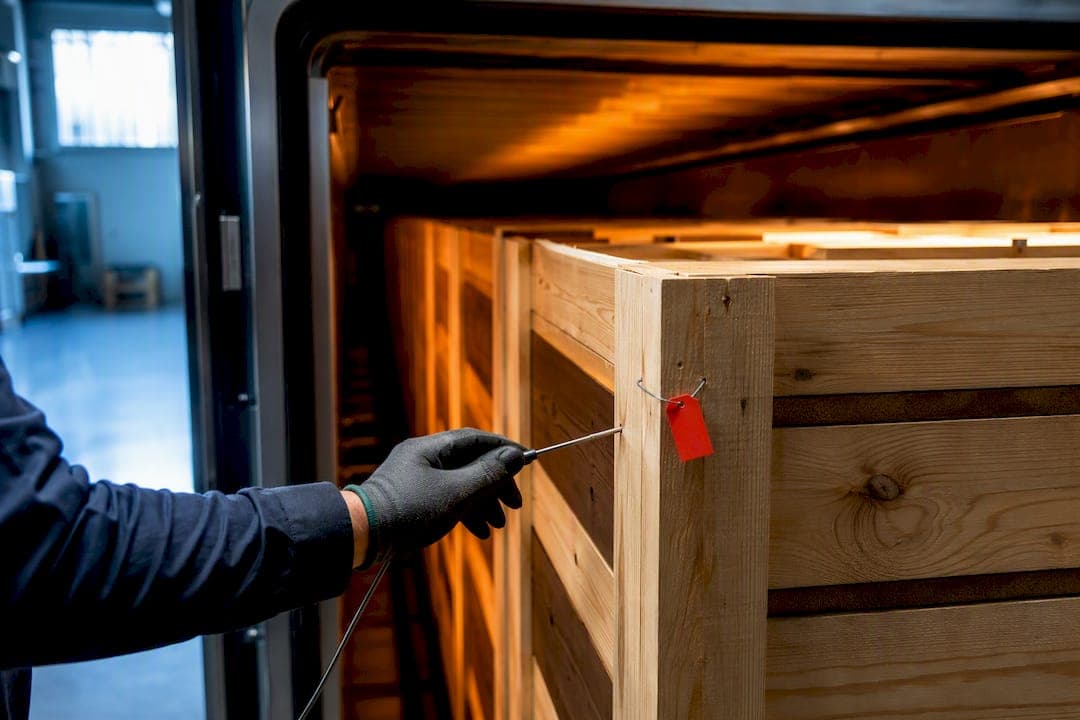
ISPM 15 requires raw wood packaging thicker than 6 mm, like pallets, crates, and dunnage, to receive an approved treatment and carry a legible mark before it crosses a border. The standard exists to stop quarantine pests from spreading through global trade in wood packaging. If your business ships, receives, or manufactures wood packaging material, the responsibility for treatment and marking falls on you, not the carrier or the customs broker.
TL;DR:
- Most compliant wood packaging must be heat treated to reach a 56°C core temperature for at least 30 minutes, verified through proper records.
- The ISPM 15 stamp must include the country code, treatment code, and treatment provider, and must remain legible and intact to ensure approval.
- Processed wood products like plywood and small wood pieces under 6 mm are exempt from treatment and marking requirements.
- Non-compliance often results from pest activity, damaged marks, or unauthorized repairs that break the certification chain, leading to shipment rejection.
- Preference for heat treatment over fumigation is based on its chemical-free process, environmental benefits, and industry shift away from methyl bromide.
Table of Contents
- What Wood Packaging Falls Under ISPM 15 Regulations
- Approved ISPM 15 Wood Treatment Methods and Their Minimums
- How to Read the ISPM 15 Stamp Correctly
- Exemptions From ISPM 15 Packaging Requirements
- Inspection Red Flags and When Re-Treatment Is Required
- Why ISPM 15 Compliance Rules Differ by Destination Country
- A Field Checklist for Exporters, Importers, and Logistics Teams
- Why We Favor Heat Treatment Over Fumigation When Possible
- Get Certified Treatment and Documentation Support
- Where to Verify ISPM 15 Rules Yourself
- Sources
What Wood Packaging Falls Under ISPM 15 Regulations
ISPM 15 covers solid wood packaging material used to support, protect, or carry cargo across international borders. The standard applies to raw wood packaging thicker than 6 millimeters, and it requires that wood be debarked before treatment.
The following packaging types fall squarely within ISPM 15 requirements:
- Pallets and skids used for stacking or moving cargo
- Wooden crates and boxes built from solid sawn timber
- Dunnage, the loose wood used to brace or wedge cargo in transit
- Packing blocks and wedges
- Cable reels and spools made from solid wood
- Wooden collars used in crating
Small amounts of residual bark are permitted under certain size conditions, but heavy bark coverage is not allowed. Processed wood products sit outside this scope entirely, which we cover in more detail below. The 6 mm threshold matters because thinner wood pieces, think veneer strips or thin lath, generally fall below the risk profile the standard targets.
Approved ISPM 15 Wood Treatment Methods and Their Minimums
Four treatment codes appear on compliant wood packaging: HT, DH, MB, and SF. Each one carries specific technical minima defined in the standard's annexes, and knowing these numbers lets you check a treatment provider's claims instead of taking them on faith.
Heat treatment (HT) is a common method often recommended by providers. The wood must reach a minimum core temperature of 56°C for 30 continuous minutes. Core temperature verification matters because a kiln reading the surrounding air temperature tells you nothing about whether the center of a thick pallet block actually got hot enough to kill pests living inside it.
Dielectric heating (DH) uses microwave or radio-frequency energy to heat wood from the inside out, requiring heating to a specified temperature for a brief continuous period across the entire wood profile. It's faster than conventional HT kilns but requires specialized equipment, so it's less common outside industrial-scale operations.
| Treatment | Code | Minimum requirement |
|---|---|---|
| Heat treatment | HT | 56°C core temperature, 30 continuous minutes |
| Dielectric heating | DH | 56°C core temperature, 30 continuous minutes |
| Methyl bromide fumigation | MB | Dosage and exposure schedule set by wood thickness, with size restrictions on treatable dimensions |
| Sulfuryl fluoride fumigation | SF | Dosage and exposure schedule set per approved national protocol |
Fumigation with methyl bromide carries size limits on the wood being treated and is increasingly discouraged. The IPPC has pushed contracting parties toward reducing methyl bromide use in favor of heat-based alternatives, largely because MB is an ozone-depleting substance. Sulfuryl fluoride has emerged as a common substitute where fumigation is still required.
Pro Tip: Always ask your treatment provider for the facility code, treatment date, and either temperature logs (for HT/DH) or gas concentration monitoring records (for MB/SF). A provider that can't produce these on request is a red flag, not a paperwork inconvenience.
How to Read the ISPM 15 Stamp Correctly
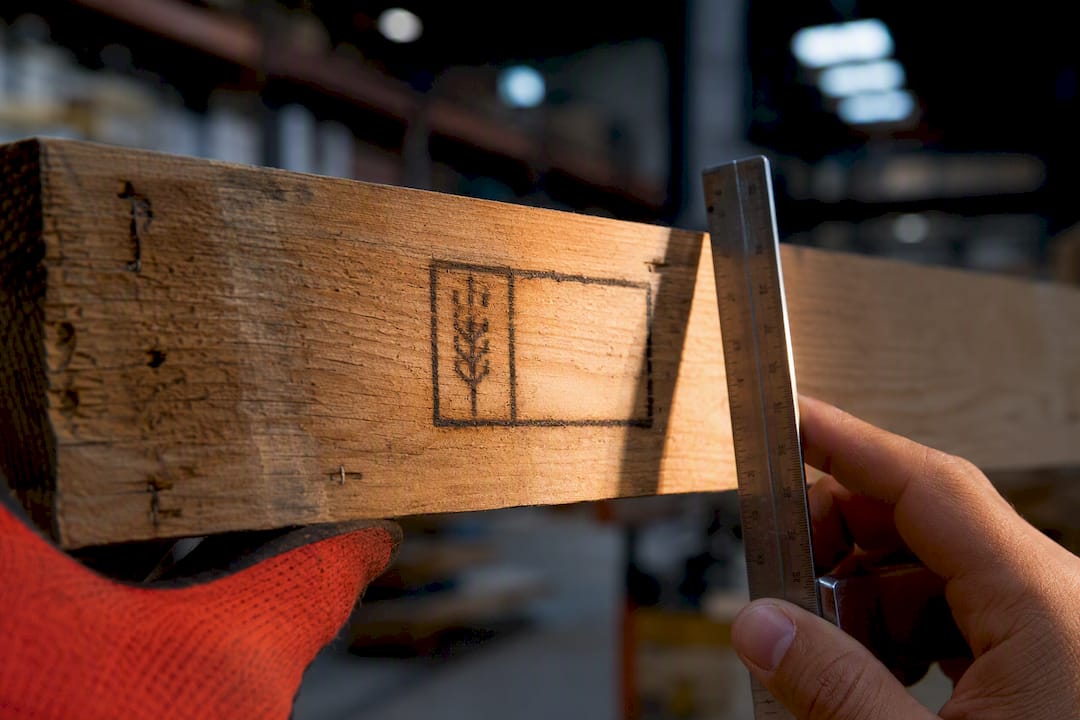
The mark itself is a compliance document in miniature. A properly applied stamp contains four core elements packed into the familiar wheat-sheaf border:
- The IPPC logo (the wheat-sheaf symbol)
- A two-letter ISO country code identifying where the treatment happened
- A unique producer or treatment provider code assigned by the national plant protection organization (NPPO)
- A treatment code: HT, DH, MB, or SF
Damaged or illegible marks are treated as non-compliant by inspecting authorities, whether the damage came from rough handling, weathering, or sloppy stamping in the first place. A blurred border, missing element, or partial stamp usually triggers the same corrective action as no mark at all: rejection, re-treatment, or destruction at the importer's expense.
Marks applied by branding iron tend to hold up better across a long supply chain than ink stamps, which can fade or smear during handling. Since the mark needs to stay legible from the treatment facility all the way to final unpacking, placement on a stable, visible face of the wood matters as much as the marking method itself.
Exemptions From ISPM 15 Packaging Requirements
Not every wood packaging material needs treatment. Processed wood products, including plywood, oriented strand board, particle board, and hardboard, are exempt because the manufacturing process itself (heat, pressure, adhesives) already destroys pests that would otherwise survive in raw timber.
A few other categories fall outside the standard entirely:
- Paper, plastic, and metal packaging materials, none of which carry the same pest risk as solid wood
- Wood packaging made entirely from these processed materials, even when mixed with other components
- Small wood pieces under the 6 mm thickness threshold
Mixed-material packaging needs a closer look. If a shipment uses a plywood crate reinforced with solid wood corner blocks thicker than 6 mm, only those solid wood components need treatment and marking, not the whole unit.
Inspection Red Flags and When Re-Treatment Is Required
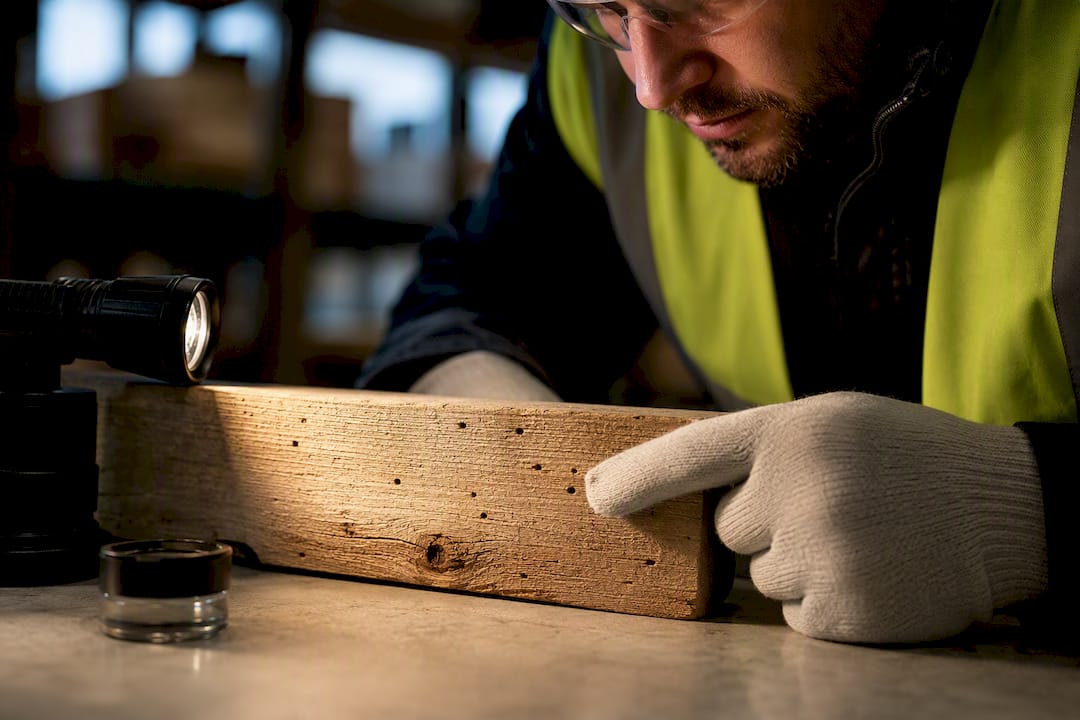
Inspectors look for a specific set of warning signs when checking wood packaging material at a border. Live insects, exit holes bored through the wood surface, frass (the sawdust-like waste pests leave behind), and stamps that are missing or unreadable all trigger the same response: rejection until the problem is resolved.
Here's what pushes wood packaging out of compliance and back into treatment:
- Visible pest activity or damage found during inspection
- A stamp that's been damaged, painted over, or worn away
- Repair or remanufacture of previously treated wood
That last point catches a lot of businesses off guard. Repairing or replacing parts of a treated pallet breaks the certification chain, meaning the entire unit needs re-treatment and a fresh stamp, not just a patch job on the damaged board. Reuse without alteration is fine; reuse after repair is not.
The consequences for non-compliance escalate quickly. Import authorities can issue an Emergency Action Notification, order re-treatment or destruction of the shipment, and hold cargo at the port while the exporter foots the bill for delays and storage.
Pro Tip: A mark check alone isn't enough. Field verification should always pair a stamp inspection with a visual pest check, since a legitimate-looking mark on wood that shows fresh exit holes is still a problem waiting to happen.
Why ISPM 15 Compliance Rules Differ by Destination Country
ISPM 15 is an international standard, but each country's NPPO implements it through its own regulations, facility accreditation system, and enforcement practices. The NPPO assigns the producer and treatment provider codes that appear on the mark, and it decides which facilities are authorized to treat and stamp wood packaging within its borders.
This creates real variation in how strictly rules get enforced at the border. Because national implementation varies, an exporter shipping the same product to three different countries could face three different sets of import conditions.
Before shipping, confirm the following with your treatment provider and destination contact:
- Check the destination country's NPPO list of accepted treatments and any additional import conditions
- Request full treatment records, not just a photo of the stamp
- Build ISPM 15 compliance language directly into supplier and freight contracts
A Field Checklist for Exporters, Importers, and Logistics Teams
Compliance breaks down most often at the handoff points, when nobody double-checks the wood before it moves to the next stage. This checklist covers the moments that matter.
- Before export: Confirm the treatment facility is accredited, request treatment records, and photograph the mark clearly for your shipping file.
- On receipt: Visually inspect incoming pallets and crates for exit holes, frass, or live pests before accepting the shipment into your facility.
- Before reuse: Check that the mark is still intact and that no repairs or alterations have been made since treatment.
- On repair or remanufacture: Remove the old mark, and have an accredited provider re-treat and re-stamp the unit before it goes back into circulation.
- When in doubt: Call a certified fumigation or heat-treatment provider and ask them to supply facility accreditation, a treatment schedule, and documentation before the job starts.
Why We Favor Heat Treatment Over Fumigation When Possible
Bespoke-Enviro Services has spent more than 30 years developing integrated pest management strategies across Singapore's residential, commercial, and industrial sectors, and wood packaging compliance draws on the same core principle: effective treatment shouldn't come at the cost of unnecessary chemical exposure.
Heat treatment is our first recommendation whenever wood packaging conditions allow it. HT achieves the same pest control outcome as fumigation without leaving chemical residue on the wood or in the surrounding storage environment, and it aligns with the broader industry shift away from methyl bromide.
Fumigation still has its place. Certain wood dimensions, tight shipping timelines, or specific pest species sometimes call for methyl bromide or sulfuryl fluoride, and a certified fumigation provider mitigates the environmental risk through controlled dosing and proper gas monitoring rather than guesswork. The right treatment depends on the wood, the timeline, and the pest pressure, not a one-size answer.
— Bespoke-Enviro Services
Get Certified Treatment and Documentation Support
Sorting out ISPM 15 compliance yourself means chasing down accredited facilities, cross-checking treatment logs, and hoping the paperwork holds up at customs. Some providers handle that verification work directly, so your wood packaging clears inspection the first time instead of getting flagged for missing documentation.
Our team provides certified fumigation services for cargo, pallets, and packaging that require MB or SF treatment, alongside general pest control and inspection support for storage facilities that need ongoing monitoring between shipments. When you request treatment, ask for facility accreditation details, complete treatment or gas monitoring records, and a realistic turnaround estimate before committing. If you're also managing an existing pest issue in a warehouse or storage yard, our guide on fumigation certificate requirements walks through what documentation to expect. Reach out to a pest control service provider to schedule an inspection and get your wood packaging treatment sorted before your next shipment deadline.
Where to Verify ISPM 15 Rules Yourself
The definitive technical reference is the ISPM 15 standard text with Annexes 1 and 2, published by the IPPC, covering treatment parameters and mark composition in full detail. Beyond that, check your destination country's NPPO website directly for its current list of accredited facilities and any country-specific import conditions before you ship, since national rules can add requirements the base standard doesn't cover.
Sources
- The importance of actively protecting the IPPC certification of wood packaging material — ISPM 15
- Import ISPM 15-Compliant Wood Packaging Material into the United States — APHIS
- ISPM 15 — Wikipedia