
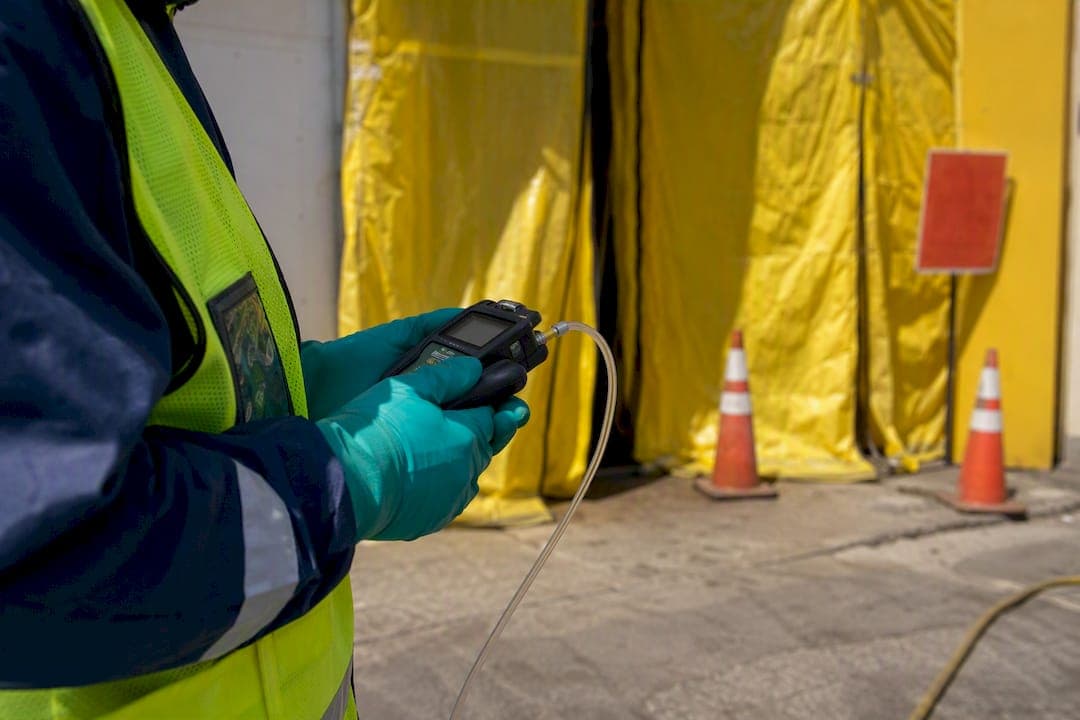
Fumigation can be safe, but only when trained, licensed personnel run it with a documented Fumigation Management Plan, continuous gas monitoring, correctly matched PPE, and a written declaration of safe re-entry before anyone steps back inside. Skip any one of those controls and the job stops being pest control and starts being a gamble with a lethal gas. If a fumigator can't show you the plan, the monitoring log, and the clearance paperwork, the job should not proceed.
TL;DR:
- Proper fumigation requires a site-specific Fumigation Management Plan, continuous gas monitoring, and a written re-entry clearance from licensed personnel.
- Fumigants are inherently toxic gases that penetrate deeply into materials and pose acute and delayed health risks if safety protocols are not strictly followed.
- Clear recordkeeping, calibration of equipment on the day of treatment, and strict adherence to regulatory thresholds are essential to prevent poisoning incidents.
- The most common safety failures stem from process lapses like inadequate monitoring, improper PPE selection, or unauthorized re-entry, not equipment malfunction.
- Effective communication before, during, and after fumigation, along with thorough decontamination, is vital to ensure safety for crews, occupants, and bystanders.
Table of Contents
- Why fumigants are hazardous: acute and chronic health risks
- What licensing and standards require of a fumigation team
- What belongs in a Fumigation Management Plan?
- How should PPE and gas monitors be chosen for fumigation?
- How do crews manage leaks, topping up, and aeration safely?
- What should happen if someone is exposed to a fumigant?
- How is safe re-entry confirmed after fumigation?
- Why do crews need a clear communication protocol during a job?
- How is equipment decontaminated after a fumigation job?
- Publisher perspective: what actually separates safe fumigation from a liability waiting to happen
- Ready for a fumigation job done the safe way?
- Sources
Why fumigants are hazardous: acute and chronic health risks
Fumigants don't kill pests the way a spray or bait does. They're gases that penetrate wood, grain, soil, and packing material at the molecular level, reaching insects and rodents hiding in spaces no liquid treatment could ever reach. That same penetrating power is what makes them dangerous to people. A fumigant doesn't just sit on a surface waiting to be wiped away. It moves through air, seeps into wall cavities, and lingers in fabric and insulation long after the visible "job" looks finished.
The FAO's safety guidance is blunt on this point: fumigants are inherently toxic, full stop. There's no "mild" version of a fumigant strong enough to kill termites or bedbugs at every life stage. The gases used most often in professional structural and commodity fumigation each carry distinct risks:
- Phosphine disrupts cellular respiration, essentially suffocating an organism from the inside out, and can ignite or explode at certain concentrations.
- Hydrogen cyanide blocks the body's ability to use oxygen at the cellular level, acting fast and with little warning odor at low concentrations.
- Sulfuryl fluoride is odorless and colorless on its own, which is why applicators pair it with a chloropicrin warning agent so people can smell trouble before it becomes dangerous.
- Methyl bromide affects the nervous system and lungs, with symptoms that can be delayed for hours after exposure.
The most dangerous scenarios almost never happen during the actual gas release. They happen during unsupervised re-entry, in confined spaces with poor air movement, or when someone assumes a structure is clear because the tarps came off. Acute exposure symptoms range from headaches, nausea, and dizziness to seizures and respiratory failure at higher concentrations. Chronic or delayed effects, including neurological symptoms that surface hours or days later, are exactly why medical monitoring after any suspected exposure matters as much as the initial rescue.
Peer-reviewed case reviews of structural fumigation poisonings consistently point to the same root causes: training gaps and failures in clearance-device verification, not equipment malfunction alone. In other words, the gas isn't usually the surprise. The process failure is.
What licensing and standards require of a fumigation team
Fumigation sits in a different regulatory category than routine pest control precisely because the margin for error is so thin. The NEA Code of Practice for Fumigation Personnel lays out the baseline that any credible operation should meet, and it goes well beyond "wear a mask and don't stand too close."
At its core, the Code requires:
- A site-specific Fumigation Management Plan for every job, not a generic template reused across properties.
- Continuous gas monitoring throughout application, aeration, and clearance testing.
- A written declaration of safe re-entry before occupants or workers return.
- Physical sealing of the structure or stack, plus visible warning signage around the treated area.
- Formal notification to relevant authorities ahead of the operation.
None of this is paperwork for its own sake. The FMP functions as the legal thread tying the pest control company and the individual fumigator to specific, provable safety commitments, which matters enormously if something goes wrong and investigators need to reconstruct exactly what was supposed to happen versus what actually did.
Licensing exists because fumigation competency isn't intuitive. A general pest technician who's excellent at baiting rodent burrows has no business handling phosphine or sulfuryl fluoride without separate, gas-specific training. Certified fumigators learn dosage calculations, leak detection, respirator selection, and emergency response as a distinct discipline.
Clearance thresholds are where the science gets specific. Guidelines generally require treated areas to reduce boundary concentrations to a safe fraction of the Permissible Exposure Limit before the public is allowed near the site, with tighter internal limits for actual re-entry. These numbers aren't arbitrary. They come from occupational exposure research and are refined further by each product's Safety Data Sheet, which should always override generic advice when the two conflict.
Recordkeeping closes the loop. A compliant fumigator keeps monitoring logs, incident reports, and clearance certificates on file, and any credible operation notifies authorities immediately if something deviates from the plan. If a company can't produce these records on request, that's a red flag worth acting on.
What belongs in a Fumigation Management Plan?
A Fumigation Management Plan is the operational backbone of a safe job, and a thin one is often the first sign of a company cutting corners. A proper plan names the personnel on site, defines a monitoring schedule, and includes an emergency response plan with actual phone numbers and hospital routes, not a placeholder line. It also maps exclusion zones clearly enough that a neighbor glancing at the property understands exactly where not to walk.
Before any fumigant is released, the site itself needs preparation work that's easy to underestimate:
- Seal cracks, vents, and gaps in the structure to prevent gas migration into adjoining units or the outside air.
- Remove or protect items vulnerable to fumigant exposure, including food, medications, and pets (never leave live animals inside a treatment zone).
- Set physical exclusion markers and boundary signage well outside the treated perimeter.
- Notify neighbors, building management, and, where required, local authorities of the schedule and duration.
- Confirm every gas detector is calibrated that day, not "sometime this month."
- Stock spare canisters, verify PPE inventory matches the crew size, and test radios or other communication equipment before the crew enters.
Pro Tip: Ask your fumigator to walk you through their exclusion zone map before the job starts. A company confident in its plan will show you exactly where the boundary sits and why, not wave vaguely at the property line.
Clients booking a job should feel entitled to ask direct questions: Is there a written FMP for this specific property? Who's the licensed fumigator on record? What's the monitoring schedule during aeration? A hesitant answer to any of these is worth pausing over.
How should PPE and gas monitors be chosen for fumigation?
Personal protective equipment for fumigation isn't a one-size-fits-all suit and a pair of gloves. It's a layered decision based on the specific gas, its concentration, and the task being performed. Chemical-resistant suits, gloves, and eye protection cover skin and contact exposure, but the real hazard with most fumigants is inhalation, and that's where respirator selection becomes the make-or-break decision.
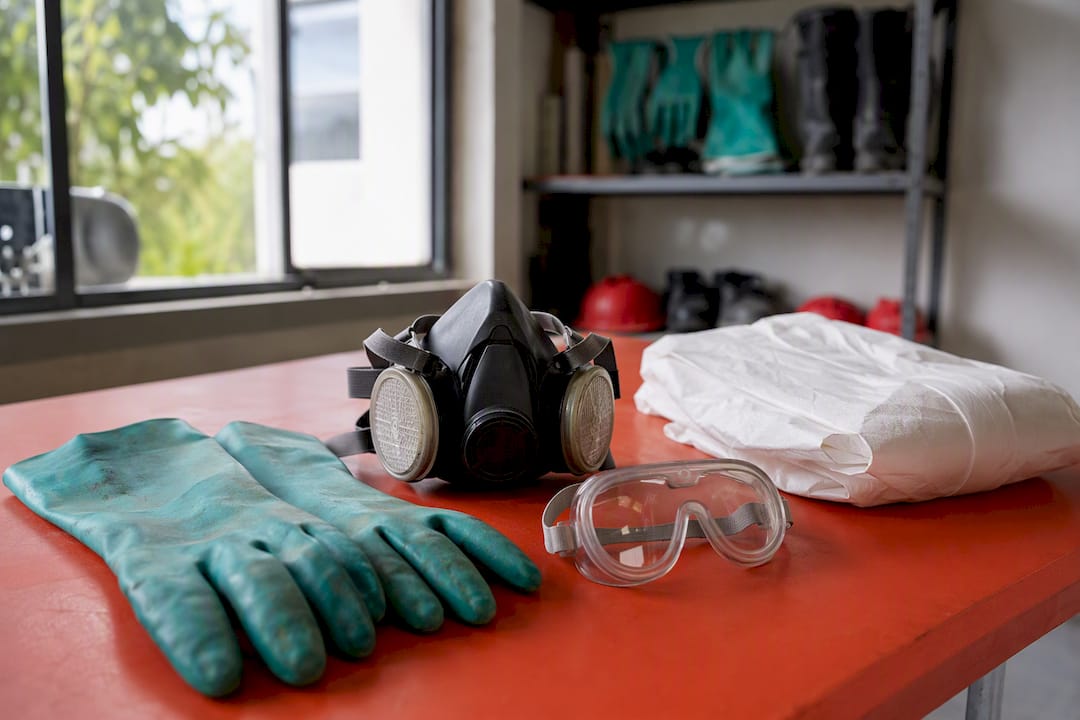
Here's the detail most homeowners never learn until it matters: cartridge and canister respirators, the kind that look reassuringly heavy-duty, are frequently the wrong tool. Their filters are gas-specific and saturate with use, meaning they can fail silently once a fumigant's concentration exceeds the cartridge's rated capacity. The FAO's guidance is explicit that atmosphere-supplying respirators, which deliver breathable air from an independent source rather than filtering ambient air, are the appropriate choice once concentrations approach or exceed those cartridge limits. Full encapsulation suits paired with supplied-air systems become necessary in confined, high-concentration environments like grain silos or sealed shipping containers.
Gas monitoring is the other half of the equation, and it needs to happen at two levels simultaneously:
- Personal monitors worn by each crew member, alerting individuals the moment their immediate air crosses a safety threshold.
- Area monitors placed at boundaries and exclusion zones, tracking whether gas is migrating beyond the treated space.
Device sensitivity matters as much as placement. A monitor calibrated for one fumigant won't reliably detect another, which is why manufacturer Safety Data Sheets should guide both PPE and monitor selection for each specific product rather than relying on generic pest control habits. The EPA's review of sulfuryl fluoride incidents found that clearance devices vary meaningfully in accuracy, which is exactly why the agency pushed for longer aeration times and tighter clearance-device standards after investigating fatalities tied to premature re-entry.
Pro Tip: Ask whether the crew's gas monitors were calibrated that day, and ask to see the calibration log. A monitor that's a week overdue for calibration is not a monitor you should trust with your family's air quality.
Fit testing, don and doff procedures, and maintenance logs round out the checklist. A respirator that doesn't seal against a crew member's face is functionally decoration, and a company that skips fit testing is skipping the step that actually keeps its own people safe.
How do crews manage leaks, topping up, and aeration safely?
The riskiest moments of any fumigation job happen during application and aeration, when gas concentrations are highest and human error carries the steepest consequences. The single most important operational rule, stated plainly in FAO's fumigation guidance, is that no one works alone. Fumigation crews operate in pairs or larger teams specifically so a second person can react if something goes wrong.
Leak detection during release demands constant vigilance. Crews trained properly know to check seals, seams, and access points repeatedly during the process, not just once at the start. If a leak is detected, the standard response is to seal from outside the structure whenever possible, keeping personnel out of the highest-concentration air while the breach gets addressed.
Topping up, adding additional fumigant partway through a treatment cycle to maintain lethal concentration, is a task reserved strictly for trained personnel who understand dosage calculations for that specific structure and gas. It is never a judgment call made on the fly by whoever happens to be closest to the tank. If concentrations or conditions deviate from the plan, the correct move is to abort and reassess, not push forward and hope it resolves itself.
Aeration, the process of ventilating a treated space until gas concentrations drop to safe levels, needs active supervision rather than a "leave it overnight and see" approach. Some jobs use passive aeration, simply opening the structure and waiting, while others deploy fans and forced-air systems to speed the process along, particularly in commercial or industrial settings where downtime carries real costs.
Boundary monitoring throughout aeration protects everyone outside the treated structure, including neighbors who had no say in the job but share a wall, a ventilation system, or simply proximity. This is precisely the layer of protection the NPIC's structural fumigation guidance emphasizes: occupants and bystanders stay out until clearance testing, not a visual check or a fixed number of hours, confirms the air is safe.
What should happen if someone is exposed to a fumigant?
Speed and correct sequencing save lives in a fumigant exposure. The first move, always, is to assess whether the atmosphere itself is safe to enter before attempting rescue. A rescuer who rushes in without protection often becomes a second casualty, which is why FAO guidance insists that anyone attempting rescue in a contaminated space dons appropriate respiratory protection first.
The general emergency sequence looks like this:
- Move the affected person to fresh air immediately if it's safe to do so without additional protection.
- If the atmosphere is unsafe, don an air-supplying respirator before attempting entry or rescue.
- Call emergency medical services right away, describing the specific fumigant involved if known.
- Administer oxygen if trained personnel and equipment are available on site.
- Keep the person calm and monitored until professional medical help arrives, watching for delayed symptom onset.
Every job site should have specific emergency equipment on hand and accessible, not locked in a truck two blocks away: an emergency air-supplying respirator separate from the crew's working units, supplemental oxygen, a stocked first-aid kit, and contact numbers for the nearest facility equipped to handle chemical exposure.
Pro Tip: If you or a family member experiences headaches, nausea, or dizziness within 24 hours of a fumigation job nearby, treat it as a medical situation and seek evaluation rather than waiting to see if it passes on its own.
Medical follow-up matters even after symptoms seem to resolve, since some fumigants carry delayed neurological effects. Reputable operators recommend a monitoring window of at least 24 hours post-exposure. Any incident, whether it involves a worker or a bystander, should be documented in writing and reported to the relevant regulatory authority. That documentation is often what protects everyone involved if questions arise later about how the job was run.
How is safe re-entry confirmed after fumigation?
Clearance is the single most consequential decision in the entire fumigation process, because it's the point where someone officially says "it's safe to breathe here again." That decision should never rest on a fixed number of hours or a visual inspection. It rests on instrument readings from properly calibrated, verified clearance devices.
The EPA's review of sulfuryl fluoride incidents found that clearance devices are not uniformly reliable, prompting the agency to push for longer aeration windows and stricter device-verification standards after fatalities tied to premature clearance calls. That finding is exactly why "the tarps came off two hours ago" is not a clearance standard. An actual reading from a properly functioning instrument is.
Regulatory benchmarks give clearance decisions a hard number to work against, generally boundary concentrations below 10% of the Permissible Exposure Limit for public areas, layered with tighter product-specific internal limits drawn from each fumigant's Safety Data Sheet. Once readings confirm those thresholds, the job needs a written declaration of safe re-entry, the document format the NEA Code refers to as the formal clearance certificate, signed by the licensed fumigator responsible for the job.
That declaration should state the readings taken, the locations tested, the time of clearance, and the name and license of the person signing off. It's not a formality. It's the paper trail that protects occupants and holds the applicator accountable.
Post-job tasks still matter after clearance:
- Remove and properly dispose of any fumigant residue, packaging, or spent materials according to local waste regulations.
- Communicate clearly with neighbors that the job has concluded and the boundary restrictions are lifted.
- Retain monitoring logs, the FMP, and the clearance declaration in company records for the required retention period.
Why do crews need a clear communication protocol during a job?
Fumigation involves multiple people, sometimes across different organizations, who all need the same information at the same time: the crew inside the exclusion zone, a supervisor monitoring readings, neighbors who need advance warning, and building management coordinating access. A breakdown in any one of those communication lines is how avoidable incidents happen.
A functioning communication protocol starts before the fumigant is ever released. Crews confirm two-way radios or equivalent devices work across the entire property, including areas with weak signal, because a rooftop or basement dead zone during an emergency is not the moment to discover the radios don't reach.
During application, the crew maintains scheduled check-ins rather than relying on someone to "call if there's a problem." Regular, timed communication catches problems faster than a passive standby approach, particularly in larger structures or industrial fumigations where a crew member might be out of visual contact with the rest of the team for extended stretches.
External communication matters just as much. Neighbors and building occupants need advance notice of the schedule, the boundaries, and what the warning signage means before the job begins, not a surprise tarp appearing overnight. Building managers need a single point of contact for questions during the operation, and that contact needs authority to pause work if a concern comes in. Clear signage at every access point, stating the hazard and the exclusion boundary in plain language, extends the communication protocol to people who never spoke with the crew directly but still need to know to stay out.
How is equipment decontaminated after a fumigation job?
Decontamination is the step that protects the fumigation crew on the next job, not just the client on this one. Fumigants and their residues can linger on PPE, tools, and monitoring equipment if cleaning is rushed or skipped, creating cross-contamination risk the next time that gear gets used.
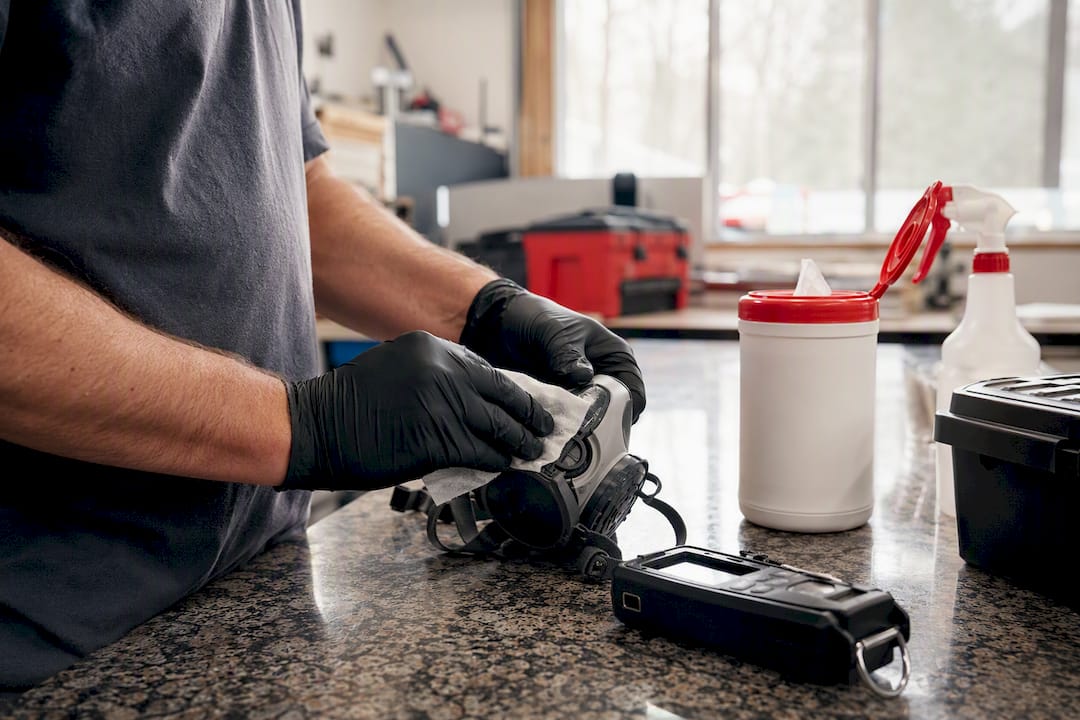
Protective suits, gloves, and respirator components need cleaning according to the manufacturer's specifications for the specific fumigant used, since generic cleaning protocols don't account for how different gases interact with different materials. Respirator masks in particular need careful attention to seals and valves, where residue buildup can compromise the very fit test that made the respirator safe in the first place.
Gas monitors and detection equipment require their own decontamination and recalibration check before storage, confirming the sensors weren't damaged or fouled during use. A monitor stored dirty or uncalibrated is a liability on the next job, not a convenience.
Disposable items, contaminated wipes, spent cartridges, single-use suits, get bagged and disposed of according to hazardous waste regulations rather than tossed in a standard bin. Reusable equipment gets logged: when it was cleaned, by whom, and whether it passed post-cleaning inspection. That log becomes part of the same recordkeeping discipline that runs through the entire fumigation process, from the initial FMP to the final clearance declaration.
Publisher perspective: what actually separates safe fumigation from a liability waiting to happen
Over more than 30 years in pest management, we've watched the fumigation industry's biggest risk shift from the gas itself to the paperwork around it. The chemistry hasn't gotten more dangerous. What's changed is how many operators treat the Fumigation Management Plan as a formality instead of the operational backbone it's meant to be.
At Bespoke-enviro, every fumigation job starts with a site-specific FMP built for that structure, not a template pulled from the last job. Our licensed fumigators calibrate monitoring equipment the same day as the job, brief neighbors and building management before a single canister opens, and issue a written declaration of safe re-entry only once instrument readings, not the calendar, confirm the space is clear.
The uncomfortable truth the industry doesn't advertise: most fumigation incidents trace back to shortcuts taken well before the gas was ever released, skipped calibration, unverified clearance devices, a crew member working alone because the schedule ran tight. Safety isn't a step you add at the end. It's the structure the entire job is built around, and clients deserve a provider who can prove that in writing, not just promise it out loud.
— Bespoke-Enviro Services
Ready for a fumigation job done the safe way?
Bespoke-enviro gives you what a rushed or unlicensed operator can't: a site-specific FMP, calibrated gas monitoring, and a written clearance declaration before anyone re-enters, backed by more than 30 years of pest management experience in eco-friendly, non-toxic treatment strategies. That combination is the difference between a job that just looks finished and one that's actually been verified safe.
We handle termites, rodents, bedbugs, cockroaches, and other structural pests with the same documented rigor described throughout this guide, licensed fumigators, calibrated equipment, and full transparency with neighbors and building managers before, during, and after the job. For broader context on how professional pest providers should handle client communication and safety obligations, this overview of commercial pest service standards is a useful comparison point.
If you have a fumigation job coming up, whether it's a termite infestation, a bedbug outbreak, or a commodity storage issue, request an inspection with Bespoke Enviro Services and ask directly for the FMP and clearance process before you sign anything. A provider confident in its safety record will walk you through it without hesitation.
This article is general information, not a substitute for advice from a qualified doctor. Consult a qualified healthcare professional about your own circumstances before acting on anything here.
Sources
- Code of Practice for Fumigation Personnel (NEA)
- Manual of fumigation for insect control - Safety precautions and protective devices (FAO)
- Structural fumigation (NPIC)
- EPA announces next steps to protect people from sulfuryl fluoride used to fumigate residential structures (US EPA)
- Sulfuryl Fluoride Poisonings in Structural Fumigation — Potential Causes and Solutions (PMC)