
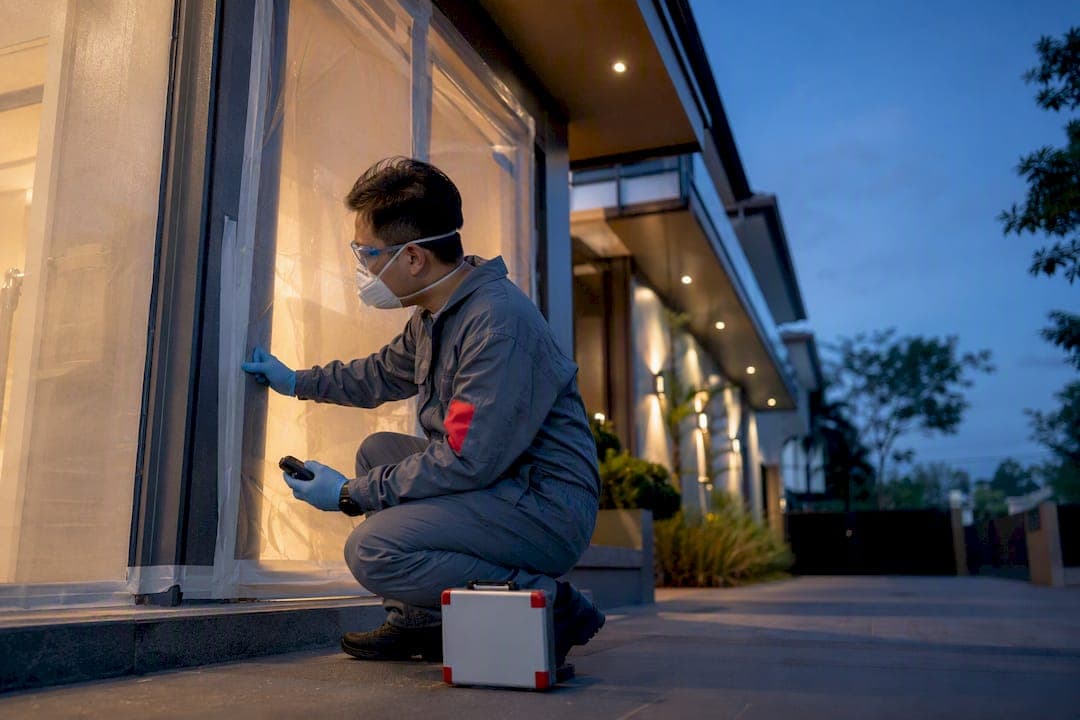
Most residential fumigations run 24 to 72 hours from gas release to safe re-entry, with structural termite tenting commonly stretching to about 2 to 3 days once you count preparation, exposure, and aeration. The exact number depends on pest species, property size, and fumigant type. Re-entry is never a guess based on a clock. It's confirmed by clearance testing that measures gas concentration inside the structure.
TL;DR:
- Fumigation for residences typically lasts 24 to 72 hours, depending on pest type, building size, and fumigant, with re-entry only after clearance testing confirms safety.
- The process includes preparation and tenting, gas exposure, aeration, and multiple safety checks, with larger or complex structures requiring more time.
- Pest biology and weather conditions significantly influence duration, as termites require longer gas contact, while bed bugs and cockroaches often clear faster.
- Proper preparation, such as sealing food and removing pets, is essential to avoid delays, while clearance depends on multiple-point gas reading below safety thresholds.
- Reputable providers conduct pre-job safety assessments and document testing, with follow-up inspections after fumigation to ensure pests have been eliminated.
Table of Contents
- How Long Does Fumigation Take at Each Stage?
- What Does a Typical Fumigation Timeline Look Like?
- What Factors Change How Long Fumigation Takes?
- How Should You Prepare to Avoid Fumigation Delays?
- How Is Safe Re-Entry Determined After Fumigation?
- What Happens After Fumigation Clears?
- What Do Reputable Fumigation Providers Actually Do?
- A Technician's Bottom Line on Fumigation Scheduling
- How Bespoke Enviro Services Keeps Your Fumigation on Schedule
- Sources
How Long Does Fumigation Take at Each Stage?
Fumigation moves through four stages, and each one carries its own timeframe. Preparation and tenting usually take a technician crew a few hours, depending on the building's size and roofline. Gas exposure follows next, and this is where the fumigant type matters most. Vikane exposure planning allows for exposure periods anywhere from 2 to 72 hours, though most fumigators plan for 16 to 30 hours to balance kill rates against scheduling.
- Preparation and tenting: sealing the structure, covering the roof, checking for gaps.
- Gas exposure: the fumigant circulates and penetrates wood, fabric, and voids.
- Aeration and ventilation: fans and open access points clear residual gas.
- Clearance testing: technicians confirm safe gas levels before anyone re-enters.
Clearance is signed off only after readings from electronic gas detectors fall below the manufacturer's safety threshold at multiple points inside the structure.
What Does a Typical Fumigation Timeline Look Like?
The scenario you're dealing with changes everything. A spot treatment for a localized pest problem looks nothing like a full structural tent job for termites.
- Short or spot treatment: A single room or isolated void treated for cockroaches or stored-product pests often finishes within 24 hours, and you might return home the same evening once the space airs out.
- Standard whole-house fumigation: Day 1 covers setup and tenting, Day 2 covers gas exposure and the start of aeration, and Day 3 wraps up with clearance testing before you get your keys back. This pattern lines up with the 24 to 72 hour range Orkin reports for whole-structure jobs.
- Termite tenting: This is the scenario that takes the longest, because sulfuryl fluoride gas has to reach every gallery inside the wood. A common pattern is tenting in the morning, overnight gas exposure, then aeration and clearance testing the following day, adding up to roughly 2 to 3 nights away from the property.
- Larger or commercial properties: Warehouses, multi-unit buildings, and structures with complex attics or crawlspaces routinely need extra hours for both exposure and aeration, simply because the gas has farther to travel and more surfaces to penetrate.
If your provider quotes a schedule that doesn't match these ranges, ask what's driving the difference. It's usually a pest species or building factor, not padding on the invoice.
What Factors Change How Long Fumigation Takes?
Pest biology drives most of the variation you'll see between quotes. Termites live inside solid wood, so gas needs longer contact time to reach the entire colony, which is why PestWorld points to whole-structure fumigation for severe or inaccessible infestations. Bed bugs and cockroaches, by contrast, often clear out faster because they're more exposed to circulating gas.
Temperature and humidity matter almost as much as the pest itself. Cooler, more humid conditions slow gas penetration and extend aeration, while warm, dry weather speeds both up.
- Fumigant type and label dosage requirements
- Property volume and construction (brick, timber, multi-story)
- Attic, crawlspace, and void complexity
- Availability of testing equipment and scheduling paperwork
Statistic Callout: Industry references show gas exposure windows ranging from a few hours up to 48 hours depending on pest and fumigant, with aeration adding another 4 to 24 hours before clearance is granted.
How Should You Prepare to Avoid Fumigation Delays?
Preparation mistakes are the single biggest cause of schedule slippage. A crew that shows up to find pets still inside or perishable food left in cabinets loses time it can't get back that day.
- Remove or double-bag all food, medications, and pet supplies according to your provider's checklist.
- Relocate pets, plants, and anyone with respiratory sensitivities before the tent goes up.
- Arrange alternative accommodation for the full window your provider quotes, not just one night.
- Ask specifically what the clearance procedure involves and whether you'll receive a written certificate.
- Notify neighbors if your property shares walls, driveways, or utility access with a tented structure.
Pro Tip: Label every container you leave sealed inside the property with your name and unit number. It saves the clearance crew time during multi-point sampling, and it's the single fastest way to shave hours off a stalled schedule.
How Is Safe Re-Entry Determined After Fumigation?
Clearance depends on measurement, not the calendar. Technicians use electronic gas detectors to sample air at multiple points throughout the structure, including enclosed spaces where gas lingers longest. A property is only cleared once every sampled point falls below the manufacturer's safety threshold.
- Multi-point sampling catches pockets of trapped gas that a single reading would miss.
- Ventilation with fans and open windows speeds aeration in most conditions.
- Aeration commonly takes 6 to 24 hours, though tight construction or cold weather can push it longer.
Statistic Callout: Under ideal conditions aeration can finish in as little as 6 hours, but weather and structure tightness routinely extend it toward the 24-hour mark. Ask for the specific readings on your clearance report, not just a verbal "all clear."
What Happens After Fumigation Clears?
Clearance isn't the finish line for termite jobs. Most providers schedule a follow-up inspection around the 30-day mark to confirm the colony didn't survive in an untreated pocket.
- Watch for fresh mud tubes, frass, or soft wood, which can signal a persistent infestation.
- Eggs and shielded life stages of some pests can survive initial exposure, so a second check within 2 to 3 weeks is common for those cases.
- Keep your clearance certificate and treatment report. They're often required for warranty claims and future property sales.
What Do Reputable Fumigation Providers Actually Do?
A reputable provider brings experience in pest management to every job, built around integrated pest management strategies designed to protect people, pets, and the surrounding environment. A trustworthy provider runs a pre-job safety checklist and documents every clearance reading before handing back the keys.
Ask your provider three things before you sign: what fumigant they're using, what the manufacturer's exposure guidance calls for, and how they'll document clearance testing. A provider who can't answer clearly isn't one you want handling a structural tent job.
A Technician's Bottom Line on Fumigation Scheduling
Most jobs finish on schedule. The delays I see most often trace back to one thing: someone left food or medication unsealed inside. Clear the attic, label your containers, and the timeline holds.
— Bespoke-Enviro Services
How Bespoke Enviro Services Keeps Your Fumigation on Schedule
Choosing a practical fumigation service provider ensures a timeline customers can plan around, not a vague estimate that shifts once the crew arrives. A pre-job safety checklist and multi-point clearance testing help catch issues that cause delays before they cost an extra night away from home.
Booking starts with a straightforward inspection. Have your property size, pest concern, and any access restrictions ready when you reach out, and you'll get a realistic quote covering preparation, exposure, and clearance timing. If termites are the concern, our termite control service covers structural tenting and the follow-up inspection that confirms the colony is gone. For broader pest issues where fumigation isn't the right fit, our general pest control services offer an integrated alternative. Ready to schedule? Visit our fumigation service page to request an inspection and get a schedule built around your property, not a generic timeline.
Sources
- Vikane fumigant general info (exposure and aeration guidance)
- Fumigating and Tenting a Home for Drywood Termites — Orkin
- Structural fumigation timeline: preparation to safe reentry — TerminatorPC
- Top signs of a termite infestation — PestWorld