
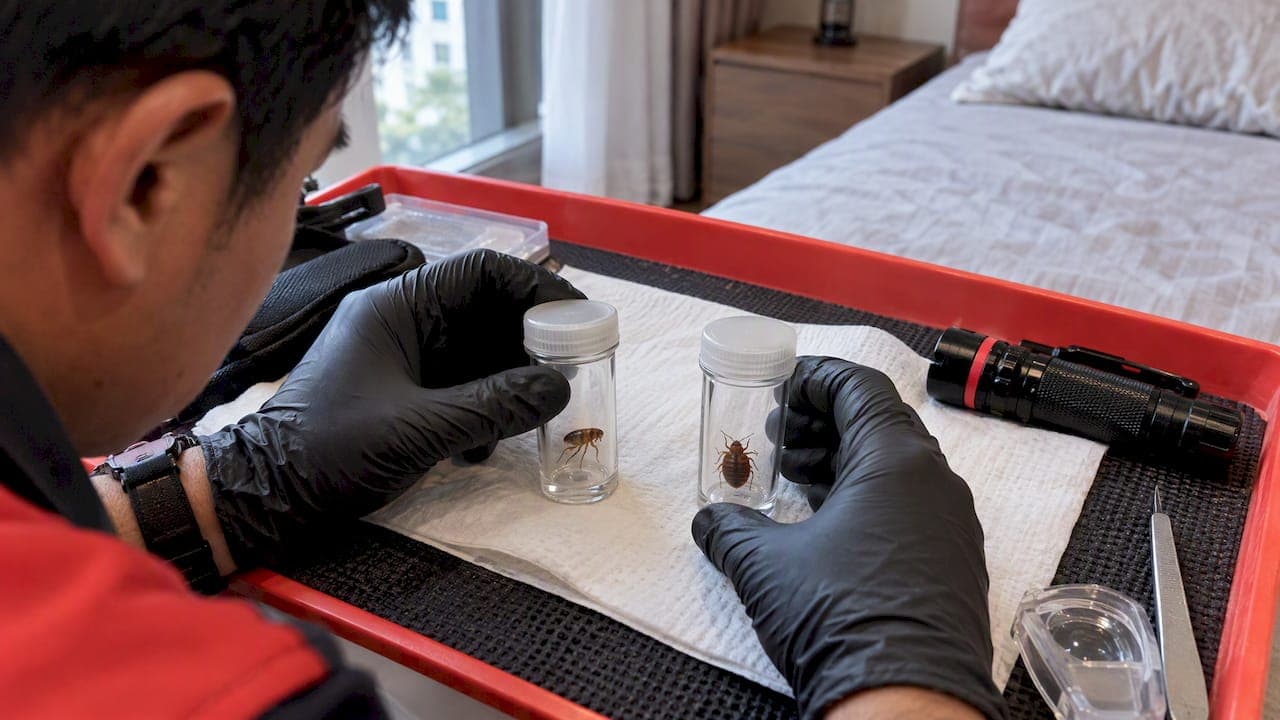
Fleas and bed bugs are both small, wingless insects that feed on blood, and their bites can look almost the same. The reliable difference is not the bite. It is the insect and where it lives: fleas are tiny jumpers tied to pets, carpets and pet bedding, while bed bugs are flat, oval crawlers that hide in mattress seams, bed frames and cracks near where you sleep.
This guide shows you how to separate the two by body shape, bite pattern, hiding places and physical evidence. It also explains why the right treatment depends on a correct identification, and when to call a licensed professional.
TL;DR
- Bed bugs are flat, reddish-brown and oval, and they stay close to beds. Fleas are smaller, narrow from side to side, and they jump.
- Flea bites tend to appear on ankles and lower legs. Bed bug bites more often appear on the arms, shoulders and back, after a night in bed.
- Bites alone cannot confirm the pest. Look for live insects, shed skins, dark spotting and flea dirt.
- A household with a cat or dog and no bed bug evidence points toward fleas. Bites without pets, plus spotting on mattress seams, point toward bed bugs.
- Treating the wrong pest wastes time and lets the infestation grow. Get an inspection before you spend on sprays.
Table of Contents
- Fleas and bed bugs: what they share
- How the insects look
- Fleas vs bed bugs: bite patterns
- Where each pest hides
- Physical evidence: what to look for
- Health risks: what is different
- Is it easier to get rid of fleas or bed bugs?
- Our perspective: identify first, then treat
- A simple decision path
- When to call a pest control professional
- How Bespoke Enviro can help
- Prevention that works for both pests
- FAQ
- Sources
Fleas and bed bugs: what they share
The two pests are easy to confuse because they behave alike in several ways. Both are wingless, both are good at hiding, both need blood meals from a warm-blooded host, and both hitchhike into homes on belongings, clothing or animals. Both can reproduce indoors, which is why a small problem becomes a large one within weeks if left alone.
They part ways on biology and habits. Those differences decide where you search and how a technician treats the problem.
How the insects look
Start with the insect itself. If you can catch one on tape or in a clear container, a phone photo is often enough to tell them apart.
| Feature | Bed bug | Flea |
|---|---|---|
| Body shape | Flat from top to bottom, broadly oval | Narrow, flattened from side to side |
| Size | Roughly an apple seed, about 1 to 7 mm depending on age | Smaller than most adult bed bugs |
| Colour | Tan to brown, redder after feeding | Dark reddish-brown to black |
| Movement | Crawls, cannot jump or fly | Jumps using powerful hind legs |
| Usual host | People | Cats, dogs and other animals, and people as a second choice |
The CDC describes bed bugs as reddish-brown, wingless insects that feed mainly at night and can survive several months without a blood meal. Fleas, by contrast, are laterally flattened and built for jumping. A Connecticut Agricultural Experiment Station guide compares adult bed bugs to an apple seed in size and notes they may look redder right after a meal. Nymphs, the young bed bugs, have the same shape but are smaller and paler.
If you want a visual reference for the bed bug side, this page on what bed bugs look like covers identification and bites.
The jump test
Fleas jump. If tiny dark specks launch off your socks, pet or carpet when you walk through a room, you are almost certainly dealing with fleas. Bed bugs do not jump. They walk, and they walk slowly, which is why you usually find them only where they hide.
Fleas vs bed bugs: bite patterns
Most people search this topic because of a bite. Here is what is usually seen, with an honest caveat: skin marks overlap a lot.
Flea bites are typically small, bright red spots, often scattered, and they cluster on the ankles, shins and lower legs. The Cleveland Clinic notes that flea bites are small, discolored bumps from fleas feeding on your blood. Each bite often has a tiny dot at its centre.
Bed bug bites are more likely on skin exposed while you sleep: the face, neck, arms, shoulders and back. They often show up as a line or a tight group of itchy welts. The pattern can be more linear than flea bites, which tend to look scattered.
These are tendencies, not rules. The CDC says bed bug bites can cause itching, loss of sleep and, rarely, allergic reactions. Reactions differ widely between people: one person may react strongly, while another sharing the same bed shows no marks at all. A bite-only diagnosis is a common reason treatments fail, so use bites as a prompt to inspect, not as proof.
Our own guide on bed bug bites and what to do next goes through the skin signs in more detail.
Quick bite clues
- Bites mainly below the knees, and you have a pet: suspect fleas.
- Bites on the arms, neck and back after waking, with no pet: suspect bed bugs.
- Bites appear in several people at different times, or only one person is affected: neither pest is ruled out.
- Bites appear after a stay in a hotel, a second-hand furniture purchase or a trip: bed bugs are a common suspect, since they travel in luggage and furniture.
Where each pest hides
Location is the strongest clue you have.
Bed bug hiding places
Bed bugs stay within a few metres of where people sleep or sit for long periods. Check:
- Mattress seams, piping and tags
- Bed frame joints, headboard and screw holes
- Cracks in nearby walls, skirting boards and behind picture frames
- Upholstered sofas and chairs, especially seams
- Bedside tables, power outlets and luggage
Flea hiding places
Fleas spread through the whole home because their hosts move around. Check:
- Pet bedding, cushions and the spots where pets sleep
- Carpets, rugs and floor edges
- Sofas and fabric furniture that pets climb on
- Entry areas where pets come in from outside
The Asthma and Allergy Foundation of America explains that bed bugs are active at night and bite humans while they sleep, while fleas prefer animals. That one habit explains most of the difference in where you find them.
Physical evidence: what to look for
Before you decide, inspect. A torch, a flat card to trace seams, white sheets and a clear piece of tape are the only tools you need for a first check.
Signs of bed bugs
- Small dark or rust-coloured spots on sheets and mattress seams, from droppings or crushed bugs
- Pale, empty shed skins left as nymphs grow
- Tiny whitish eggs in seams and crevices
- Live insects in daylight in a heavy infestation
- A sweet, musty smell in severe cases
Signs of fleas
- Live fleas jumping on pets, socks or pale floors
- Flea dirt: black specks that turn reddish-brown when dabbed with a damp tissue, because they are dried blood
- A pet scratching, chewing or losing fur
- Bites concentrated around the ankles after walking across carpets or pet areas
If the flea dirt test turns the specks reddish-brown, that points to fleas on your pet or in its bedding. If you find spotting only on mattress seams, bed bugs are more likely. Our photo-first check for bed bug signs gives a 5 to 10 minute routine you can follow with a phone camera.
Pets with flea allergies can react far more strongly than the number of bites suggests. This vet checklist on flea allergy dermatitis explains what to watch for if your dog or cat is scratching badly. Speak to your veterinarian about treating the animal itself.
Health risks: what is different
Bed bugs are a nuisance pest. According to the CDC, they are not known to spread disease to people, though scratching can lead to secondary skin infection and the lost sleep affects daily life.
Fleas call for slightly more care. The National Environment Agency (NEA) lists the rat flea as a vector of murine typhus and plague in its overview of public health pests. In practice, the flea problem most Singapore households face involves cat and dog fleas rather than rat fleas. But if you also see signs of rodents in the home, such as droppings or gnaw marks, mention that to your pest professional, because rodents and their fleas should be dealt with together.
If bites become swollen, blister, ooze, or you develop fever or spreading redness, see a doctor. A pharmacist or GP can advise on itch relief for ordinary bites.
Is it easier to get rid of fleas or bed bugs?
Neither is a quick DIY job, but the routes differ.
Fleas are controlled by treating the source and the environment together. The pet needs veterinary flea treatment, bedding is washed hot, carpets and upholstery are vacuumed thoroughly, and the home is treated so eggs and larvae in fabrics do not restart the cycle. If the animal is not treated, the home will be reinfested.

Bed bugs are harder to remove completely. They hide in tight crevices, adults can go months without feeding, and bites do not reveal how widespread the problem is. Over-the-counter sprays often scatter the insects into neighbouring rooms or units. In a Singapore HDB flat or condo, where walls, ducts and shared corridors connect homes, scattering is a real risk. A professional inspection identifies how far the infestation has spread and which rooms need work.
In short: fleas are usually a pet-and-home problem, bed bugs are a bed-and-furniture problem, and bed bugs typically need professional treatment sooner.
Our perspective: identify first, then treat
We have worked in pest control in Singapore for over 30 years, and the most common reason a treatment fails is a wrong guess at the start. Homeowners see bites, buy a spray for the pest they assume they have, and the real problem carries on.
Our approach follows integrated pest management (IPM). We inspect first, including thermal imaging where it helps us find activity behind surfaces, confirm what the pest is, then choose the least disruptive method that works. For bed bugs, that means we look at the bed, furniture and surrounding cracks. For fleas, we look at pet areas, flooring and fabrics, and we ask about animals in the home. We use non-toxic, environmentally safe methods with the safety of people and pets in mind, and our technicians are NEA-licensed.

The lookalikes matter too. Bird mites, for example, can cause bites that people mistake for bed bugs. We cover that case in our guide on bird mites vs bed bugs. If there are pigeons or nests near your windows or air-con ledges, tell your technician.
Our advice is simple. Do not treat on a guess. Collect evidence, take photos, keep a specimen on tape, and get it identified.
— Bespoke-Enviro Services
A simple decision path
- Check your pets. Run a fine-toothed flea comb through fur and look for black specks. Dab them on a damp white tissue.
- Inspect your bed. Strip it and check mattress seams, piping, the bed frame and the headboard with a torch.
- Photograph and collect. Take clear photos. Stick any insect to clear tape.
- Map the bites. Note where on the body and when they appear, morning or after walking around the home.
- Contain, do not spray. Wash bedding on a hot cycle and dry on high heat. Avoid moving bedding and furniture between rooms, which can spread bed bugs.
- Call a professional if you find bed bug evidence, if fleas persist after your pet has been treated, or if you cannot find the source at all.
When to call a pest control professional
Call for an inspection if:
- You find spotting, shed skins or live bugs on or near your bed
- Bites continue for more than a few days with no clear cause
- You have treated your pet for fleas and the problem keeps coming back
- You live in a shared building, rent out rooms, or run a hotel, serviced apartment or dormitory, where spread between units is a risk
- You are unsure which pest you have
Property managers and landlords should treat a bed bug report as time-sensitive. Our note on hotel bed bug prevention with a written IPM program applies equally to serviced residences and shared housing.
Our costs depend on the size of the property and the extent of the problem, and we do not publish a fixed price. For general guidance on what affects the bill, read our article on bed bug treatment cost in Singapore.
How Bespoke Enviro can help
If your inspection points to bed bugs, our bed bug control and treatment service covers homes, hotels and commercial premises. If the picture is mixed, or you are dealing with fleas alongside other pests such as cockroaches or rodents, our general pest control service handles the full inspection and plan. We are available 24/7, and we can advise before you commit to any treatment.
Prevention that works for both pests
- Inspect after travel. Check luggage and hotel mattress seams, and keep bags off beds. Wash and heat-dry clothing on return.
- Be careful with second-hand furniture. Inspect seams and joints before bringing items inside.
- Keep pets on a vet-recommended flea schedule. Wash pet bedding regularly.
- Vacuum often. Focus on carpets, upholstery and floor edges, and empty the vacuum outside.
- Reduce clutter around beds so hiding places and inspection blind spots are fewer.
- Seal cracks along skirting boards and around outlets where bed bugs can shelter.
- Use mattress encasements so seams are easier to inspect and bugs have fewer places to hide.
Regular checks are the cheapest protection. The CDC advises preventing bed bugs by regularly looking for signs of infestation.
FAQ
How do I know if I have bed bugs or fleas?
Look at the insect and where it lives, not just the bite. Fleas jump and are found around pets, carpets and pet bedding. Bed bugs crawl and are found in mattress seams, bed frames and nearby cracks. Dark spotting and shed skins on bedding point to bed bugs, while black flea dirt on a pet or in its bedding points to fleas.
Do fleas bite humans in bed?
Yes, if fleas are in the bed. This usually happens when pets sleep on or near the bed, and the bites tend to land on the ankles and lower legs. Bites mainly on the upper body after sleeping make bed bugs the more likely cause, though only an inspection can confirm it.
Is it easier to get rid of fleas or bed bugs?
Fleas are usually simpler once the pet is treated and the home is cleaned and treated alongside it. Bed bugs are harder because they hide in tight crevices and survive long periods without feeding. Bed bug problems generally need a professional inspection and treatment plan.
Can I tell the pest from the bite alone?
No. Flea and bed bug bites can look alike, and people react differently. Use the bite pattern as a clue, then confirm by finding insects, droppings, shed skins, eggs or flea dirt. If you cannot find any, ask a licensed pest professional to inspect.
Sources
- CDC: About Bed Bugs
- Connecticut Agricultural Experiment Station: Bed Bugs and Lookalikes (PDF)
- Cleveland Clinic: Flea Bites
- AAFA: Biting Insect Allergy, Bed Bugs and Fleas
- NEA: Pest Control Overview