
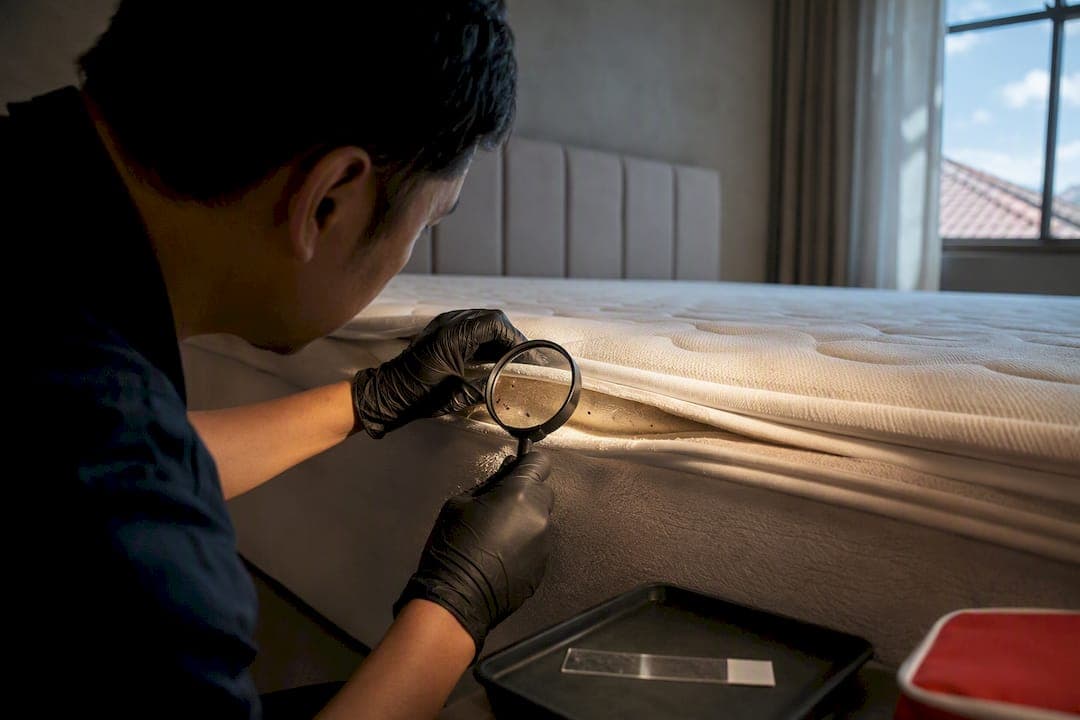
Tiny black specks near a window, vent, or eaves point to bird mites; black spotting, shed skins, or live insects in mattress seams and sofa creases point to bed bugs. Both bite and both itch, but the fix is completely different for each, so we never recommend treating for one without confirming the source first.
TL;DR:
- Bird mites are less than 1 millimeter and typically appear as moving dust specks near windows and eaves, while bed bugs are 4 to 7 millimeters and cluster on mattresses.
- Mite infestations usually resolve after nest removal or abandonment, but bed bug problems tend to persist without targeted treatment.
- Evidence-based inspection, including photos and tape samples, is crucial for accurate identification, as bites alone cannot reliably distinguish the pests.
- Correct diagnosis ensures effective treatment: removing bird nests and sealing entry points for bird mites, or encasing mattresses and professional heat treatment for bed bugs.
- Outdoor conditions, building features, and recent travel influence pest activity, with bird mites peaking in spring and early summer, and bed bugs increasing with travel and furniture movement.
Table of Contents
- Bird Mites vs Bed Bugs: The Quick Comparison
- How Do You Identify Bird Mites and Bed Bugs by Sight?
- What Do Bird Mite Bites Look Like Compared to Bed Bug Bites?
- Why Does the Source of the Infestation Change Everything?
- How Do You Confirm Which Pest You're Actually Dealing With?
- What Should You Do Right Now?
- When Should You Call a Licensed Pest Control Professional?
- How Do You Keep Either Pest From Coming Back?
- Does Bird Mite and Bed Bug Activity Change With the Seasons?
- What Do People Get Wrong When Identifying These Pests?
- Can Bird Mites and Bed Bugs Cause Serious Health Problems?
- How Do Home Conditions Influence Which Pest You're Dealing With?
- How Do Their Feeding Habits and Behavior Really Differ?
- Technician Perspective: The One Check That Ends Most Misdiagnoses
- Get a Professional Inspection Before You Guess Wrong
- Sources
Bird Mites vs Bed Bugs: The Quick Comparison
The two pests look and behave nothing alike once you know what to check. Size is the fastest tell: bed bugs run about 4 to 7 millimeters, roughly the size of an apple seed, while bird mites stay under 1 millimeter and are barely visible without a magnifier.
- Size and visibility: Bed bugs are easy to spot with the naked eye; bird mites usually look like moving dust specks.
- Where you'll find them: Bed bugs cluster near mattress seams, headboards, and sofa frames. Bird mites show up near windows, curtains, vents, eaves, or balconies close to a bird nest.
- Bite timing: Bed bugs feed mostly overnight, leaving bites in lines or clusters. Bird mites bite at any hour, often as a crawling or pinprick sensation.
- Lifecycle: Bed bugs take several weeks to mature and can survive for a long period without a meal. Bird mites can mature in about a week but usually die off once their host is gone.
That last point matters more than most homeowners realize. A bird mite problem often solves itself once the nest is removed. A bed bug problem almost never does.
How Do You Identify Bird Mites and Bed Bugs by Sight?
Evidence beats guesswork every time. Here's a practical route through your home that mirrors how a technician would approach the same inspection.
- Start at the bed. Pull back sheets and check mattress seams, piping, and the bed frame joints for live insects, reddish brown shells, or tiny black fecal spots. Bed bugs leave these signs consistently once a population takes hold.
- Check upholstered furniture next. Sofa seams, cushion welting, and recliner creases are common secondary hiding spots for bed bugs.
- Move to windows and vents. Look at sills, curtain folds, air vents, and any wall near an eave or balcony for tiny moving specks. This is where bird mite problems typically originate, since they migrate indoors from a nearby nest.
- Look up outside. Scan eaves, gutters, and roof vents for old nesting material, feathers, or droppings.
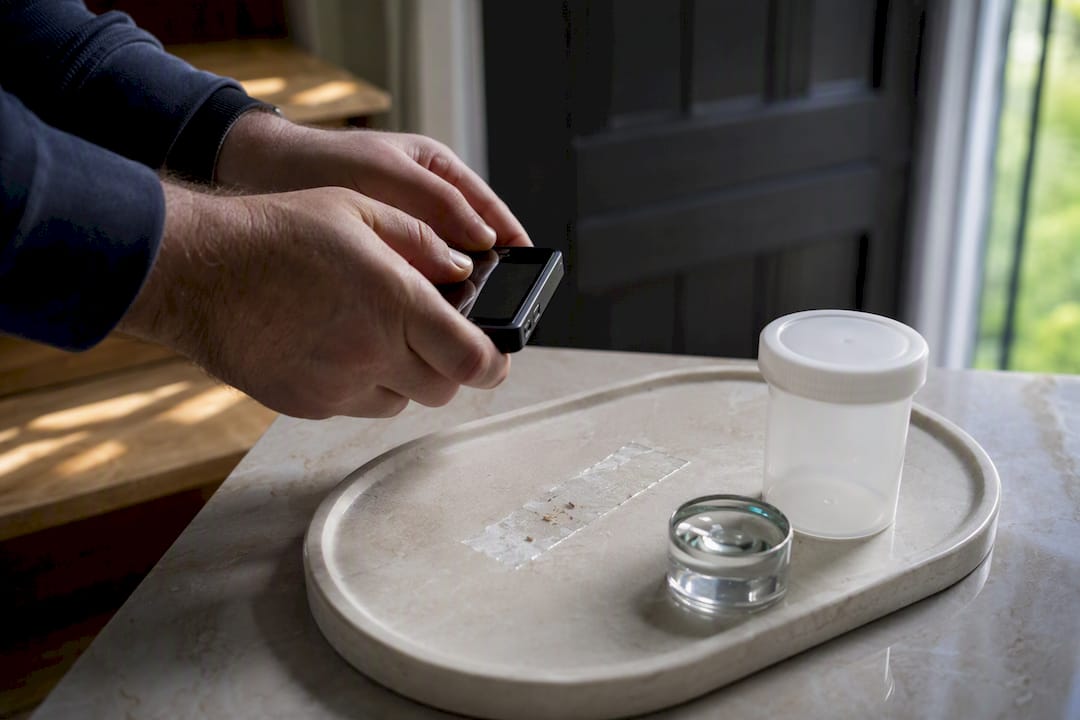
- Document everything. Photograph any insects or debris, and use clear tape to lift a sample without crushing it.
Pro Tip: Press a strip of clear tape onto a suspected specimen instead of squashing it. Intact mites and bugs are far easier for a technician to identify under magnification than a smear.
Gather two or three photos and one taped sample before you call anyone. It saves time and often speeds up an accurate diagnosis on the first visit.
What Do Bird Mite Bites Look Like Compared to Bed Bug Bites?
Bite patterns give you a clue, but never a confirmed diagnosis on their own. Bed bug bites usually appear as small red welts in a line or tight cluster, mostly on skin exposed while sleeping, arms, shoulders, neck, and legs. Bird mite bites scatter more randomly and can happen during the day, often described as a sharp pinprick or a crawling itch that shows up before any visible mark does.
- Bed bug bites: clustered or linear, mostly overnight, itchy welts that can take several days to fade.
- Bird mite bites: scattered, any time of day, sharper stinging sensation, usually clearing within a few days once mites are gone.
- Both can trigger secondary skin infections from scratching, and some people develop stronger allergic swelling than others.
Homeowners commonly describe bird mite bites as a crawling or pinprick feeling rather than a sudden welt, which is a helpful clue when nothing is visible on the skin yet. See a doctor if swelling spreads, a bite site looks infected, or itching disrupts sleep for more than a week.
Why Does the Source of the Infestation Change Everything?
Bird mites depend entirely on a live host. Their lifecycle can complete in about a week, but they reproduce poorly on human blood, so a population usually collapses within days to a couple of weeks once the nest is gone. Bed bugs work the opposite way.
- Bird mites: fast lifecycle, host-dependent, migrate indoors after a nest is disturbed or abandoned, die off without birds nearby.
- Bed bugs: slower lifecycle, feed directly on humans, and can survive for a long period without a blood meal, which lets an infestation sit quietly and grow.
That gap explains why bird mite scares often resolve on their own and why bed bug problems rarely do without direct treatment.
How Do You Confirm Which Pest You're Actually Dealing With?
DIY inspection gets you most of the way there, but a few extra steps make the evidence usable if you end up calling a professional.
- Walk the room in one direction, starting at the bed, then furniture, then windows and vents, so you don't miss a hiding spot.
- Collect a specimen with tape or drop it into a small vial with a drop of rubbing alcohol to preserve it.
- Photograph the specimen next to a common object, a coin works well, for scale.
- Note exactly where you found it: mattress seam, window sill, vent cover.
- If nothing is conclusive after a thorough check, or if bites continue without any visible insect, seek professional identification rather than guessing.
Pro Tip: Store your sample in the refrigerator, not the freezer, if you can't get it examined right away. It keeps the specimen intact without destroying identifying features.
Room evidence remains the most decisive factor in separating these two pests, more reliable than bite appearance alone.
What Should You Do Right Now?
Reduce exposure while you confirm the source. Strip and wash bedding on the hottest safe setting, vacuum the mattress seams and surrounding floor, and isolate the room if you can. Beyond that, the correct next move depends entirely on what you found.
- If evidence points to a bird nest: locate and legally remove the inactive nest, clean the migration route mites used to get inside (window frames, vents), seal the entry gap, and treat the immediate surface area.
- If evidence points to bed bugs: encase the mattress and box spring, heat treatment is a commonly used professional option, and a licensed provider will typically combine it with targeted insecticide application after proper prep.
- Don't mix the two approaches. Spraying a bedroom for bed bugs does nothing for a bird mite problem migrating in from an eave, and vice versa.
Pro Tip: If you're still unsure after inspecting, treat the room as a possible bed bug case first. Bed bugs cause the more expensive, longer-running damage if left untreated, so ruling them out early protects your budget.
Matching the treatment to the actual source is the single biggest factor in resolving either problem without wasting money on the wrong fix.
When Should You Call a Licensed Pest Control Professional?
Call in help when bites continue after a week of cleaning, when you find any confirmed bed bug evidence, black spotting, shed skins, live insects, or when a DIY treatment attempt hasn't stopped the problem.
- Bites persist despite laundering and vacuuming
- You've found live insects or fecal spotting near the bed
- You can't locate the source despite a thorough inspection
- A previous DIY spray treatment had no effect
A proper bed bug inspection includes a full source search, checking eaves and vents for nesting material, collecting evidence, and building a treatment plan around integrated pest management rather than blanket spraying. A professional pest control company has handled pest identification and treatment with a consistent focus on non-toxic, source-based solutions. Bring your photos and taped sample to the visit, it speeds up the diagnosis considerably.
How Do You Keep Either Pest From Coming Back?
Prevention looks different depending on which pest you're guarding against, but a few habits help with both.
- Bird-proofing: seal roof and eave gaps, install netting or spikes on ledges where birds roost, and inspect vents seasonally for new nesting activity.
- Bed-proofing: keep mattress and box spring encasements on, inspect secondhand furniture before bringing it inside, and check luggage after travel.
- Shared habits: vacuum regularly, reduce clutter near beds and vents, and do a quick visual check of window sills and mattress seams once a month.
Pro Tip: If you remove an active bird nest yourself, check local wildlife regulations first. Some species are protected, and removal timing matters as much as the method.
Does Bird Mite and Bed Bug Activity Change With the Seasons?
Bird mite problems spike around spring and early summer, which lines up with nesting season for pigeons, sparrows, and mynas. When chicks fledge or a nest is abandoned, the mites that fed on the birds lose their host and migrate into nearby windows, vents, and rooflines looking for a new blood source. That's usually the moment homeowners suddenly notice bites they never had before.
Bed bugs don't follow the same outdoor calendar because they never depend on wildlife. Their populations tend to climb with travel volume, more guests, more luggage, more secondhand furniture moving through a home, so activity often builds through holiday seasons and after periods of frequent travel rather than a specific month. Warmer indoor temperatures do speed up their reproduction slightly, but a heated apartment in December can host just as active an infestation as one in July.
Humidity plays a role for both pests. Bird mites survive slightly longer in damp conditions, which is one reason bathroom-adjacent vents or poorly sealed window frames see more activity after rainy stretches. Bed bugs tolerate a wider humidity range, which is part of why they're harder to starve out with environmental changes alone.
The practical takeaway: a sudden bite problem in spring near a window or balcony deserves a look at nearby rooflines first. A gradual, months-long problem near the bed, especially after a move, a hotel stay, or new furniture, points toward bed bugs regardless of season.
What Do People Get Wrong When Identifying These Pests?
The most common mistake is assuming any bite means bed bugs. Bed bugs get more media attention, so homeowners often jump to that conclusion before checking a single mattress seam. Bites alone can't confirm the pest; the sensation and timing offer clues, but room evidence settles it.
A second misconception: thinking bird mites are simply "less serious." They bite readily, can trigger real irritation, and a nest sitting in a roof void can produce a surprisingly large population that migrates through several rooms before anyone spots the source. The idea that they're a nuisance and nothing more usually delays action rather than preventing it.
A third mix-up involves other pests entirely. Carpet beetles, booklice, and even static clothing fibers get mistaken for bird mites because both are tiny and hard to see clearly without magnification. Fleas, meanwhile, get confused with bed bugs because both leave itchy welts, though fleas jump and tend to bite ankles specifically.
The fix for all three misconceptions is the same one this guide keeps returning to: check the room before assuming the pest. Technicians prioritize a source search over blanket spraying precisely because misidentification wastes time and money on the wrong treatment.
Can Bird Mites and Bed Bugs Cause Serious Health Problems?
For most people, both pests cause temporary irritation rather than lasting harm. The real risk comes from secondary effects: scratching that breaks the skin and invites bacterial infection, and allergic reactions that vary quite a bit from person to person.
Some individuals develop stronger histamine responses to bed bug saliva, resulting in larger welts, prolonged swelling, or hives that spread beyond the bite site. Children and people with sensitive skin tend to react more visibly. Bird mite bites can produce a similar range of reactions, from a barely noticeable prick to persistent itching that lasts several days after the mite is gone.
Sleep disruption is an underrated health impact for both. Constant itching or the anxiety of not knowing where bites are coming from interrupts rest, which compounds over a week or two of an unresolved infestation. That stress response is real, even when the physical bite itself is minor.
See a doctor if you notice spreading redness, warmth, or pus around a bite, if swelling extends well beyond the bite site, or if you experience shortness of breath or dizziness, which are signs of a more significant allergic response and require prompt medical attention rather than home care.
How Do Home Conditions Influence Which Pest You're Dealing With?
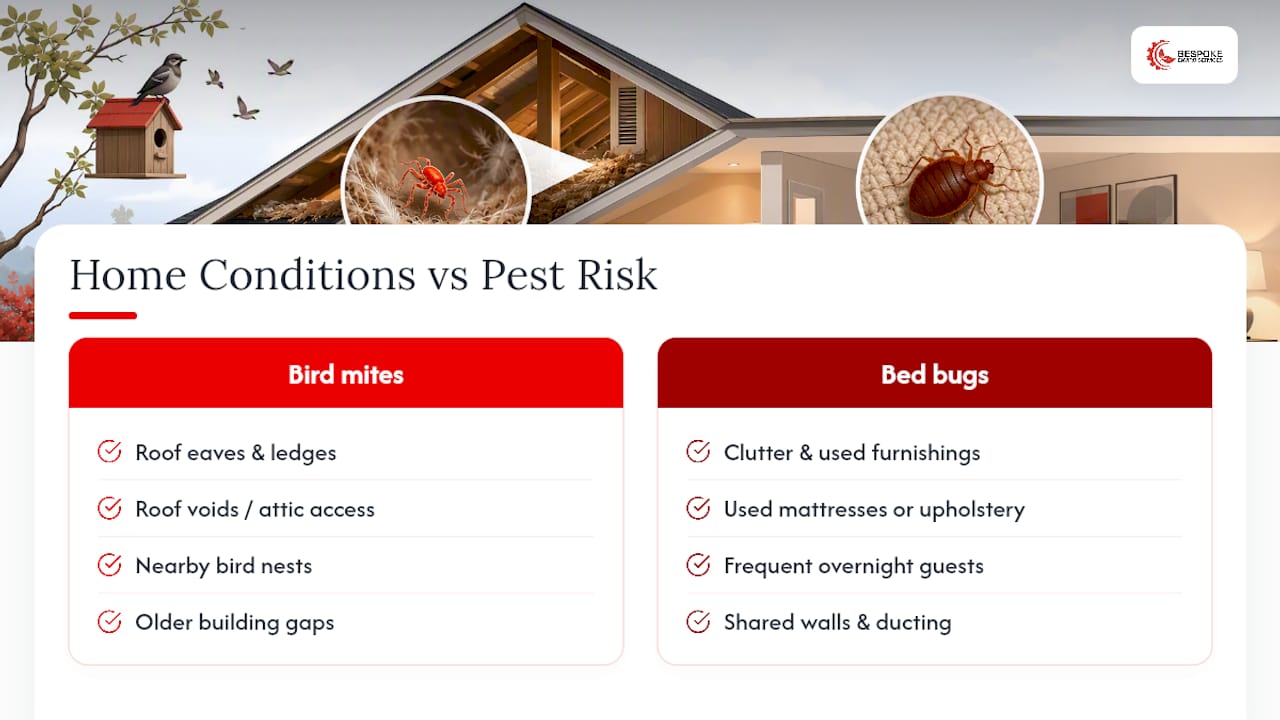
Your home's physical features matter more than most people expect. A house with exposed eaves, roof voids, or nearby balconies gives birds easy nesting access, which raises bird mite risk regardless of how clean the home is inside. Older buildings with gaps around vents or roof tiles are particularly exposed.
Clutter and secondhand items shift the risk toward bed bugs instead. Used mattresses, upholstered furniture bought without inspection, and frequent overnight guests all raise the odds of bed bugs hitching a ride indoors. Neither pest cares much about general cleanliness. Bed bugs feed on blood, not food debris, so a spotless bedroom can still host an infestation if a bug arrived in a suitcase.
Building density plays a role too. Apartments with shared walls or ducting see bed bugs move between units more easily than detached homes do, since bugs travel through wall voids and shared plumbing runs. Bird mite risk, on the other hand, tracks more closely with rooftop and ledge access than with how many neighbors you share a wall with.
Climate control matters for both, but differently. Stable indoor temperatures let bed bugs breed at a steady pace year round. Bird mites are more tied to outdoor nesting cycles, so their indoor presence often traces back to a specific external event, a nest built, then abandoned, rather than ongoing indoor conditions.
How Do Their Feeding Habits and Behavior Really Differ?
Bed bugs are opportunistic, patient hunters. They hide in tight seams during the day and emerge at night, drawn by body heat and exhaled carbon dioxide. A single bed bug feeds for several minutes, then retreats, which is why bites often appear in a line, it fed, moved slightly, and fed again along the same path.
Bird mites behave more like desperate travelers than patient hunters. Once their bird host is gone, they don't wait around, they actively search for any warm-blooded target nearby, biting more indiscriminately and at any hour rather than following a nocturnal pattern. This is part of why bird mite bites feel more random and widespread compared to the tidy clusters bed bugs leave.
Feeding frequency separates them further. Bed bugs need a blood meal roughly every few days to progress through their lifecycle and can pause between meals for months if necessary, a survival trait that makes them exceptionally hard to starve out. Bird mites feed more urgently since they can't reproduce well on human blood at all, they're biting out of necessity, not as part of a sustainable feeding cycle on a human host.
That distinction drives the whole difference in how these infestations play out. Bed bugs settle in and build a sustainable population inside your home. Bird mites pass through, bite while they're stuck, and largely disappear once the original nest is gone, which is exactly why the treatment for one rarely works for the other.
Technician Perspective: The One Check That Ends Most Misdiagnoses
We've seen homeowners treat mattresses for weeks while the real source sat undisturbed in a roof vent. The fix is almost always the same: follow the clue backward, mattress evidence means treat the bed, migrating specks near a window mean check the eaves first. Skip that step and you're just guessing with chemicals.
— Bespoke-Enviro Services
Get a Professional Inspection Before You Guess Wrong
If your own inspection turned up mixed signals, or you'd simply rather have a trained technician confirm the source before spending money on treatment, that's exactly the gap a professional visit closes. Certain pest control services run inspections built around integrated pest management, which means identifying the actual source, bird nest, migration route, or mattress infestation, before recommending any treatment, and every solution leans on eco-friendly, non-toxic methods that are safe around family and pets.

A first visit typically includes:
- A full walkthrough covering beds, furniture, windows, vents, and eaves
- Collection of physical evidence, samples, photos, or specimens found on site
- A source-based treatment recommendation instead of a one-size-fits-all spray
- A clear explanation of what caused the infestation and how to prevent it returning
Book a general pest inspection and get a straight answer on which pest you're actually dealing with, and a treatment plan built around the real source instead of a guess.
Sources
- Bird Mites: Pictures, Bites, Treatment & Prevention — Healthline
- Bird mites vs bed bugs, fleas & other mites: bites and signs — Bonaccord Pest Control