
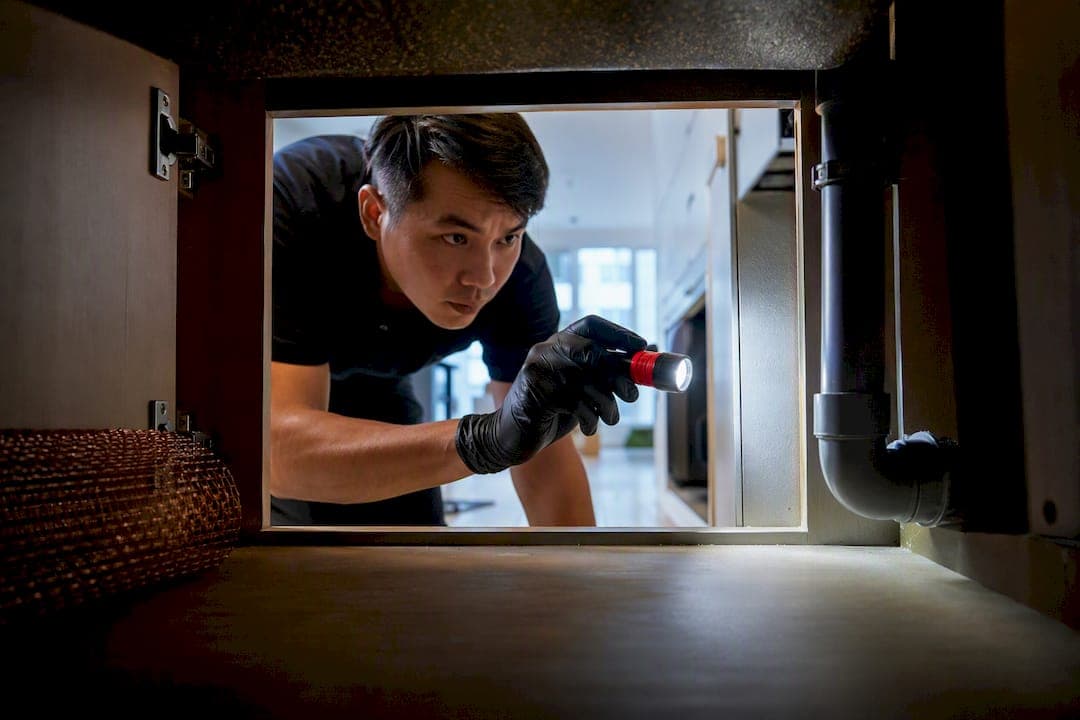
To stop rodents permanently, prioritize exclusion, sealing entry points with metal-resistant materials, paired with sanitation. Traps and poisons are secondary tools, not the fix. Start with three moves this week: inspect your perimeter and roofline for gaps, seal what you find with metal-backed materials, and remove food and water sources that keep rodents coming back. If you find an active infestation or can't pin down how they're getting in, call a licensed pest professional before sealing anything shut.
TL;DR:
- Sealing entry points with metal-backed materials is essential, as rodents can exploit openings as small as a dime for mice or half an inch for rats.
- Regular inspections of exterior foundation lines, utility penetrations, and roofline junctions should be conducted at dusk with a flashlight, documenting and sealing any gaps found.
- Inside the home, signs like droppings, gnaw marks, and nesting material in attics, crawlspaces, and behind appliances indicate active infestations needing prompt treatment.
- Using durable, metal-based seals such as hardware cloth, copper mesh, or sheet metal is critical, with verification of no rodent activity before permanent sealing.
- Ongoing sanitation, including storing food securely, managing waste and compost, and trimming vegetation, is vital to prevent attractants that lure rodents back.
Table of Contents
- What Should Be On Your Rodent Proofing Checklist?
- How Do You Check For Rodents Inside Your Home?
- Which Sealing Materials Actually Keep Rodents Out?
- Sanitation Checklist: Removing What Attracts Rodents
- How Often Should You Audit Your Rodent Proofing?
- When Should You Call A Professional Rodent Control Service?
- What Types Of Rodents Are You Actually Dealing With?
- What Tools Help You Spot Subtle Rodent Activity?
- What Mistakes Undermine Rodent Proofing Efforts?
- How Does Rodent Activity Change By Season?
- A Publisher's Note From Bespoke Enviro Services
- Ready To Get Your Property Professionally Sealed?
- Where To Find Official Rodent Proofing Guidance
- Sources
What Should Be On Your Rodent Proofing Checklist?
A rodent proofing checklist works only if it treats exclusion and sanitation as one job, not two. That's the backbone of Integrated Pest Management (IPM), the approach public health agencies and pest professionals rely on instead of leaning on rodenticides as a first response. Rodenticides come third, after the entry points are closed and the attractants are gone.
The gap-size numbers matter more than most homeowners realize. Mice squeeze through openings as small as a dime, roughly a quarter inch across, while rats need somewhat larger openings around half an inch. That quarter-inch threshold is why a "small" crack around a utility pipe or a warped garage door seal isn't cosmetic. It's an open door.
Exterior locations that deserve a flashlight and a slow walk
- Foundation lines, especially where siding meets the slab
- Utility penetrations for cable, gas, and water lines
- Dryer vents and bathroom exhaust vents
- Soffits and roofline junctions
- Chimney caps and flashing
- Garage door bottoms and side seals
- Gutters and downspouts where they meet the roofline
Document everything as you go. Take a photo of each gap with something for scale (a coin or a tape measure works fine), and note the location and approximate size in a running log. A simple probe test, a screwdriver or a pen pushed gently into a suspected gap, tells you fast whether it's soft enough for a rodent to widen.
Pro Tip: Do your exterior walk at dusk with a bright flashlight held at a low angle. Shadows cast across gaps and gnaw marks show up far more clearly than they do in flat daylight.
How Do You Check For Rodents Inside Your Home?
Interior signs often show up before you ever see a live rodent, which is exactly why the CDC recommends inspecting both inside and outside the home rather than treating the exterior as the whole job. Attics, crawlspaces, and the dead space behind major appliances are where rodents nest, travel, and leave the evidence homeowners miss for months.
Work through these zones in order:
- Attic and roof void. Check insulation for flattened trails, shredded nesting material, and droppings near vents or eaves.
- Crawlspace and basement. Look along foundation walls and around plumbing chases for tracks in dust or grease rubs on beams.
- Behind and under appliances. Pull out the refrigerator and stove and check for droppings, chewed wiring insulation, and gnaw marks on baseboards.
- Cabinets and pantry. Scan corners and the backs of shelves for droppings and gnawed packaging.
- HVAC penetrations and pipe chases. These vertical voids let rodents travel between floors undetected.
A single mouse produces many droppings each night, so even a light scattering near a baseboard is a signal worth acting on, not dismissing as one-off.
Skip the vacuum if you find heavy droppings or nesting material. Dry disturbance can aerosolize particles linked to hantavirus and other risks. Ventilate the area, wear gloves and an N95-rated mask, and use a disinfectant spray before wiping up debris. If the contamination covers a wide area or you're unsure what you're dealing with, that's a job for a professional, not a Saturday afternoon project.
Which Sealing Materials Actually Keep Rodents Out?
Materials matter more than effort here. A homeowner who spends an afternoon packing gaps with the wrong product will redo the work within a year. Hardware cloth and other metal-backed solutions resist gnawing far longer than foam or soft weather stripping, which rodents chew through in minutes.
- Hardware cloth (quarter-inch galvanized mesh) for vents, crawlspace openings, and larger gaps.
- Copper mesh for pipe penetrations and anywhere moisture is a factor.
- Steel wool packed tightly, then sealed with caulk for small gaps around cables and pipes.
- Sheet-metal flashing for roofline junctions and larger foundation gaps.
Sequence matters as much as material. Confirm no rodents remain active in the space, pack rigid metal backing into the gap, apply a permanent caulk or flashing seal over it, then verify the seal holds after a week of normal weather. Skipping the "confirm no rodents remain" step is how homeowners end up sealing an animal inside a wall cavity, which creates an odor and secondary pest problem far worse than the original gap.
Expanding foam alone fails as a long-term barrier because rodents chew straight through it. Soft weather stripping, the kind designed to stop drafts rather than teeth, suffers the same fate at door bottoms. Steel wool works well as a filler but corrodes in damp conditions over time, so copper mesh is the better call near exterior plumbing or irrigation lines.
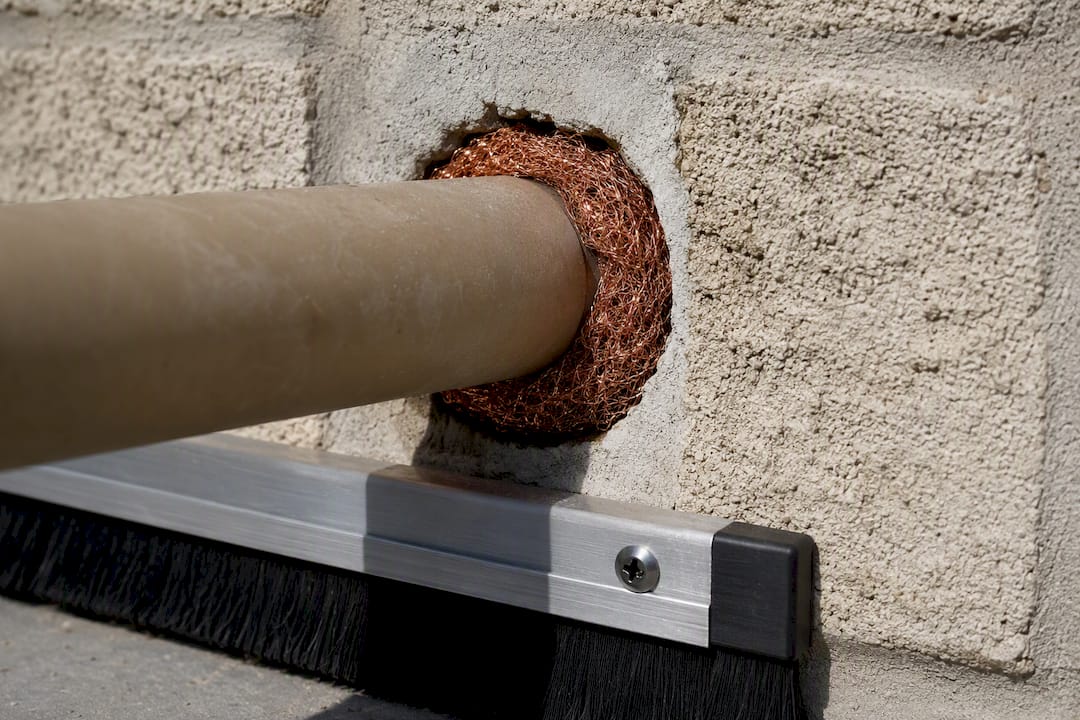
Pro Tip: A true rodent-proof door sweep has a rigid base with metal reinforcement, not just a rubber flap. If you can bend it flat with your thumb, a rat can push through it too.
Sanitation Checklist: Removing What Attracts Rodents
Sealed walls won't hold if your yard and kitchen are still feeding the problem. The Province of British Columbia's pest management guidance treats sanitation as inseparable from exclusion, and the checklist below covers the attractants that matter most.
- Store dry food and pet food in sealed, hard-sided containers, never in the original paper or thin plastic bags.
- Remove outdoor pet food and water bowls overnight.
- Use garbage bins with tight-fitting lids, and rinse them periodically to cut down on food odor.
- Manage compost with a metal mesh base or a fully enclosed unit rather than an open pile.
- Clean up spilled birdseed under feeders weekly.
- Trim vegetation back from the foundation by at least a foot to remove cover for approach.
- Move firewood, lumber, and debris piles well away from exterior walls.
- Keep grass cut low near the structure to reduce nesting habitat.
None of this requires special equipment, just consistency. A property that seals perfectly but leaves pet food out nightly is still an open invitation.
How Often Should You Audit Your Rodent Proofing?
Exclusion isn't a one-time project. Buildings settle, caulk shrinks, wood swells and shrinks with humidity, and every new utility line drilled through a wall creates a fresh opportunity. Recommend an audit at least twice a year, and more often if you're in a high-pressure area with dense construction, nearby waterways, or a history of activity.
- Re-walk the exterior perimeter and roofline with your original photo log in hand.
- Check every previous repair for gnaw marks, gaps reopening, or caulk cracking.
- Log the date and outcome of each check, noting any new signs of activity.
| Audit item | Frequency | What to record |
|---|---|---|
| Full exterior perimeter walk | Twice yearly | Photos, gap locations, repair status |
| Interior attic/crawlspace check | Twice yearly | Droppings, nesting, gnaw marks |
| Previous repair verification | Twice yearly | Repair date, condition, follow-up needed |
| Sanitation review (bins, feed, compost) | Quarterly | Attractants removed, container condition |
When Should You Call A Professional Rodent Control Service?
Call in a licensed professional when the infestation is large, entry points stay unclear after a thorough inspection, droppings are widespread enough to raise health concerns, or the same problem keeps returning despite your repairs.
- A qualified service typically starts with a full inspection and entry-point mapping, not a guess.
- Exclusion work follows, using the same durable materials covered above, installed at scale.
- Targeted removal addresses any existing population before sealing finishes.
- Ongoing monitoring catches new activity before it becomes a repeat infestation.
Ask any contractor how they sequence removal before sealing, and ask what materials they use for exclusion versus what they reserve for chemical treatment. Their answers tell you whether they're running an IPM program or just setting traps.
What Types Of Rodents Are You Actually Dealing With?
The species behind your droppings changes your entire proofing strategy. House mice are curious and will explore new gaps within hours of them appearing, which is why a "temporary" hole often gets exploited before you get back to it with caulk. They need only that quarter-inch opening, and they're strong climbers, capable of scaling rough brick or stucco to reach roofline gaps most homeowners never check.
Norway rats behave differently. They're burrowers, more likely to dig under foundations, decking, or sheds than to climb, and they gravitate toward ground-level entry points near garbage storage and compost. Roof rats, by contrast, are agile climbers that favor attics, tree canopies overhanging the roofline, and utility lines as travel routes. If your droppings show up in the attic before anywhere else, you're likely dealing with roof rats, not the ground-level Norway rat.
Both mice and rats are creatures of habit. They reuse the same travel paths night after night, which is why grease rubs and worn tracks along a baseboard or beam are so reliable as evidence. That habitual behavior cuts both ways. It makes their routes predictable for inspection, but it also means a single unsealed gap gets exploited far more heavily than a first-time visitor might suggest. Understanding which species you're up against tells you whether to focus your first pass on the roofline or the foundation.
What Tools Help You Spot Subtle Rodent Activity?
A flashlight and a notebook cover most of the job, but a few specific tools catch what a casual walk-through misses. UV flashlights make old urine trails fluoresce, which helps confirm activity along baseboards and in attics where droppings alone don't tell the whole story.
Talcum powder or unscented flour, dusted in a thin layer along a suspected travel path, records fresh tracks within a single night, useful for confirming whether a space is still active before you seal it. A simple wind-up motion camera, the kind used for wildlife observation, works just as well indoors for confirming nocturnal activity without the cost of a dedicated pest camera.
Your nose is a legitimate tool too. A persistent ammonia-like odor in an enclosed space, especially a crawlspace or attic, often signals a nest before visual signs are obvious. Pair that with a probe test on suspicious gaps: if a screwdriver tip sinks into a gap edge with light pressure, the material is degraded enough for a rodent to widen it further. None of this requires specialized equipment, just a willingness to check the same spots more than once and compare what you find against your dated photo log.
What Mistakes Undermine Rodent Proofing Efforts?
The single most common mistake is sealing a gap without confirming the space is clear first. Sealing while rodents remain active inside risks trapping them in a wall cavity, which creates an odor problem and secondary pest issue far worse than the original entry point. Always verify with a probe test or a monitoring camera before you finish the seal.
Relying on foam or soft caulk alone is the second big error. Both feel like a fix in the moment, but neither resists sustained gnawing, and a rodent that chewed through drywall once will chew through foam without slowing down. The same goes for standard weather stripping at door bottoms. It stops drafts, not teeth.
Homeowners also tend to treat exclusion as a single event rather than a maintained system. A perfect seal job in the spring means little by winter if nobody re-checks it. Partial sealing, closing the obvious gaps while missing utility penetrations or roofline junctions, leaves an opening just as effective as no work at all. And addressing only the interior while ignoring exterior sanitation guarantees the population pressure stays high even after the building itself is sealed tight.
How Does Rodent Activity Change By Season?
Rodent pressure isn't constant across the year, and timing your proofing work around it makes the effort more effective. Fall is the highest-risk season for new indoor activity. Falling temperatures push mice and rats to seek shelter, and that's exactly when small gaps around windows, doors, and utility lines get tested hardest. Completing your exterior seal before the first real cold snap matters more than doing it any other time of year.
Winter brings rodents indoors to nest, which is when interior signs, droppings, gnaw marks, nesting material, tend to surface even in homes with reasonably tight exteriors. Spring is your best window for exterior repair work. Materials cure properly in moderate temperatures, and you can assess winter damage to seals before rodent pressure builds again. Summer typically sees lower indoor pressure but higher outdoor activity around gardens, compost, and landscaping, making it the right season to focus on sanitation rather than sealing.

If your property sits in a region with heavy construction nearby or seasonal flooding, expect pressure spikes outside this general pattern. Displaced rodent populations move fast when their usual habitat gets disturbed.
A Publisher's Note From Bespoke Enviro Services
Three decades of IPM work has taught us that most of this checklist is genuinely DIY-capable for a patient homeowner. Use it, document your findings, and bring in a professional when the scope or the health risk outgrows a weekend project.
— Bespoke-Enviro Services
Ready To Get Your Property Professionally Sealed?
A thorough rodent proofing checklist gets you most of the way there, but some properties need hands that have mapped a thousand entry points before yours. A professional rodent control service pairs a full inspection with exclusion work built on IPM principles, metal-backed materials, verified sealing, and targeted removal before anything gets closed shut.

Technicians map every entry point on a property, confirm no active population remains before sealing, and follow up with monitoring so a repair holds through the next season change. If your property has repeat activity, unclear entry points, or a scope beyond a weekend project, book a rodent inspection and get a specific plan for your building rather than a generic estimate. For broader pest concerns beyond rodents, our general pest control service covers ongoing maintenance contracts too.
Where To Find Official Rodent Proofing Guidance
For further reading, the BC SPCA's rodent proofing checklist PDF offers a downloadable version of the core steps, and homeowners weighing door hardware upgrades can review door winterizing options for rodent-resistant sweeps and seals.
Sources
- Rodent-proofing your home in four simple steps - BC SPCA
- How to Seal Up to Prevent Rodents - CDC
- Managing rat and mouse pests - Province of British Columbia
- Rodent Proofing Your Home | Miller Pest