
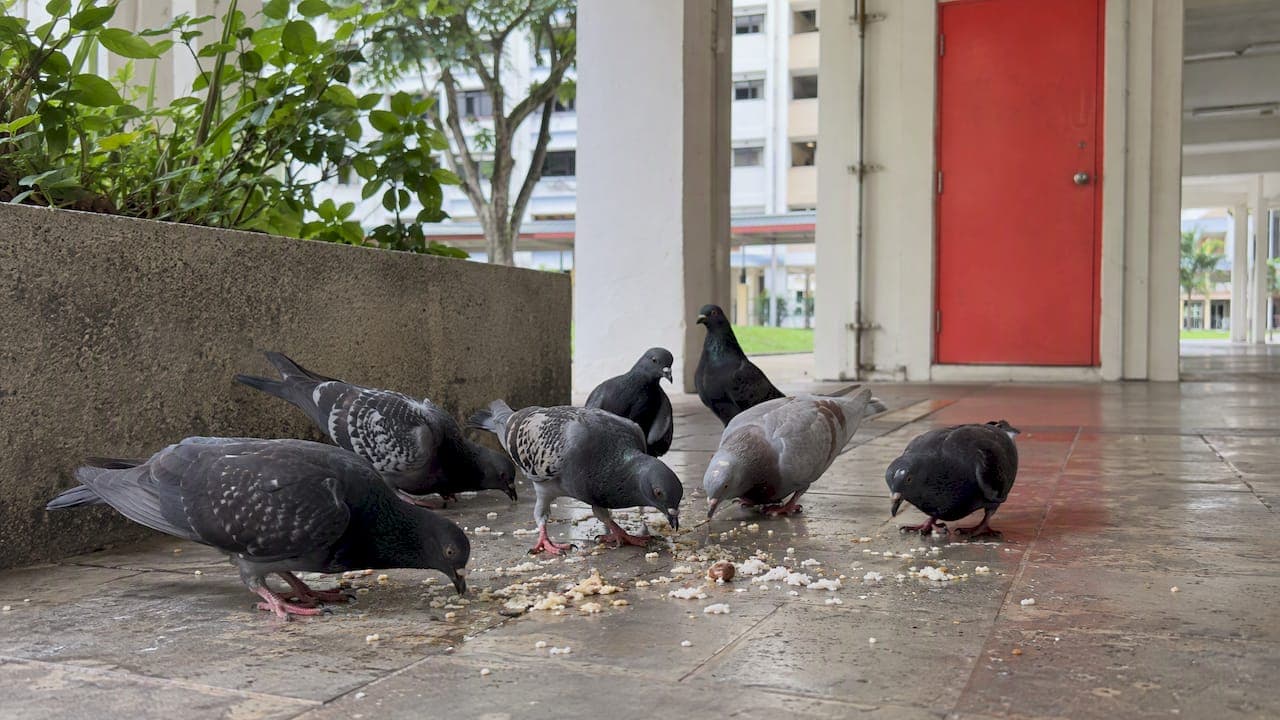
Feeding pigeons in Singapore is illegal without written approval, keeping or harboring them on your property requires a licence, and penalties for repeat offenders increased in 2026. The Wildlife Act and the Animals and Birds (Pigeons) Rules set the framework, and NParks, AVS and partner agencies enforce it.
TL;DR:
- Penalties for feeding pigeons without approval now reach $5,000 for fines and up to $20,000 or imprisonment for repeat offenders, effective July 2026.
- Licensing is required for any premises where pigeons roost, nest, or breed, with enforcement agencies able to inspect, seize birds, and issue fines or forfeiture orders.
- Reporting illegal feeding is most effective when providing detailed evidence, including date, time, location, and clear photos or videos of the incident.
- Preventative measures such as netting, spikes, and better refuse management are key to reducing pigeon roosting and breeding on properties.
- Authorities adopt a combination of habitat modification, population control, and community education, with targeted, humane culling used in specific cases.
Table of Contents
- Which laws cover pigeons and the headline penalties
- Which agencies enforce the rules and what powers they have
- Illegal feeding: the law, penalties, and how to report feeders effectively
- Licensing and premises-owner obligations under the pigeons rules
- How authorities actually manage pigeon populations
- Practical checklist for residents and property managers
- If you find an injured or distressed pigeon
- Recent policy updates and timeline that affect enforcement
- Our view on humane, compliant bird control
- Bespoke Enviro's lawful bird control and proofing services
- FAQ
- Sources
Which laws cover pigeons and the headline penalties
Three pieces of legislation shape how pigeons are managed here. The Wildlife Act governs feeding behavior across all wild animals, the Animals and Birds (Pigeons) Rules govern keeping and harboring pigeons on private premises, and the broader Animals and Birds Act gives the Animal and Veterinary Service its general authority over bird-related offenses.
- The Wildlife Act bans intentional feeding of wildlife, pigeons included, without the Director-General's written approval.
- The Animals and Birds (Pigeons) Rules make it an offence to keep, harbor, roost, nest or breed pigeons on any premises without a licence.
- The Animals and Birds Act underpins AVS enforcement powers across both statutes.
Feeding penalties rose on July 1, 2026: fines for intentional wildlife feeding now reach $5,000, with repeat convictions carrying up to $20,000 or imprisonment. Under the Pigeons Rules, non-compliance can bring a fine of up to $500 plus forfeiture of the birds by the Licensing Officer, and owners who let pigeons roost unchecked are often presumed to be keepers under the law.
Which agencies enforce the rules and what powers they have
Enforcement is split across a few bodies, each with a distinct lane. Understanding who does what helps you direct a complaint to the agency that can actually act on it.
- NParks and its Animal and Veterinary Service lead wildlife enforcement, including feeding offenses and licensing under the Pigeons Rules.
- NEA handles cleanliness and refuse management, which matters because dirty bin centers and exposed food waste draw pigeons in the first place.
- Town Councils and the Singapore Food Agency support premises-level action, especially where estate cleanliness or food establishments are involved.
Authorized officers can inspect premises, enter with notice, remove nests, seize birds, issue fines and refer serious or repeat cases for prosecution. Agencies also share surveillance data and escalate persistent cases between departments rather than treating each complaint in isolation.
Illegal feeding: the law, penalties, and how to report feeders effectively
Section 5A of the Wildlife Act is the operative provision against feeding. It applies to pigeons, crows, mynas and other wildlife, and the Director-General's approval is the only lawful exception. NParks increasingly relies on CCTV footage, OneService reports and community-submitted evidence to build cases, particularly against repeat offenders who move between locations to avoid detection.
A useful report includes:
- The date, time and exact location of the feeding incident.
- Clear photos or video showing the person and the act of feeding.
- Notes on whether this is a repeat occurrence at the same spot.
Reports can go through the OneService app or directly to NParks and AVS hotlines, and agencies typically follow up with site checks once a pattern is established.
Pro Tip: Photograph the feeder's face and the food being scattered in the same frame; isolated shots of either one rarely hold up as usable evidence.

Licensing and premises-owner obligations under the pigeons rules
If pigeons are found roosting, nesting or breeding on your property, the law can presume you are keeping or harboring them, regardless of intent. That presumption shifts the burden onto owners and managers to show they have taken reasonable steps to prevent it, which makes proactive proofing a practical legal safeguard rather than just a maintenance choice.
- A licence is required for any premises where pigeons are kept, harbored, roosted, nested or bred.
- Failure to hold a licence or control roosting can lead to fines and forfeiture of the birds under the Pigeons Rules.
- Netting, spikes, ledge sealing and tighter refuse management reduce the chance of pigeons settling in the first place.
- Keeping dated records of proofing work and inspections helps demonstrate compliance if a complaint or inspection arises.
How authorities actually manage pigeon populations
Singapore's approach to pigeons rarely relies on enforcement alone. Agencies combine food-source reduction, habitat modification and, where authorized, targeted population control, treating the issue as a behavioral and environmental problem rather than purely a legal one.
- NEA and Town Councils tighten refuse handling and bin center hygiene to remove the food sources that draw large flocks.
- NParks removes nests, installs exclusion devices and applies deterrents in known roosting hotspots.
- Trapping and humane culling are used in specific, authorized circumstances rather than as a default response.
- Repeat feeders are sometimes referred to the Agency for Integrated Care for social or mental-health support alongside enforcement.
The "Say No to Feeding Wildlife" campaign underpins this strategy, and MND has reported that pilot programs combining these measures produced reductions in pigeon populations in trial town-council areas, with plans to extend the approach more broadly.
Practical checklist for residents and property managers
Compliance comes down to a short list of habits, done consistently rather than occasionally.
- Stop feeding pigeons immediately and ask household members or tenants to do the same.
- Secure food waste in sealed bins and clean balconies, ledges and bin centers regularly.
- Log recurring sightings or feeding incidents through the OneService app with photos and dates.
- Schedule a bird-proofing assessment if pigeons are already roosting on your building.
- Keep records of any remedial work, since this documentation supports your position if questioned.
Pro Tip: A single missed cleaning cycle at a bin center can undo weeks of proofing work, so treat refuse management as part of your pest-control routine, not a separate task.
Escalate to NParks or your Town Council when feeding or roosting persists despite your efforts; bring in a licensed contractor when the building's structure itself needs physical exclusion work.
If you find an injured or distressed pigeon
Do not touch, chase or feed the bird. NParks and AVS advise observing from a distance and calling the Animal Response Centre at 1800-476-1600, giving the exact location, the bird's condition and, if possible, a photo.

Recent policy updates and timeline that affect enforcement
The regulatory environment has shifted noticeably since 2024. Pilot programs in Ang Mo Kio, Bishan-Toa Payoh and Tanjong Pagar showed measurable drops in pigeon numbers, prompting plans to extend the model to more estates.
- Wildlife Act penalties for feeding increased from July 1, 2026, with repeat offenders facing steeper fines or imprisonment.
- The Pigeons Rules continue to require licensing for keeping or harboring birds, with forfeiture remaining a standing enforcement tool.
- Parliamentary responses confirm that targeted pest-bird operations resumed in some districts alongside the penalty changes.
For repeat feeders and premises owners alike, the message is consistent: upstream prevention is now paired with a tougher penalty structure.
Our view on humane, compliant bird control
We support NParks' layered approach because it treats pigeons as a management problem, not a one-off nuisance. Persistent roosting, legal exposure from presumed keeper status, or a building with complex rooflines are the moments to bring in a licensed professional rather than attempt a quick fix.
— Bespoke-Enviro Services
Bespoke Enviro's lawful bird control and proofing services

Once feeding stops and refuse is under control, the remaining work is usually physical: netting, spikes, ledge sealing and ongoing monitoring best handled by professionals offering pest control services. We handle that part. Our technicians apply integrated pest management methods designed to keep treatments non-toxic and safe for people and pets, which matters on occupied residential and commercial buildings.
- Bird control and proofing installation for ledges, rooflines and bin centers.
- Inspection reports that document existing roosting activity and risk areas.
- Ongoing maintenance plans to keep proofing effective over time.
| Service | What it covers |
|---|---|
| Bird Control & Proofing | Netting, spikes, exclusion devices, humane deterrents |
| General Pest Control | Broader IPM-based building hygiene and waste-control measures |
If pigeons have already settled on your property, request an inspection through our Bird Control & Proofing Services page and we will assess what the building actually needs.
FAQ
How do I permanently get rid of pigeons?
No single step guarantees permanent removal, but combining food-source control, physical exclusion such as netting or spikes, and regular bin center cleaning gives the most durable results. Licensed bird-proofing work addresses the structural side that feeding bans alone cannot fix.
How to get rid of pigeons in Singapore?
Start by removing food sources and sealing access to ledges or rooflines where pigeons roost. For persistent problems, a licensed pest control provider can install exclusion devices, and you can report ongoing nuisance through the OneService app.
Are you allowed to get rid of pigeons?
You can deter and exclude pigeons using lawful, humane methods like netting and spikes, but you need a licence to keep or harbor pigeons, and trapping or culling without authorization is not permitted under the Pigeons Rules. Feeding them is restricted under the Wildlife Act regardless of intent.
Can you complain about pigeons?
Yes, residents can report pigeon nuisance or illegal feeding through the OneService app or directly to NParks and AVS. Clear photos, dates and repeat-incident details make a complaint far more actionable for enforcement officers.
Sources
- Wildlife Act 1965 — section 5A (Feeding of wildlife) - Singapore Statutes Online
- Pigeons in Singapore | Animal and Veterinary Service (AVS) - NParks
- Written answer by Ministry of National Development on complaints on pest bird nuisance and measures to reduce such nuisances