
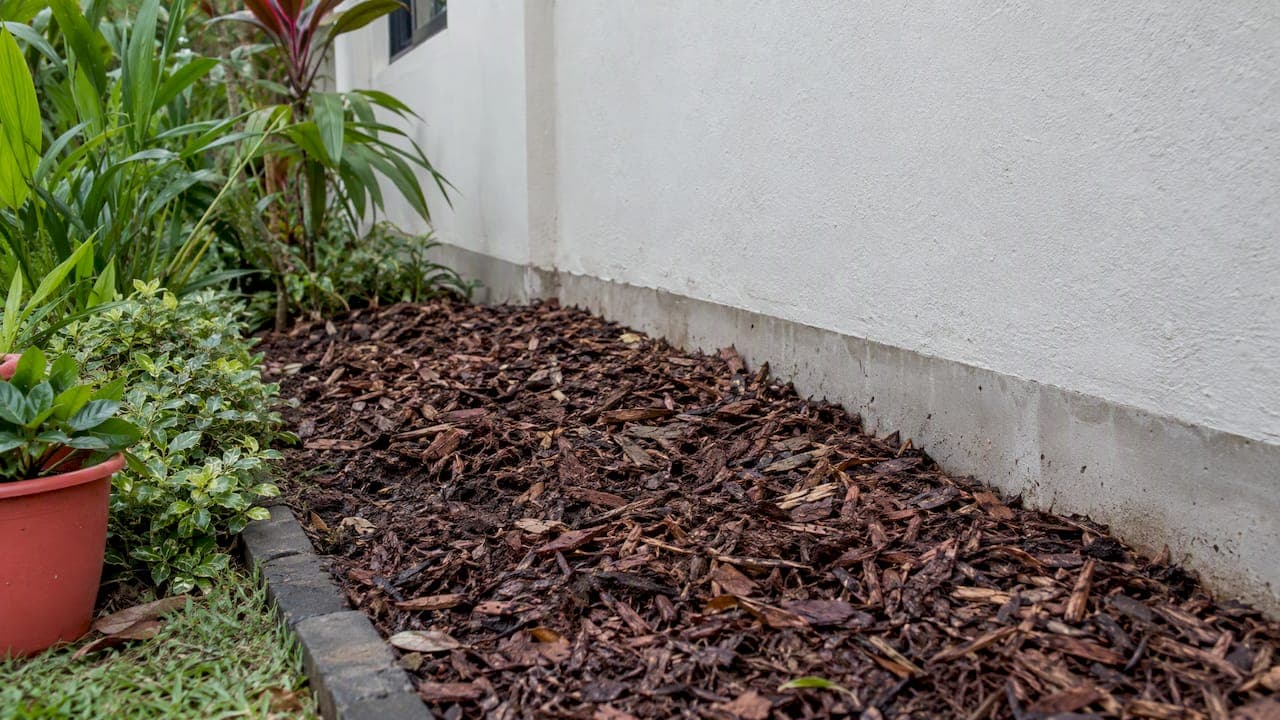
Mulch does not cause a termite infestation on its own, but it can make the ground around your foundation more comfortable for termites that are already foraging nearby. The fix is simple: keep mulch layers thin, leave a clear gap between mulch and your foundation, and watch for warning signs. The evidence behind this advice, and the exact numbers to follow, are below.
TL;DR:
- Keep organic mulch 5 to 10 centimeters deep, pull it away from foundations and siding, and prevent downspouts or irrigation from keeping the base wet.
- Bagged mulch is an unlikely infestation source; termites survive poorly on mulch compared with solid wood, while nearby soil colonies pose the greater risk.
- Gravel, stone, and rubber remove termites’ cellulose food source, but gravel can still shelter foragers by keeping the ground cool and moist.
- Call a professional when you find foundation mud tubes, damaged or hollow sounding wood, or repeated swarms of winged termites; ask for a written report.
Table of Contents
- How mulch changes conditions that termites prefer
- Do termites actually eat mulch, and can it support a colony?
- Which mulches carry less termite risk, and what you give up
- How to mulch without inviting termites to your foundation
- When to call a professional and what a prevention program includes
- Garden health and termite risk do not have to be a trade-off
- Get a professional inspection before mulch season starts
- FAQ
- Sources
How mulch changes conditions that termites prefer
Mulch does not summon termites out of nowhere, but it changes the microclimate at ground level in ways that favor them. A layer of organic mulch holds moisture and keeps the soil surface cooler than bare ground, and termites forage longer in cooler, damper conditions. Field experiments comparing shredded hardwood, pine bark, eucalyptus mulch, and pea gravel found that these materials lowered surface temperatures and, in some cases, extended how long termites stayed feeding once they found a food source underneath.
The bigger structural concern is contact, not composition. When mulch is piled directly against a foundation or siding, it can form a bridge that lets termites cross from soil to wood while bypassing any soil-applied treatment barrier beneath it.
- Mulch retains moisture and cools the soil surface, conditions termites favor for extended foraging.
- Mulch piled against a foundation can act as a bridge over treated soil zones.
- Groundcover type does not appear to significantly change whether foraging termites discover a site, but it can affect how long they stay once they do.
Do termites actually eat mulch, and can it support a colony?
Termites will feed on many organic mulches, but that does not mean mulch is a good home for them. Peer-reviewed feeding trials found that subterranean termites consumed a range of landscape mulches in no-choice lab tests, yet survivorship on mulch diets was often lower than survivorship on solid wood. Mulches that decompose quickly and carry higher nitrogen and phosphorus content tended to be eaten more readily, while some materials, including melaleuca heartwood, were among the least preferred.

A mulch layer rarely houses a self-sustaining termite colony. Termites may show up in a mulch bed, but they survive poorly there compared with established soil colonies, and bagged, store-bought mulch is an unlikely source of a live infestation since the chipping and bagging process separates workers from their colony. The real risk comes from subterranean colonies already present in the soil near your home, not from stowaways in a bag of mulch.
Which mulches carry less termite risk, and what you give up
No mulch is termite-proof, but some materials are less appealing to foragers or remove the food source entirely. Organic mulches feed soil life and improve moisture retention for plants, while inorganic materials trade some of those benefits for lower feeding risk.
- Wood chips and bark mulch feed soil microbes and insulate roots well, but they are among the materials termites will consume in feeding trials.
- Straw and leaf mulch break down quickly and enrich soil, though faster decomposition and higher nutrient content can make them more attractive to foraging termites.
- Gravel, stone, and pumice remove the cellulose food source entirely, though some field data show termites can still linger under gravel longer than expected, likely due to the cooler, moist conditions underneath.
- Rubber mulch does not feed termites, but it does not improve soil health the way organic mulches do.
Species-level results vary: melaleuca mulch showed lower termite preference in some feeding trials, but availability and suitability for your plants should guide the choice as much as pest resistance.
How to mulch without inviting termites to your foundation
Mulch benefits your garden when it is applied correctly, and the rules for avoiding termite problems are specific enough to follow exactly.
- Keep mulch layers thin. NParks' gardening guidance recommends applying organic mulch 5 to 10 centimeters thick, which supports plant health without creating a deep, moist refuge.
- Leave a gap at the foundation. Keep mulch pulled back from exterior walls and wooden structures, and avoid letting it touch siding, door frames, or deck posts directly.
- Never pile mulch against stems or structures. The same NParks guidance warns against mounding mulch up against plant stems, and the same logic applies to walls and foundations.
- Manage moisture at the base of walls. Make sure downspouts and irrigation do not keep soil or mulch near your foundation constantly wet, since persistent dampness favors termite activity.
- Inspect mulched areas regularly. Check for mud tubes along the foundation, hollow-sounding wood when tapped, and discarded wings or frass, and note the date and location of anything you find.
- Keep the site clean. Remove old stumps, stacked firewood, and leftover lumber from near the house, and avoid piling soil against any wood structure.
Pro Tip: Measure before you buy. A mulch calculator helps you work out exactly how many bags or cubic yards you need, so you are not tempted to pile on extra mulch just to use up what is left over.
When to call a professional and what a prevention program includes
Some signs call for a professional inspection right away rather than a wait-and-see approach.
- Mud tubes running along your foundation, posts, or pipes.
- Visible wood damage, including wood that sounds hollow or crumbles under light pressure.
- Swarms of winged termites indoors, especially repeated swarms in the same season.
A proper termite prevention program goes well beyond mulch choice. It typically combines in-ground treatments or bait stations placed around the perimeter, routine inspections that include visual checks and scanning tools, and targeted spot treatment where activity is confirmed. When you talk to a provider, ask whether their technicians are NEA-licensed, whether they follow an integrated pest management approach, whether non-toxic treatment options are available, and whether you will receive a written inspection report with clear next steps.
Garden health and termite risk do not have to be a trade-off
Mulch is worth using. It protects roots, retains moisture, and feeds the soil, and none of that has to come at the cost of your foundation's safety. The research points to a practical middle ground: thin layers, a clear gap at the wall, and routine inspection rather than avoiding mulch altogether. Fear of termites should not push you toward bare, lifeless soil when a few measurable habits keep both your garden and your home protected.
— Bespoke-Enviro Services
Get a professional inspection before mulch season starts
Thin layers and clear gaps go a long way, but a trained eye catches what a weekend inspection might miss. Our termite control and treatment service pairs NEA-licensed technicians with integrated pest management methods, including in-ground baiting and targeted treatment where activity is found.

On an inspection visit, we check foundation lines, mulched beds, and vulnerable wood contact points, then leave you with a written report and clear recommendations. If you want a baseline before you mulch this season, book a termite inspection with our team.
FAQ
Does mulch attract termites?
Mulch does not create termites out of nowhere, but it can make an area more comfortable for termites already foraging nearby by holding moisture and cooling the soil surface. The bigger risk comes from mulch piled directly against a foundation, which can let termites bridge from soil to wood.
What is the biggest enemy of termites?
In practical terms, dry conditions and a disrupted food and moisture supply work against termite colonies, which is why pest professionals focus on soil treatments, bait stations, and removing cellulose contact points near structures. Routine monitoring and in-ground barriers, rather than any single material, are considered the standard approach to keeping termite activity in check.
What kind of mulch is termite resistant?
No mulch is fully termite resistant, but inorganic options like gravel, stone, and rubber remove the cellulose food source that organic mulches provide. Among organic mulches, some studies found termites prefer certain types less than others, including melaleuca heartwood, though local availability and plant needs should guide your final choice.
Is it okay to put mulch around your house?
Yes, as long as you keep the layer thin, around 5 to 10 centimeters as recommended by NParks, and leave a clear gap between the mulch and your foundation. Regular inspection for mud tubes or wood damage adds another layer of protection.
Can store-bought mulch bring termites into my yard?
Bagged, store-bought mulch is an unlikely source of a live termite infestation, since the chipping and bagging process separates any termites from their colony and survival is poor. The greater risk comes from subterranean termite colonies already established in the soil around your property.
Sources
- Will Subterranean Termites Consume Landscape Mulches? (Duryea et al.)
- Mulching | gardeningSG (NParks)