
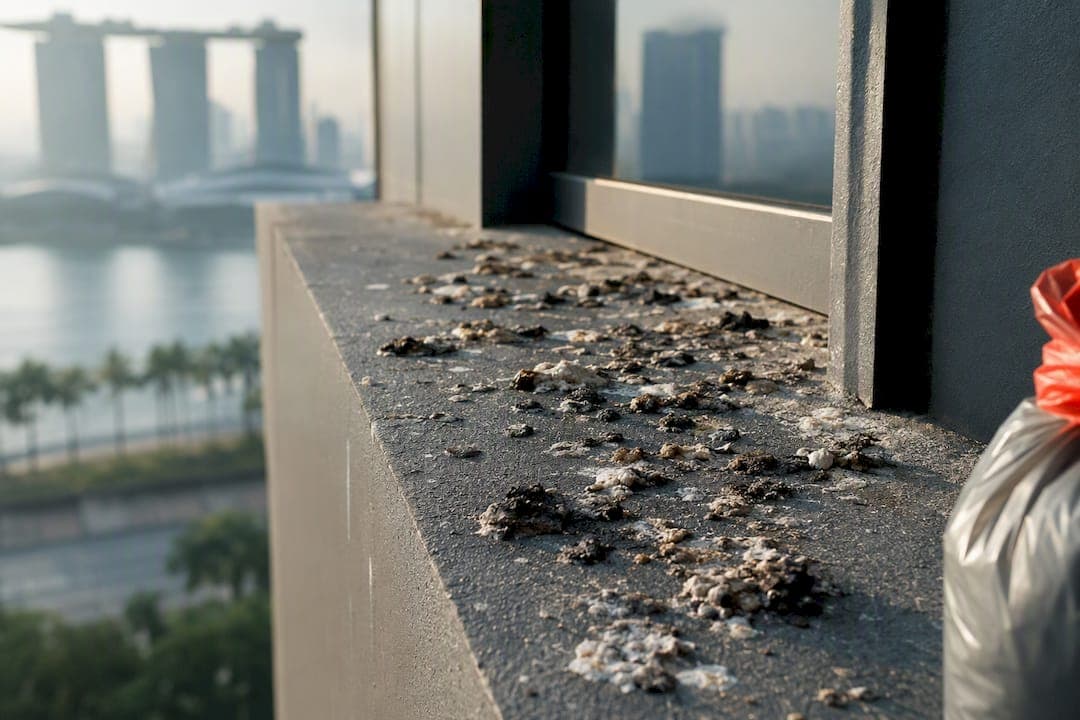
Bird droppings can carry real disease risks, but the danger comes from a narrow set of pathogens and specific situations rather than every pigeon perch on your ledge. The infections of concern are histoplasmosis, psittacosis, and cryptococcosis. The single most important thing you can do right now is leave dried deposits undisturbed. Do not sweep, scrape, or vacuum them. Seek medical care if you develop fever or respiratory symptoms after exposure, and call in professionals for any large or long-standing accumulation.
TL;DR:
- Most health risks from bird droppings occur when dried deposits are disturbed or accumulate heavily over years in indoor or outdoor sites.
- Infections like histoplasmosis, psittacosis, and cryptococcosis mostly affect vulnerable groups such as immunocompromised individuals, children, and older adults.
- Proper cleanup involves wet methods and protective equipment, avoiding dry sweeping or pressure washing that can aerosolize spores.
- Large, long-standing buildups require professional remediation with PPE, wet decontamination, and sealed containment, especially in high-risk settings.
- Preventing future nesting sites involves exclusion measures like netting, spikes, and sealing entry points to reduce buildup over time.
Table of Contents
- What Diseases Are Linked to Bird Droppings
- How Exposure Happens and Who Faces the Highest Risk
- Symptoms That Warrant Medical Attention
- How to Clean Up Bird Droppings Safely
- Preventing Bird Droppings From Building Up Again
- When Professional Remediation Makes Sense
- A Practical Take on Managing the Risk
- Get Professional Help for Bird Dropping Cleanup and Prevention
- Sources
What Diseases Are Linked to Bird Droppings
Most healthy people who walk past a dirty windowsill or a pigeon-covered ledge face little to no danger. The real health risks tied to bird droppings show up when dried material gets disturbed and pathogens become airborne, or when accumulations sit for years and build up fungal or bacterial load.
- Histoplasmosis: a fungal infection tied to soil enriched by bird or bat droppings over time. Inhaling spores from disturbed, aged material can trigger respiratory illness that ranges from a mild flu-like episode to a severe lung infection in people with weaker immune defenses.
- Psittacosis: a bacterial infection most associated with parrots but also documented with pigeons. It typically starts as a flu-like illness and can progress to pneumonia, and it's a recognized occupational hazard for construction and maintenance workers who disturb contaminated material.
- Cryptococcosis: a fungal infection strongly associated with pigeon droppings. It rarely troubles healthy adults but poses a serious threat to immunocompromised people.
- Other risks: Salmonella from direct contact, plus mite or lice irritation from active roosts. These are less common than the fungal and bacterial threats above but still worth knowing about, especially around chronic roosting sites.
How Exposure Happens and Who Faces the Highest Risk
The path to illness almost always runs through the air, not the skin. Dried droppings crumble into dust, and any activity that disturbs them, cleanup, renovation, gardening, pressure washing, roof work, can send spores airborne where they're easily inhaled. Direct contact matters too, particularly when hands touch a contaminated surface and then the mouth, eyes, or an open cut.
Some groups carry meaningfully higher risk:
- Children, whose developing immune systems and hand-to-mouth habits increase exposure odds.
- Older adults, who tend to have less respiratory reserve to handle a lung infection.
- Immunocompromised individuals (transplant patients, those on chemotherapy, people living with HIV), who face higher risk of severe outcomes from both histoplasmosis and cryptococcosis.
- Occupational groups: construction crews, HVAC technicians, roofers, and pest-control staff who routinely encounter accumulated droppings in attics, ledges, and rooftop equipment.
Incubation periods vary by pathogen, but psittacosis symptoms often appear within 5 to 19 days of exposure, which is exactly why employers are expected to assess and control this risk before work begins near contaminated sites.
Symptoms That Warrant Medical Attention
Early signs of exposure-related illness tend to overlap: fever, dry cough, fatigue, headache, and sometimes chest discomfort. Psittacosis often starts with a sudden fever and headache before settling into a chest infection. Histoplasmosis can look like a mild cold in most people, but in higher-risk patients it can spread beyond the lungs.
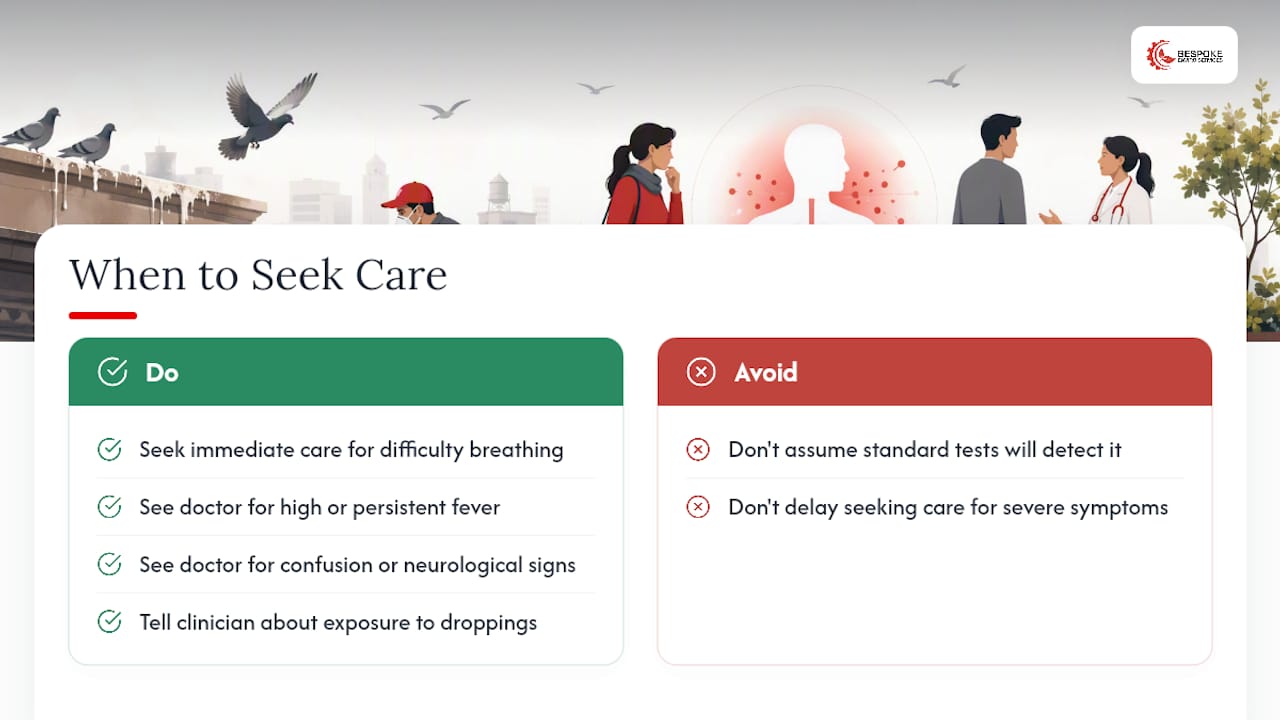
Certain symptoms should send you to a doctor without delay: difficulty breathing, a high or persistent fever, confusion, or any neurological symptom following known exposure to droppings. Tell your clinician about the exposure specifically, since these infections don't always show up on standard tests unless the doctor knows to look. Treatment usually involves antibiotics for psittacosis and, for more severe histoplasmosis or cryptococcosis cases, antifungal medication.
How to Clean Up Bird Droppings Safely
Cleaning bird droppings safely comes down to one rule: never let dry material become airborne. Sweeping, dry vacuuming, or blasting a surface with a high-pressure washer will lift spores into the air exactly where you're standing, which defeats the purpose of cleaning in the first place.
For small, fresh droppings on an outdoor surface, a manageable approach looks like this:
- Put on gloves and eye protection before you start.
- Mist the area thoroughly with water using a low-pressure sprayer to keep dust down.
- Wipe or scrub with soap and water rather than scraping dry residue.
- Bag disposable materials, wash exposed skin, and disinfect tools afterward.
Large, old, or indoor accumulations, especially in attics, ductwork, or roosting sites that have built up over multiple seasons, call for a different standard entirely. That's a job for a well-fitted N95 or FFP2 respirator at minimum, disposable coveralls, and controlled wet decontamination rather than a garden hose and good intentions. University environmental health guidance recommends wet methods and respiratory protection specifically because dry cleanup methods are what turn a nuisance into a health hazard.
Pro Tip: If you're unsure whether an accumulation counts as "small and fresh" or "large and old," treat it as the latter. Erring conservative costs you a phone call; erring careless costs you a respiratory infection.
Preventing Bird Droppings From Building Up Again
Cleaning up an existing mess solves today's problem. Stopping birds from coming back solves next year's. Exclusion is the more durable fix, and it works best when paired with habitat changes that make the site less attractive in the first place.
- Netting across large open structures like warehouses, parking structures, and building facades.
- Spikes on ledges, signage, and beams to block landing spots without harming birds.
- Screening over vents, gutters, and rooftop equipment openings.
- Sealing gaps and eaves where birds establish nests inside structures.
- Removing food and waste sources, and trimming back anything that creates a sheltered roosting spot.
This matters more the longer a roost sits undisturbed. Soil and surfaces under a long-term roost accumulate fungal spores over years, not days, so a site that's hosted pigeons for three seasons carries meaningfully more risk than one cleaned up after a few weeks. Exclusion paired with cleanup is what actually prevents that buildup from starting over.
When Professional Remediation Makes Sense
Some situations move past the soap-and-water category entirely. Indoor roosts, contamination inside HVAC systems, heavy or multi-year accumulations, and any site where children, elderly residents, or immunocompromised people are present all justify calling in a licensed remediation team rather than handling it yourself. Case documentation on bird-dropping-related infections consistently points to heavy, aged accumulations as the scenario where severe illness actually occurs.
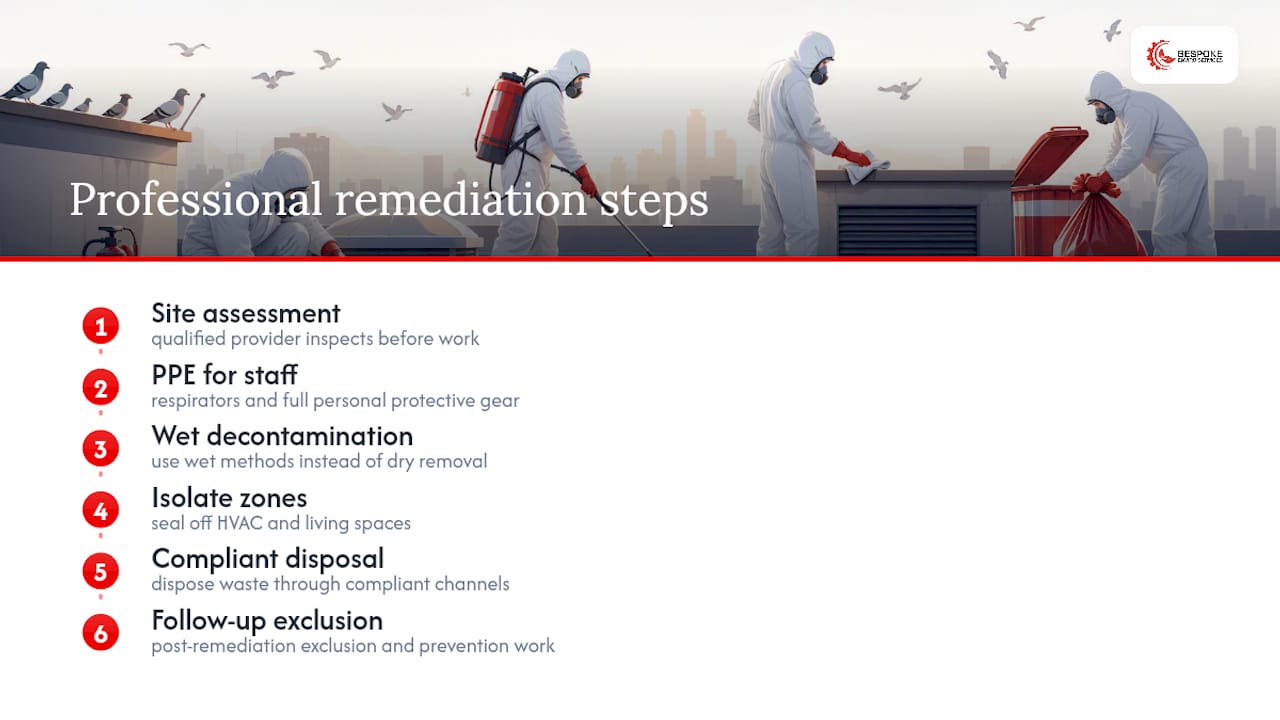
A qualified provider should run a site assessment before touching anything, equip staff with respirators and full PPE, use wet decontamination methods instead of dry removal, seal off contaminated zones from HVAC and living spaces, and dispose of waste through compliant channels. At Bespoke-enviro, our integrated pest management approach pairs that kind of remediation with follow-up exclusion work, backed by over 30 years of pest management experience across residential, commercial, and industrial sites.
A Practical Take on Managing the Risk
Most brief, incidental contact with bird droppings won't make anyone sick. The danger concentrates in disturbed, aged, or indoor accumulations, and in people whose immune systems can't fight off a fungal or bacterial foothold. When you're unsure which category you're dealing with, choose the conservative path: keep vulnerable people away, avoid disturbing the deposit, wash any exposed skin, and bring in professionals for anything beyond a small, fresh outdoor spot. Watch for fever or respiratory symptoms afterward, and don't wait to get checked if they show up.
— Bespoke-Enviro Services
Get Professional Help for Bird Dropping Cleanup and Prevention
A garden hose and a respirator handle the small jobs, but heavy roosts, indoor contamination, and HVAC exposure need a team that treats decontamination as a safety protocol, not a chore. Bespoke-enviro brings over 30 years of pest management experience in Singapore, combining eco-friendly, non-toxic treatments with integrated pest management strategies built to protect people, not just clear a mess.

Our bird control services cover both the cleanup and the exclusion work that stops roosts from reforming, using netting, spikes, and screening suited to the site. For heavily contaminated locations, our fumigation services handle decontamination that goes beyond a standard surface clean, and our general pest control programs keep infestations, droppings included, from becoming a recurring problem. If your site involves large exterior surfaces alongside droppings buildup, a partner like Apache X's cleaning services can complement the exclusion work with routine exterior maintenance. Contact Bespoke-enviro to book a site inspection and get a straightforward quote before the next roosting season starts.
This article is general information, not a substitute for advice from a qualified doctor. Consult a qualified healthcare professional about your own circumstances before acting on anything here.
Sources
- Histoplasmosis - MedlinePlus
- Construction micro-organisms: Psittacosis and other diseases from work involving bird droppings - HSE
- Factsheet – Bird and Bat Waste | Environmental Health & Safety (WSU)
- PMC article on bird-dropping-related infections