
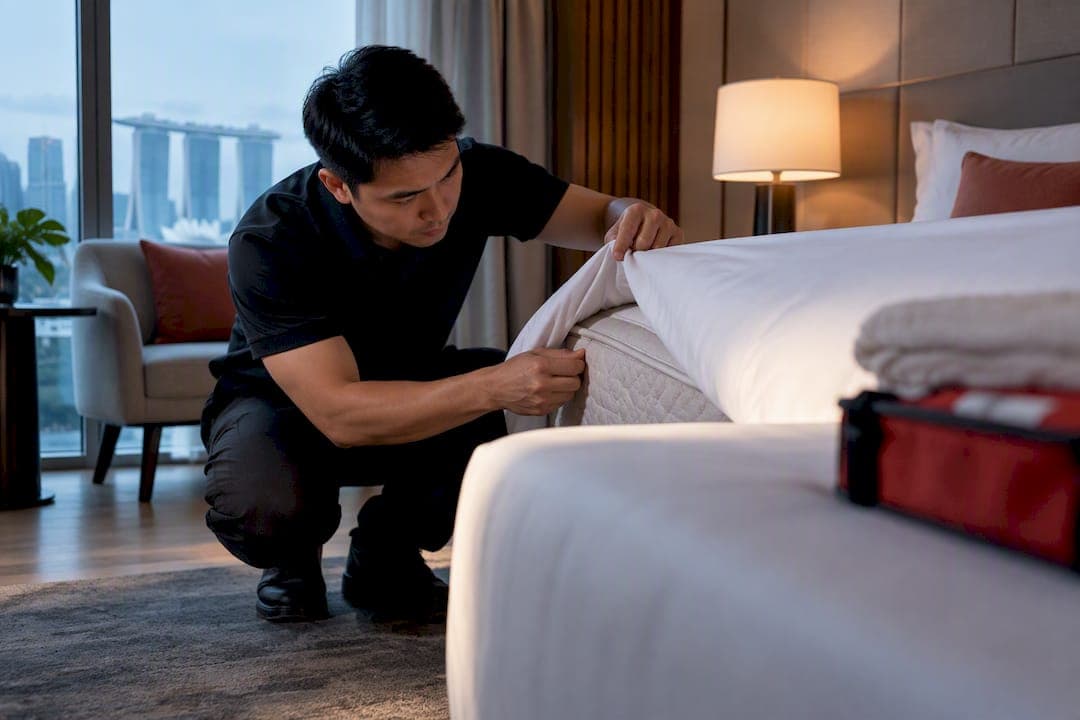
Use a zone-by-zone checklist covering guest rooms, kitchens, public and back-of-house areas, and the loading bay and exterior, and pair it with a single owned log that assigns an owner, a deadline, and a verification step to every defect found. Any suspected bed bug or rodent activity should trigger immediate isolation of the area and a call to a licensed pest professional before staff attempt anything else. A checklist without ownership is just a record of problems nobody fixed.
TL;DR:
- Regular inspections for bed bugs must be conducted at every guest room turnover and in public areas at least weekly to detect infestations early.
- Proper documentation and ownership of pest control tasks, including detailed logs and verification steps, are essential to prevent recurring issues.
- Food storage areas require strict sanitation, sealed containers, and regular drain and equipment checks to minimize pest entry points.
- Hidden zones like ceiling voids, laundry rooms, and exterior loading bays should be inspected periodically and kept free of debris and markings that attract pests.
- Any suspected pest activity must trigger immediate area isolation and professional treatment, with records and photos kept to verify resolution according to NEA guidelines.
Table of Contents
- Guest-Room Checklist: Bed Bug and Turnover Inspection Points
- Kitchens and F&B: Sanitation, Storage, and Drain Checks
- Public Areas and Back-of-House: Laundry, Storage, and Ceiling Voids
- Loading Bay, Waste, and Exterior: Refuse and Rodent Entry Points
- How a Hotel Pest Management Plan and NEA Rules Fit Together
- A Manager's Take on Turning Checklists Into Systems
- Sources
- FAQ
Guest-Room Checklist: Bed Bug and Turnover Inspection Points
Room turnover is where hotels catch or miss bed bugs, and the difference usually comes down to whether housekeeping knows exactly where to look. Every turnover should include a quick, focused pass through the spots bed bugs actually use, not a general glance at the room.
- Mattress seams and piping, where cast skins and dark spotting collect first.
- Headboards, especially where they attach to the wall, since this is a common harborage point.
- Upholstered joints on chairs and sofas, along seams and welting.
- Curtain hems and pleats, checked with a flashlight in daylight.
- Luggage racks and storage areas, a frequent transfer point between rooms and guest bags.
- Skirting boards and baseboards, particularly where they've pulled away from the wall.
- AC units and pipe penetrations, where gaps let pests move between rooms.
Record any live insects, cast skins, eggs, blood spotting, or fecal marks you find, along with the exact location. If a guest reports bites or you find physical evidence, take the room out of service immediately, bag and isolate the guest's belongings separately from other laundry, and inspect the rooms directly adjoining it on all sides. NEA guidance recommends visual inspections and surveillance traps for detection, and rooms should stay out of service until a pest management company confirms control, not just until the next guest needs it.
Pro Tip: Never tell a guest you've "found bed bugs" before a professional confirms it. Say the room needs maintenance, move them quietly to a new room, and handle the inspection out of sight. A calm, discreet response protects both the guest experience and your reputation far better than a visible scramble.
Documentation matters as much as the inspection itself. A written bed bug action plan that names who inspects, who treats, and who signs off on returning the room to service keeps a single bad room from becoming a recurring one. Sample IPM programs for hotels also recommend laundering linens at high temperatures and logging every complaint so patterns across rooms or floors become visible over time.
Kitchens and F&B: Sanitation, Storage, and Drain Checks
Food areas fail pest inspections for the same reasons almost every time: food left accessible, moisture where it shouldn't be, and gaps nobody sealed. Daily sanitation has to be non-negotiable here.
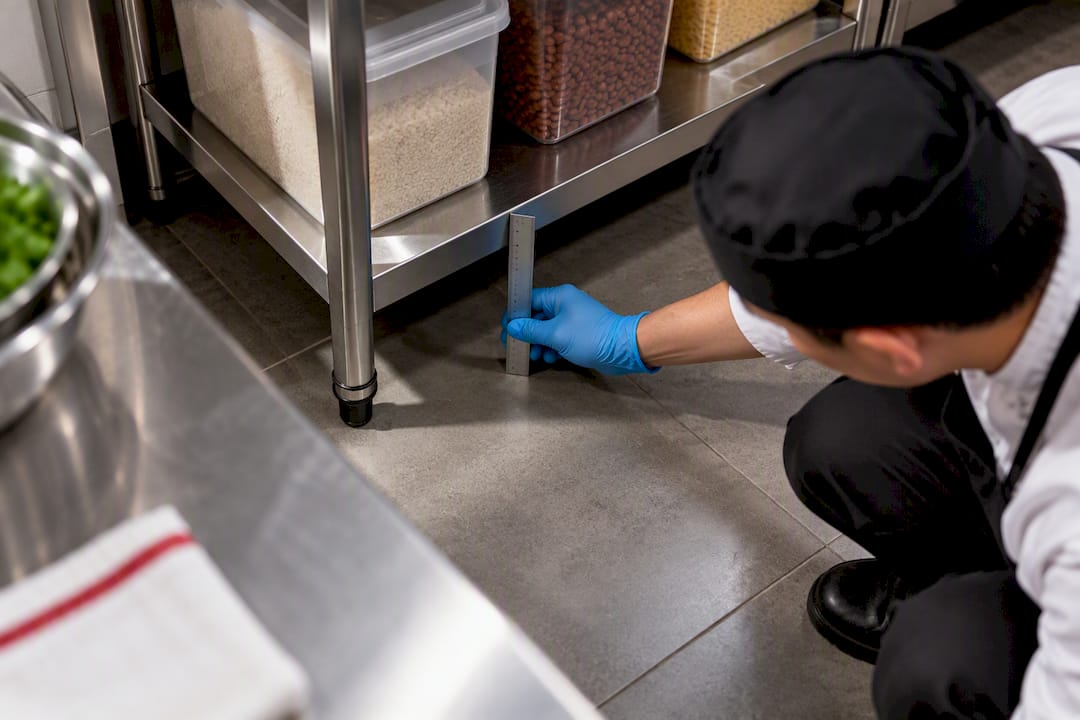
- Store all food at least 15 cm off the floor and away from walls.
- Keep dry goods in sealed, pest-proof containers, never in original cardboard once opened.
- Wipe down prep surfaces and clean spills the moment they happen, not at closing.
- Check behind and beneath heavy equipment, ovens, walk-in coolers, and dish machines, where warm voids attract roaches and rodents alike.
- Clean grease traps and floor drains on a fixed schedule rather than "when someone notices the smell."
- Inspect service penetrations, the small gaps where pipes and conduits pass through walls, since these are common entry points.
Sticky traps placed along walls and behind equipment give you an early warning system without introducing chemicals near food. Physical and mechanical controls are generally preferred in food-handling areas because of contamination risk, and any chemical treatment in these zones should be handled only by licensed personnel trained in food-safe application methods.
One overlooked number: the 15 cm storage rule sounds arbitrary, but it exists because it's the minimum clearance most inspection routines rely on to actually see under shelving without moving stock. If your storage is lower than that, your staff are guessing, not inspecting.
Log any contamination risk you spot, droppings near dry storage, gnaw marks on packaging, grease trails along baseboards, and escalate it the same day rather than waiting for the weekly contractor visit.
Public Areas and Back-of-House: Laundry, Storage, and Ceiling Voids
Guests rarely see these zones, which is exactly why pests tend to establish themselves there first. Lobbies, laundry rooms, linen storage, staff break rooms, and ceiling voids all deserve a place on the rotation.
- Check upholstered lobby furniture and planters for signs of insect activity or standing water.
- Inspect laundry staging areas, since soiled linen from a bed bug room can spread the problem if it isn't bagged and handled separately.
- Look inside storage cabinets and shelving units for droppings, chew marks, or nesting material.
- Open ceiling tiles and access panels in service ducts periodically. Rodents and cockroaches use these as highways between floors.
- Inspect incoming deliveries and donated furniture or linens before they enter the building. Both are common ways pests hitch a ride in.
Assign one staff member per area as the responsible owner for that zone's checks, and keep a simple sticky-trap log by date and location so trends across weeks are easy to spot rather than buried in memory.
Loading Bay, Waste, and Exterior: Refuse and Rodent Entry Points
The exterior is where most rodent problems start, and it's the zone hotels check least often. NEA identifies clutter, overflowing refuse, and unsealed access points as the primary rat-risk conditions around any commercial building.
- Inspect dock edges and door seals for gaps large enough for rodents to squeeze through, which is smaller than most staff assume.
- Check pallet and cardboard storage. Cardboard left flat against exterior walls creates instant harborage.
- Walk the refuse room daily for spilled waste, overflowing bins, and standing liquid.
- Clear drains and gullies of debris that traps moisture and food residue.
- Look for burrows, runways, or rub marks along fence lines and building foundations at dusk, when rodent activity picks up.
Cover bins at all times, remove cardboard the same day it accumulates, and keep landscaping trimmed back from the building line. Outdoor tamper-resistant bait stations, checked and logged on a set schedule, catch problems before they reach the loading dock door.
How a Hotel Pest Management Plan and NEA Rules Fit Together
A checklist only works inside a real plan. Integrated pest management, the approach recommended by the EPA, sets action thresholds first, then monitors and identifies problems, then applies prevention, and reserves chemical treatment for last. That order matters more than most managers realize. Skipping straight to chemical control without fixing the sanitation or exclusion gap underneath it just means the same problem returns in a few weeks.
NEA's expectations for commercial premises give the plan its backbone:
- Keep a pest management plan on site, available for inspection at any time.
- Commission 6-monthly comprehensive surveys at minimum, more often if the property has a history of infestations.
- Engage a registered vector control operator (VCO) for specified premises, as required under NEA rules.
- Require baseline surveys with mapped monitoring points and monthly service reports that include photos.
Records worth keeping: the baseline survey, monthly service reports, treatment logs, safety data sheets for any pesticide used, and a corrective-action list showing who owns each open item and when it was verified closed.
Pro Tip: Ask your contractor for photo evidence with every monthly report, not just a checklist of "areas serviced." A report without photos is a report you can't verify, and NEA's own technical specifications treat photo documentation as standard practice for rodent programs.
A Manager's Take on Turning Checklists Into Systems
A checklist that nobody owns is a checklist that gets filed and forgotten. Assign one manager to hold the pest log, brief staff on follow-up actions after every contractor visit, and confirm each item actually got fixed. Run mock inspections quarterly and review the log monthly. The pattern is consistent across every property that gets this right: recurring pest problems are almost never a detection failure. They're a follow-through failure, and only ownership fixes that.
— Bespoke-Enviro Services
Sources
Verify rodent control specs through NEA's technical requirements, bed bug protocols through NEA's bed bug guidance, and IPM fundamentals through the EPA's IPM principles. For hands-on support, Bespoke-Enviro's general pest control services cover routine inspections and maintenance contracts for hotels that need a licensed partner backing up the internal checklist. If bed bugs are the specific concern, our bed bug control and treatment service handles inspection through reinspection, and properties dealing with rodent signs near loading docks can turn to our rodent and rat control services for mapped monitoring and baiting programs.
FAQ
How Often Should a Hotel Run a Pest Inspection?
Guest rooms need a bed bug check at every turnover, while public and back-of-house zones should be checked weekly at minimum. NEA recommends comprehensive professional surveys at least every six months, more often if the property has a history of infestations.
What Should Staff Do if They Suspect Bed Bugs?
Take the room out of service immediately, isolate the guest's belongings, and inspect adjoining rooms before doing anything else. NEA advises keeping the room out of service until a pest management company confirms control, since returning it too soon risks the infestation spreading.
Who Should Be Responsible for the Pest Control Log?
One designated manager should own the log, brief staff after every contractor visit, and confirm that flagged defects get fixed and verified. NEA places this verification responsibility on the operator, not just the contractor, which is why a single accountable owner matters.
Are Chemical Treatments Safe to Use in Hotel Kitchens?
Physical controls like sticky traps and sealed storage are preferred in food areas because of contamination risk. Any chemical treatment near food should be applied only by trained, licensed personnel following food-safe protocols.
Does a Hotel Need a Licensed VCO on Staff?
Specified premises are required to engage a registered vector control operator under NEA rules, though many hotels contract this out rather than hiring in-house. A licensed provider such as Bespoke-Enviro's general pest control service can fill this role under an ongoing maintenance contract.